
Home
Neuroscience Fiction: How Is Transforming Sci-Fi into Reality-While Challenging Our Belie fs About the Mind, Machines, and What Makes us Human
Barnes and Noble
Loading Inventory...
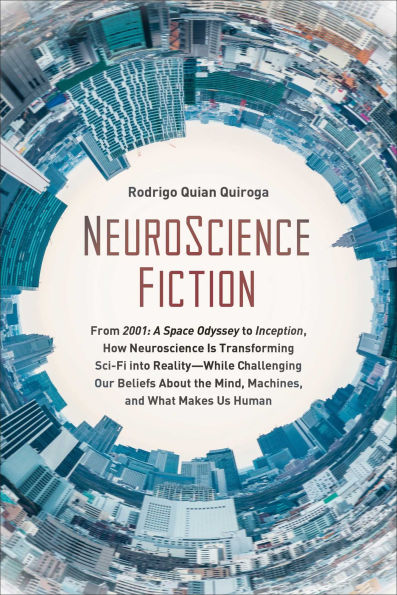
Neuroscience Fiction: How Is Transforming Sci-Fi into Reality-While Challenging Our Belie fs About the Mind, Machines, and What Makes us Human in Franklin, TN
Current price: $17.95
Barnes and Noble
Neuroscience Fiction: How Is Transforming Sci-Fi into Reality-While Challenging Our Belie fs About the Mind, Machines, and What Makes us Human in Franklin, TN
Current price: $17.95
Loading Inventory...
Size: Paperback
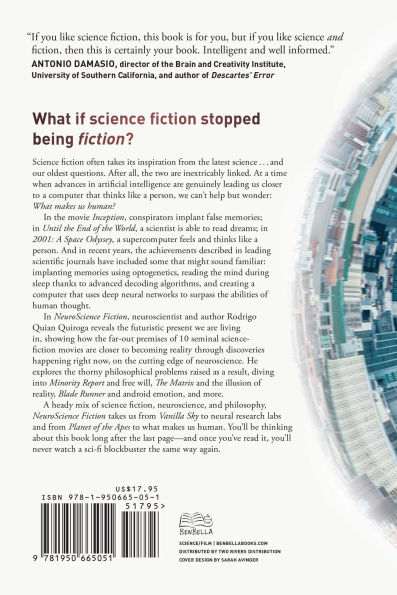
What if science fiction stopped being fiction?
Developments in neuroscience are turning sci-fi scenarios into reality, and causing us to revisit some of the philosophical questions we have been asking ourselves for centuries.
Science fiction often takes its inspiration from the latest science . . . and our oldest questions. After all, the two are inextricably linked. At a time when advances in artificial intelligence are genuinely leading us closer to a computer that thinks like a human, we can't help but wonder:
What makes a person a person?
Countless writers and filmmakers have created futuristic scenarios to explore this issue and others like it. But these scenarios may not be so futuristic after all.
In the movie
Inception,
a group of conspirators implants false memories; in
Until the End of the World,
a mad scientist is able to read dreams; in
2001: A Space Odyssey,
a supercomputer feels and thinks like a person. And in recent years, the achievements described in leading scientific journals have included some that might sound familiar: implanting memories using optogenetics, reading the mind during sleep thanks to advanced decoding algorithms, and creating a computer that uses deep neural networks to surpass the abilities of human thought.
In
NeuroScience Fiction
, neuroscientist and author Rodrigo Quiroga reveals the futuristic present we are living in, showing how the far-out premises of 10 seminal science fiction movies are being made possible by discoveries happening right now, on the cutting edge of neuroscience. He also explores the thorny philosophical problems raised as a result, diving into
Minority Report
and free will,
The Matrix
and the illusion of reality,
Blade Runner
and android emotion, and more.
A heady mix of science fiction, neuroscience, and philosophy,
takes us from
Vanilla Sky
to neural research labs, and from
Planet of the Apes
to what makes us human. This is a book you'll be thinking about long after the last page—and once you've read it, you'll never watch a sci-fi blockbuster the same way again.
Developments in neuroscience are turning sci-fi scenarios into reality, and causing us to revisit some of the philosophical questions we have been asking ourselves for centuries.
Science fiction often takes its inspiration from the latest science . . . and our oldest questions. After all, the two are inextricably linked. At a time when advances in artificial intelligence are genuinely leading us closer to a computer that thinks like a human, we can't help but wonder:
What makes a person a person?
Countless writers and filmmakers have created futuristic scenarios to explore this issue and others like it. But these scenarios may not be so futuristic after all.
In the movie
Inception,
a group of conspirators implants false memories; in
Until the End of the World,
a mad scientist is able to read dreams; in
2001: A Space Odyssey,
a supercomputer feels and thinks like a person. And in recent years, the achievements described in leading scientific journals have included some that might sound familiar: implanting memories using optogenetics, reading the mind during sleep thanks to advanced decoding algorithms, and creating a computer that uses deep neural networks to surpass the abilities of human thought.
In
NeuroScience Fiction
, neuroscientist and author Rodrigo Quiroga reveals the futuristic present we are living in, showing how the far-out premises of 10 seminal science fiction movies are being made possible by discoveries happening right now, on the cutting edge of neuroscience. He also explores the thorny philosophical problems raised as a result, diving into
Minority Report
and free will,
The Matrix
and the illusion of reality,
Blade Runner
and android emotion, and more.
A heady mix of science fiction, neuroscience, and philosophy,
takes us from
Vanilla Sky
to neural research labs, and from
Planet of the Apes
to what makes us human. This is a book you'll be thinking about long after the last page—and once you've read it, you'll never watch a sci-fi blockbuster the same way again.
What if science fiction stopped being fiction?
Developments in neuroscience are turning sci-fi scenarios into reality, and causing us to revisit some of the philosophical questions we have been asking ourselves for centuries.
Science fiction often takes its inspiration from the latest science . . . and our oldest questions. After all, the two are inextricably linked. At a time when advances in artificial intelligence are genuinely leading us closer to a computer that thinks like a human, we can't help but wonder:
What makes a person a person?
Countless writers and filmmakers have created futuristic scenarios to explore this issue and others like it. But these scenarios may not be so futuristic after all.
In the movie
Inception,
a group of conspirators implants false memories; in
Until the End of the World,
a mad scientist is able to read dreams; in
2001: A Space Odyssey,
a supercomputer feels and thinks like a person. And in recent years, the achievements described in leading scientific journals have included some that might sound familiar: implanting memories using optogenetics, reading the mind during sleep thanks to advanced decoding algorithms, and creating a computer that uses deep neural networks to surpass the abilities of human thought.
In
NeuroScience Fiction
, neuroscientist and author Rodrigo Quiroga reveals the futuristic present we are living in, showing how the far-out premises of 10 seminal science fiction movies are being made possible by discoveries happening right now, on the cutting edge of neuroscience. He also explores the thorny philosophical problems raised as a result, diving into
Minority Report
and free will,
The Matrix
and the illusion of reality,
Blade Runner
and android emotion, and more.
A heady mix of science fiction, neuroscience, and philosophy,
takes us from
Vanilla Sky
to neural research labs, and from
Planet of the Apes
to what makes us human. This is a book you'll be thinking about long after the last page—and once you've read it, you'll never watch a sci-fi blockbuster the same way again.
Developments in neuroscience are turning sci-fi scenarios into reality, and causing us to revisit some of the philosophical questions we have been asking ourselves for centuries.
Science fiction often takes its inspiration from the latest science . . . and our oldest questions. After all, the two are inextricably linked. At a time when advances in artificial intelligence are genuinely leading us closer to a computer that thinks like a human, we can't help but wonder:
What makes a person a person?
Countless writers and filmmakers have created futuristic scenarios to explore this issue and others like it. But these scenarios may not be so futuristic after all.
In the movie
Inception,
a group of conspirators implants false memories; in
Until the End of the World,
a mad scientist is able to read dreams; in
2001: A Space Odyssey,
a supercomputer feels and thinks like a person. And in recent years, the achievements described in leading scientific journals have included some that might sound familiar: implanting memories using optogenetics, reading the mind during sleep thanks to advanced decoding algorithms, and creating a computer that uses deep neural networks to surpass the abilities of human thought.
In
NeuroScience Fiction
, neuroscientist and author Rodrigo Quiroga reveals the futuristic present we are living in, showing how the far-out premises of 10 seminal science fiction movies are being made possible by discoveries happening right now, on the cutting edge of neuroscience. He also explores the thorny philosophical problems raised as a result, diving into
Minority Report
and free will,
The Matrix
and the illusion of reality,
Blade Runner
and android emotion, and more.
A heady mix of science fiction, neuroscience, and philosophy,
takes us from
Vanilla Sky
to neural research labs, and from
Planet of the Apes
to what makes us human. This is a book you'll be thinking about long after the last page—and once you've read it, you'll never watch a sci-fi blockbuster the same way again.
You May Also Like











More About Barnes and Noble at CoolSprings Galleria
Barnes & Noble is the world’s largest retail bookseller and a leading retailer of content, digital media and educational products. Our Nook Digital business offers a lineup of NOOK® tablets and e-Readers and an expansive collection of digital reading content through the NOOK Store®. Barnes & Noble’s mission is to operate the best omni-channel specialty retail business in America, helping both our customers and booksellers reach their aspirations, while being a credit to the communities we serve.
1800 Galleria Blvd #1310, Franklin, TN 37067, United States
Find Barnes and Noble at CoolSprings Galleria in Franklin, TN
Visit Barnes and Noble at CoolSprings Galleria in Franklin, TN
