
Home
Next-Generation Sequencing: Standard Operating Procedures and Applications
Barnes and Noble
Loading Inventory...
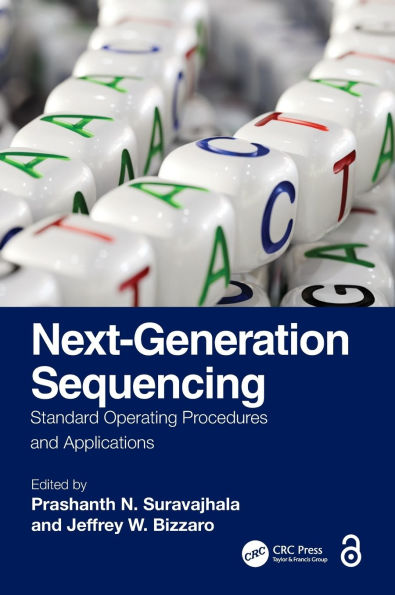
Next-Generation Sequencing: Standard Operating Procedures and Applications in Franklin, TN
Current price: $160.00
Barnes and Noble
Next-Generation Sequencing: Standard Operating Procedures and Applications in Franklin, TN
Current price: $160.00
Loading Inventory...
Size: Hardcover
This cutting-edge reference book compiles standard operating procedures, protocols, and applications of
next-generation sequencing
(NGS). It discusses genomic testing applications through NGS. It pays special focus on the protocols for cataloguing variants of uncertain significance. Over the years, NGS and advanced bioinformatics approaches have allowed the transition of genomic assays into translational practices. The book covers visualisation of NGS datasets, investigation of early development impairment, and metagenome protocols. It also discusses the challenges in NGS methods.
Key Points:
Includes case studies of application of NGS in different taxa like humans, rodents, plants, and bacteria
Compiles protocols from various reputed companies like Illumina, PacBio, and ThermoFisher
Discusses the translational applications of NGS methods
Reviews machine learning heuristics for NGS data interpretation
Discusses emerging genomic assay technologies and characterising mechanisms of disease prevalence
The book is meant for researchers and industry experts in genomics, computational biology, and bioinformatics.
Chapter 7 and 9 of this book is freely available as a downloadable Open Access PDF at http://www.taylorfrancis.com under a Creative Commons [Attribution-Non Commercial-No Derivatives (CC BY-NC-ND)] 4.0 license.
next-generation sequencing
(NGS). It discusses genomic testing applications through NGS. It pays special focus on the protocols for cataloguing variants of uncertain significance. Over the years, NGS and advanced bioinformatics approaches have allowed the transition of genomic assays into translational practices. The book covers visualisation of NGS datasets, investigation of early development impairment, and metagenome protocols. It also discusses the challenges in NGS methods.
Key Points:
Includes case studies of application of NGS in different taxa like humans, rodents, plants, and bacteria
Compiles protocols from various reputed companies like Illumina, PacBio, and ThermoFisher
Discusses the translational applications of NGS methods
Reviews machine learning heuristics for NGS data interpretation
Discusses emerging genomic assay technologies and characterising mechanisms of disease prevalence
The book is meant for researchers and industry experts in genomics, computational biology, and bioinformatics.
Chapter 7 and 9 of this book is freely available as a downloadable Open Access PDF at http://www.taylorfrancis.com under a Creative Commons [Attribution-Non Commercial-No Derivatives (CC BY-NC-ND)] 4.0 license.
This cutting-edge reference book compiles standard operating procedures, protocols, and applications of
next-generation sequencing
(NGS). It discusses genomic testing applications through NGS. It pays special focus on the protocols for cataloguing variants of uncertain significance. Over the years, NGS and advanced bioinformatics approaches have allowed the transition of genomic assays into translational practices. The book covers visualisation of NGS datasets, investigation of early development impairment, and metagenome protocols. It also discusses the challenges in NGS methods.
Key Points:
Includes case studies of application of NGS in different taxa like humans, rodents, plants, and bacteria
Compiles protocols from various reputed companies like Illumina, PacBio, and ThermoFisher
Discusses the translational applications of NGS methods
Reviews machine learning heuristics for NGS data interpretation
Discusses emerging genomic assay technologies and characterising mechanisms of disease prevalence
The book is meant for researchers and industry experts in genomics, computational biology, and bioinformatics.
Chapter 7 and 9 of this book is freely available as a downloadable Open Access PDF at http://www.taylorfrancis.com under a Creative Commons [Attribution-Non Commercial-No Derivatives (CC BY-NC-ND)] 4.0 license.
next-generation sequencing
(NGS). It discusses genomic testing applications through NGS. It pays special focus on the protocols for cataloguing variants of uncertain significance. Over the years, NGS and advanced bioinformatics approaches have allowed the transition of genomic assays into translational practices. The book covers visualisation of NGS datasets, investigation of early development impairment, and metagenome protocols. It also discusses the challenges in NGS methods.
Key Points:
Includes case studies of application of NGS in different taxa like humans, rodents, plants, and bacteria
Compiles protocols from various reputed companies like Illumina, PacBio, and ThermoFisher
Discusses the translational applications of NGS methods
Reviews machine learning heuristics for NGS data interpretation
Discusses emerging genomic assay technologies and characterising mechanisms of disease prevalence
The book is meant for researchers and industry experts in genomics, computational biology, and bioinformatics.
Chapter 7 and 9 of this book is freely available as a downloadable Open Access PDF at http://www.taylorfrancis.com under a Creative Commons [Attribution-Non Commercial-No Derivatives (CC BY-NC-ND)] 4.0 license.
You May Also Like
















More About Barnes and Noble at CoolSprings Galleria
Barnes & Noble is the world’s largest retail bookseller and a leading retailer of content, digital media and educational products. Our Nook Digital business offers a lineup of NOOK® tablets and e-Readers and an expansive collection of digital reading content through the NOOK Store®. Barnes & Noble’s mission is to operate the best omni-channel specialty retail business in America, helping both our customers and booksellers reach their aspirations, while being a credit to the communities we serve.
1800 Galleria Blvd #1310, Franklin, TN 37067, United States
Find Barnes and Noble at CoolSprings Galleria in Franklin, TN
Visit Barnes and Noble at CoolSprings Galleria in Franklin, TN
