
Home
Normal Accidents: Living with High Risk Technologies - Updated Edition
Barnes and Noble
Loading Inventory...
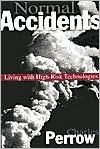
Normal Accidents: Living with High Risk Technologies - Updated Edition in Franklin, TN
Current price: $42.00
Barnes and Noble
Normal Accidents: Living with High Risk Technologies - Updated Edition in Franklin, TN
Current price: $42.00
Loading Inventory...
Size: Paperback
Normal Accidents
analyzes the social side of technological risk. Charles Perrow argues that the conventional engineering approach to ensuring safetybuilding in more warnings and safeguardsfails because systems complexity makes failures inevitable. He asserts that typical precautions, by adding to complexity, may help create new categories of accidents. (At Chernobyl, tests of a new safety system helped produce the meltdown and subsequent fire.) By recognizing two dimensions of riskcomplex versus linear interactions, and tight versus loose couplingthis book provides a powerful framework for analyzing risks and the organizations that insist we run them.
The first edition fulfilled one reviewer's prediction that it "may mark the beginning of accident research." In the new afterword to this edition Perrow reviews the extensive work on the major accidents of the last fifteen years, including Bhopal, Chernobyl, and the Challenger disaster. The new postscript probes what the author considers to be the "quintessential 'Normal Accident'" of our time: the Y2K computer problem.
analyzes the social side of technological risk. Charles Perrow argues that the conventional engineering approach to ensuring safetybuilding in more warnings and safeguardsfails because systems complexity makes failures inevitable. He asserts that typical precautions, by adding to complexity, may help create new categories of accidents. (At Chernobyl, tests of a new safety system helped produce the meltdown and subsequent fire.) By recognizing two dimensions of riskcomplex versus linear interactions, and tight versus loose couplingthis book provides a powerful framework for analyzing risks and the organizations that insist we run them.
The first edition fulfilled one reviewer's prediction that it "may mark the beginning of accident research." In the new afterword to this edition Perrow reviews the extensive work on the major accidents of the last fifteen years, including Bhopal, Chernobyl, and the Challenger disaster. The new postscript probes what the author considers to be the "quintessential 'Normal Accident'" of our time: the Y2K computer problem.
Normal Accidents
analyzes the social side of technological risk. Charles Perrow argues that the conventional engineering approach to ensuring safetybuilding in more warnings and safeguardsfails because systems complexity makes failures inevitable. He asserts that typical precautions, by adding to complexity, may help create new categories of accidents. (At Chernobyl, tests of a new safety system helped produce the meltdown and subsequent fire.) By recognizing two dimensions of riskcomplex versus linear interactions, and tight versus loose couplingthis book provides a powerful framework for analyzing risks and the organizations that insist we run them.
The first edition fulfilled one reviewer's prediction that it "may mark the beginning of accident research." In the new afterword to this edition Perrow reviews the extensive work on the major accidents of the last fifteen years, including Bhopal, Chernobyl, and the Challenger disaster. The new postscript probes what the author considers to be the "quintessential 'Normal Accident'" of our time: the Y2K computer problem.
analyzes the social side of technological risk. Charles Perrow argues that the conventional engineering approach to ensuring safetybuilding in more warnings and safeguardsfails because systems complexity makes failures inevitable. He asserts that typical precautions, by adding to complexity, may help create new categories of accidents. (At Chernobyl, tests of a new safety system helped produce the meltdown and subsequent fire.) By recognizing two dimensions of riskcomplex versus linear interactions, and tight versus loose couplingthis book provides a powerful framework for analyzing risks and the organizations that insist we run them.
The first edition fulfilled one reviewer's prediction that it "may mark the beginning of accident research." In the new afterword to this edition Perrow reviews the extensive work on the major accidents of the last fifteen years, including Bhopal, Chernobyl, and the Challenger disaster. The new postscript probes what the author considers to be the "quintessential 'Normal Accident'" of our time: the Y2K computer problem.
You May Also Like














More About Barnes and Noble at CoolSprings Galleria
Barnes & Noble is the world’s largest retail bookseller and a leading retailer of content, digital media and educational products. Our Nook Digital business offers a lineup of NOOK® tablets and e-Readers and an expansive collection of digital reading content through the NOOK Store®. Barnes & Noble’s mission is to operate the best omni-channel specialty retail business in America, helping both our customers and booksellers reach their aspirations, while being a credit to the communities we serve.
1800 Galleria Blvd #1310, Franklin, TN 37067, United States
Find Barnes and Noble at CoolSprings Galleria in Franklin, TN
Visit Barnes and Noble at CoolSprings Galleria in Franklin, TN
