
Home
Nourishing Resistance: Stories of Food, Protest, and Mutual Aid
Barnes and Noble
Loading Inventory...
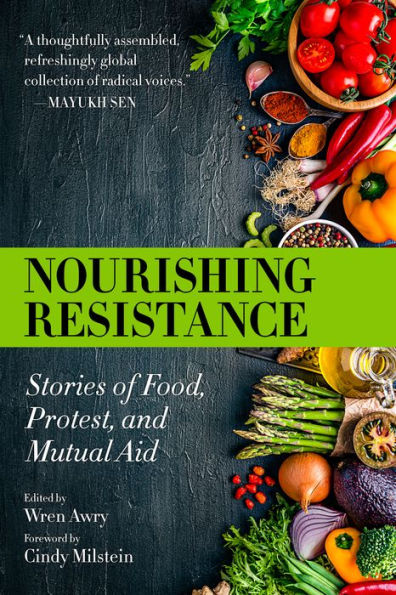
Nourishing Resistance: Stories of Food, Protest, and Mutual Aid in Franklin, TN
Current price: $22.00
Barnes and Noble
Nourishing Resistance: Stories of Food, Protest, and Mutual Aid in Franklin, TN
Current price: $22.00
Loading Inventory...
Size: OS
From the cooks who have quietly fed rebels and revolutionaries to the collective kitchens set up after hurricanes and floods, food has long played a crucial role in resistance, protest, and mutual aid.
Until very recently, foodbased work—steadfast and not particularly flashy—slipped under the radar or was centered on celebrity chefs and wellfunded nonprofits. Adding to a growing constellation of conversations that push against this narrative,
Nourishing Resistance
centers the role of everyday people in acts of culinary solidarity.
Twentythree contributors—cooks, farmers, writers, organizers, academics, and dreamers—write on queer potlucks, BIPOCcentered farms and gardens, rebel ancestors, disability justice, indigenous food sovereignty, and the fight against toxic diet culture, among many other topics. They recount bowls of biryani at a Delhi protest, fricasé de conejo on a Puerto Rican farm, payasyouwant dishes in a collectivelyrun Hong Kong restaurant, and lemon cake cooked in a New Jersey disaster relief kitchen. They chronicle the communal kitchens and food distribution programs that emerged in Buenos Aires and New York City in the wake of COVID19, which caused surging food insecurity worldwide. They look to the past, revealing how “Bella Ciao” was composed by striking women rice workers, and the future, speculating on postcapitalist worlds that include both hightech collective farms and herbs gathered beside highways.
Through essays, articles, poems, and stories,
argues that food is a central, intrinsic part of global struggles for autonomy and collective liberation.
Until very recently, foodbased work—steadfast and not particularly flashy—slipped under the radar or was centered on celebrity chefs and wellfunded nonprofits. Adding to a growing constellation of conversations that push against this narrative,
Nourishing Resistance
centers the role of everyday people in acts of culinary solidarity.
Twentythree contributors—cooks, farmers, writers, organizers, academics, and dreamers—write on queer potlucks, BIPOCcentered farms and gardens, rebel ancestors, disability justice, indigenous food sovereignty, and the fight against toxic diet culture, among many other topics. They recount bowls of biryani at a Delhi protest, fricasé de conejo on a Puerto Rican farm, payasyouwant dishes in a collectivelyrun Hong Kong restaurant, and lemon cake cooked in a New Jersey disaster relief kitchen. They chronicle the communal kitchens and food distribution programs that emerged in Buenos Aires and New York City in the wake of COVID19, which caused surging food insecurity worldwide. They look to the past, revealing how “Bella Ciao” was composed by striking women rice workers, and the future, speculating on postcapitalist worlds that include both hightech collective farms and herbs gathered beside highways.
Through essays, articles, poems, and stories,
argues that food is a central, intrinsic part of global struggles for autonomy and collective liberation.
From the cooks who have quietly fed rebels and revolutionaries to the collective kitchens set up after hurricanes and floods, food has long played a crucial role in resistance, protest, and mutual aid.
Until very recently, foodbased work—steadfast and not particularly flashy—slipped under the radar or was centered on celebrity chefs and wellfunded nonprofits. Adding to a growing constellation of conversations that push against this narrative,
Nourishing Resistance
centers the role of everyday people in acts of culinary solidarity.
Twentythree contributors—cooks, farmers, writers, organizers, academics, and dreamers—write on queer potlucks, BIPOCcentered farms and gardens, rebel ancestors, disability justice, indigenous food sovereignty, and the fight against toxic diet culture, among many other topics. They recount bowls of biryani at a Delhi protest, fricasé de conejo on a Puerto Rican farm, payasyouwant dishes in a collectivelyrun Hong Kong restaurant, and lemon cake cooked in a New Jersey disaster relief kitchen. They chronicle the communal kitchens and food distribution programs that emerged in Buenos Aires and New York City in the wake of COVID19, which caused surging food insecurity worldwide. They look to the past, revealing how “Bella Ciao” was composed by striking women rice workers, and the future, speculating on postcapitalist worlds that include both hightech collective farms and herbs gathered beside highways.
Through essays, articles, poems, and stories,
argues that food is a central, intrinsic part of global struggles for autonomy and collective liberation.
Until very recently, foodbased work—steadfast and not particularly flashy—slipped under the radar or was centered on celebrity chefs and wellfunded nonprofits. Adding to a growing constellation of conversations that push against this narrative,
Nourishing Resistance
centers the role of everyday people in acts of culinary solidarity.
Twentythree contributors—cooks, farmers, writers, organizers, academics, and dreamers—write on queer potlucks, BIPOCcentered farms and gardens, rebel ancestors, disability justice, indigenous food sovereignty, and the fight against toxic diet culture, among many other topics. They recount bowls of biryani at a Delhi protest, fricasé de conejo on a Puerto Rican farm, payasyouwant dishes in a collectivelyrun Hong Kong restaurant, and lemon cake cooked in a New Jersey disaster relief kitchen. They chronicle the communal kitchens and food distribution programs that emerged in Buenos Aires and New York City in the wake of COVID19, which caused surging food insecurity worldwide. They look to the past, revealing how “Bella Ciao” was composed by striking women rice workers, and the future, speculating on postcapitalist worlds that include both hightech collective farms and herbs gathered beside highways.
Through essays, articles, poems, and stories,
argues that food is a central, intrinsic part of global struggles for autonomy and collective liberation.
You May Also Like











More About Barnes and Noble at CoolSprings Galleria
Barnes & Noble is the world’s largest retail bookseller and a leading retailer of content, digital media and educational products. Our Nook Digital business offers a lineup of NOOK® tablets and e-Readers and an expansive collection of digital reading content through the NOOK Store®. Barnes & Noble’s mission is to operate the best omni-channel specialty retail business in America, helping both our customers and booksellers reach their aspirations, while being a credit to the communities we serve.
1800 Galleria Blvd #1310, Franklin, TN 37067, United States
Find Barnes and Noble at CoolSprings Galleria in Franklin, TN
Visit Barnes and Noble at CoolSprings Galleria in Franklin, TN
