
Home
Nuclear Country: the Origins of Rural New Right
Barnes and Noble
Loading Inventory...
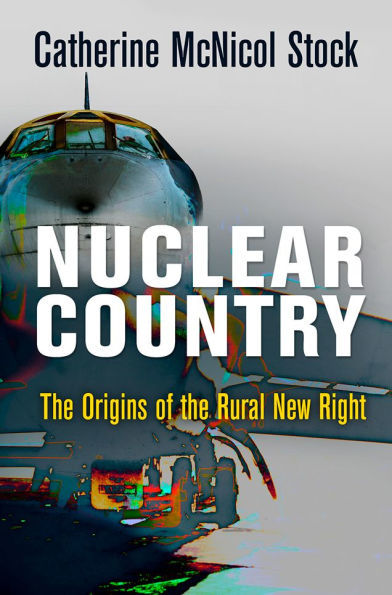
Nuclear Country: the Origins of Rural New Right in Franklin, TN
Current price: $34.95
Barnes and Noble
Nuclear Country: the Origins of Rural New Right in Franklin, TN
Current price: $34.95
Loading Inventory...
Size: Paperback
Militarization and nuclearization were the historical developments most essential to the creation of the rural New Right
Both North Dakota and South Dakota have long been among the most reliably Republican states in the nation: in the past century, voters have only chosen two Democrats, Franklin Roosevelt and Lyndon B. Johnson, and in 2016 both states preferred Donald Trump by over thirty points. Yet in the decades before World War II, the people of the Northern Plains were not universally politically conservative. Instead, many Dakotans, including Republicans, supported experiments in agrarian democracy that incorporated ideas from populism and progressivism to socialism and communism and fought against "bigness" in all its forms, including "bonanza" farms, out-of-state railroads, corporations, banks, corrupt political parties, and distant federal bureaucracies—but also, surprisingly, the culture of militarism and the expansion of American military power abroad.
In
Nuclear Country
, Catherine McNicol Stock explores the question of why, between 1968 and 1992, most voters in the Dakotas abandoned their distinctive ideological heritage and came to embrace the conservatism of the New Right. Stock focuses on how this transformation coincided with the coming of the military and national security states to the countryside via the placement of military bases and nuclear missile silos on the Northern Plains. This militarization influenced regional political culture by reinforcing or re-contextualizing long-standing local ideas and practices, particularly when the people of the plains found that they shared culturally conservative values with the military. After adopting the first two planks of the New Right—national defense and conservative social ideas—Dakotans endorsed the third plank of New Right ideology, fiscal conservativism. Ultimately, Stock contends that militarization and nuclearization were the historical developments most essential to the creation of the rural New Right throughout the United States, and that their impact can best be seen in this often-overlooked region's history.
Both North Dakota and South Dakota have long been among the most reliably Republican states in the nation: in the past century, voters have only chosen two Democrats, Franklin Roosevelt and Lyndon B. Johnson, and in 2016 both states preferred Donald Trump by over thirty points. Yet in the decades before World War II, the people of the Northern Plains were not universally politically conservative. Instead, many Dakotans, including Republicans, supported experiments in agrarian democracy that incorporated ideas from populism and progressivism to socialism and communism and fought against "bigness" in all its forms, including "bonanza" farms, out-of-state railroads, corporations, banks, corrupt political parties, and distant federal bureaucracies—but also, surprisingly, the culture of militarism and the expansion of American military power abroad.
In
Nuclear Country
, Catherine McNicol Stock explores the question of why, between 1968 and 1992, most voters in the Dakotas abandoned their distinctive ideological heritage and came to embrace the conservatism of the New Right. Stock focuses on how this transformation coincided with the coming of the military and national security states to the countryside via the placement of military bases and nuclear missile silos on the Northern Plains. This militarization influenced regional political culture by reinforcing or re-contextualizing long-standing local ideas and practices, particularly when the people of the plains found that they shared culturally conservative values with the military. After adopting the first two planks of the New Right—national defense and conservative social ideas—Dakotans endorsed the third plank of New Right ideology, fiscal conservativism. Ultimately, Stock contends that militarization and nuclearization were the historical developments most essential to the creation of the rural New Right throughout the United States, and that their impact can best be seen in this often-overlooked region's history.
Militarization and nuclearization were the historical developments most essential to the creation of the rural New Right
Both North Dakota and South Dakota have long been among the most reliably Republican states in the nation: in the past century, voters have only chosen two Democrats, Franklin Roosevelt and Lyndon B. Johnson, and in 2016 both states preferred Donald Trump by over thirty points. Yet in the decades before World War II, the people of the Northern Plains were not universally politically conservative. Instead, many Dakotans, including Republicans, supported experiments in agrarian democracy that incorporated ideas from populism and progressivism to socialism and communism and fought against "bigness" in all its forms, including "bonanza" farms, out-of-state railroads, corporations, banks, corrupt political parties, and distant federal bureaucracies—but also, surprisingly, the culture of militarism and the expansion of American military power abroad.
In
Nuclear Country
, Catherine McNicol Stock explores the question of why, between 1968 and 1992, most voters in the Dakotas abandoned their distinctive ideological heritage and came to embrace the conservatism of the New Right. Stock focuses on how this transformation coincided with the coming of the military and national security states to the countryside via the placement of military bases and nuclear missile silos on the Northern Plains. This militarization influenced regional political culture by reinforcing or re-contextualizing long-standing local ideas and practices, particularly when the people of the plains found that they shared culturally conservative values with the military. After adopting the first two planks of the New Right—national defense and conservative social ideas—Dakotans endorsed the third plank of New Right ideology, fiscal conservativism. Ultimately, Stock contends that militarization and nuclearization were the historical developments most essential to the creation of the rural New Right throughout the United States, and that their impact can best be seen in this often-overlooked region's history.
Both North Dakota and South Dakota have long been among the most reliably Republican states in the nation: in the past century, voters have only chosen two Democrats, Franklin Roosevelt and Lyndon B. Johnson, and in 2016 both states preferred Donald Trump by over thirty points. Yet in the decades before World War II, the people of the Northern Plains were not universally politically conservative. Instead, many Dakotans, including Republicans, supported experiments in agrarian democracy that incorporated ideas from populism and progressivism to socialism and communism and fought against "bigness" in all its forms, including "bonanza" farms, out-of-state railroads, corporations, banks, corrupt political parties, and distant federal bureaucracies—but also, surprisingly, the culture of militarism and the expansion of American military power abroad.
In
Nuclear Country
, Catherine McNicol Stock explores the question of why, between 1968 and 1992, most voters in the Dakotas abandoned their distinctive ideological heritage and came to embrace the conservatism of the New Right. Stock focuses on how this transformation coincided with the coming of the military and national security states to the countryside via the placement of military bases and nuclear missile silos on the Northern Plains. This militarization influenced regional political culture by reinforcing or re-contextualizing long-standing local ideas and practices, particularly when the people of the plains found that they shared culturally conservative values with the military. After adopting the first two planks of the New Right—national defense and conservative social ideas—Dakotans endorsed the third plank of New Right ideology, fiscal conservativism. Ultimately, Stock contends that militarization and nuclearization were the historical developments most essential to the creation of the rural New Right throughout the United States, and that their impact can best be seen in this often-overlooked region's history.
You May Also Like










More About Barnes and Noble at CoolSprings Galleria
Barnes & Noble is the world’s largest retail bookseller and a leading retailer of content, digital media and educational products. Our Nook Digital business offers a lineup of NOOK® tablets and e-Readers and an expansive collection of digital reading content through the NOOK Store®. Barnes & Noble’s mission is to operate the best omni-channel specialty retail business in America, helping both our customers and booksellers reach their aspirations, while being a credit to the communities we serve.
1800 Galleria Blvd #1310, Franklin, TN 37067, United States
Find Barnes and Noble at CoolSprings Galleria in Franklin, TN
Visit Barnes and Noble at CoolSprings Galleria in Franklin, TN
