
Home
Of Bondage: Debt, Property, and Personhood Early Modern England
Barnes and Noble
Loading Inventory...
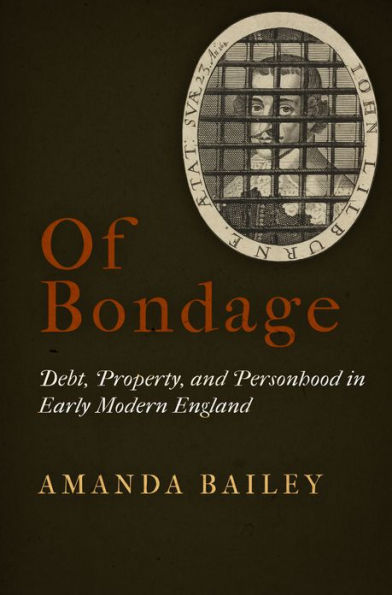
Of Bondage: Debt, Property, and Personhood Early Modern England in Franklin, TN
Current price: $64.95
Barnes and Noble
Of Bondage: Debt, Property, and Personhood Early Modern England in Franklin, TN
Current price: $64.95
Loading Inventory...
Size: Hardcover
The late sixteenth-century penal debt bond, which allowed an unsatisfied creditor to seize the body of his debtor, set in motion a series of precedents that would shape the legal, philosophical, and moral issue of property-in-person in England and America for centuries. Focusing on this historical juncture at which debt litigation was not merely an aspect of society but seemed to engulf it completely,
Of Bondage
examines a culture that understood money and the body of the borrower as comparable forms of property that impinged on one another at the moment of default.
Amanda Bailey shows that the early modern theater, itself dependent on debt bonds, was well positioned to stage the complex ethical issues raised by a system of forfeiture that registered as a bodily event. While plays about debt like
The Merchant of Venice
and
The Custom of the Country
did not use the language of political philosophy, they were artistically and financially invested in exploring freedom as a function of possession. By revealing dramatic literature's heretofore unacknowledged contribution to the developing narrative of possessed persons, Amanda Bailey not only deepens our understanding of creditor-debtor relations in the period but also sheds new light on the conceptual conditions for the institutions of indentured servitude and African slavery.
is vital not only for students and scholars of English literature but also for those interested in British and colonial legal history, the history of human rights, and the sociology of economics.
Of Bondage
examines a culture that understood money and the body of the borrower as comparable forms of property that impinged on one another at the moment of default.
Amanda Bailey shows that the early modern theater, itself dependent on debt bonds, was well positioned to stage the complex ethical issues raised by a system of forfeiture that registered as a bodily event. While plays about debt like
The Merchant of Venice
and
The Custom of the Country
did not use the language of political philosophy, they were artistically and financially invested in exploring freedom as a function of possession. By revealing dramatic literature's heretofore unacknowledged contribution to the developing narrative of possessed persons, Amanda Bailey not only deepens our understanding of creditor-debtor relations in the period but also sheds new light on the conceptual conditions for the institutions of indentured servitude and African slavery.
is vital not only for students and scholars of English literature but also for those interested in British and colonial legal history, the history of human rights, and the sociology of economics.
The late sixteenth-century penal debt bond, which allowed an unsatisfied creditor to seize the body of his debtor, set in motion a series of precedents that would shape the legal, philosophical, and moral issue of property-in-person in England and America for centuries. Focusing on this historical juncture at which debt litigation was not merely an aspect of society but seemed to engulf it completely,
Of Bondage
examines a culture that understood money and the body of the borrower as comparable forms of property that impinged on one another at the moment of default.
Amanda Bailey shows that the early modern theater, itself dependent on debt bonds, was well positioned to stage the complex ethical issues raised by a system of forfeiture that registered as a bodily event. While plays about debt like
The Merchant of Venice
and
The Custom of the Country
did not use the language of political philosophy, they were artistically and financially invested in exploring freedom as a function of possession. By revealing dramatic literature's heretofore unacknowledged contribution to the developing narrative of possessed persons, Amanda Bailey not only deepens our understanding of creditor-debtor relations in the period but also sheds new light on the conceptual conditions for the institutions of indentured servitude and African slavery.
is vital not only for students and scholars of English literature but also for those interested in British and colonial legal history, the history of human rights, and the sociology of economics.
Of Bondage
examines a culture that understood money and the body of the borrower as comparable forms of property that impinged on one another at the moment of default.
Amanda Bailey shows that the early modern theater, itself dependent on debt bonds, was well positioned to stage the complex ethical issues raised by a system of forfeiture that registered as a bodily event. While plays about debt like
The Merchant of Venice
and
The Custom of the Country
did not use the language of political philosophy, they were artistically and financially invested in exploring freedom as a function of possession. By revealing dramatic literature's heretofore unacknowledged contribution to the developing narrative of possessed persons, Amanda Bailey not only deepens our understanding of creditor-debtor relations in the period but also sheds new light on the conceptual conditions for the institutions of indentured servitude and African slavery.
is vital not only for students and scholars of English literature but also for those interested in British and colonial legal history, the history of human rights, and the sociology of economics.
You May Also Like










More About Barnes and Noble at CoolSprings Galleria
Barnes & Noble is the world’s largest retail bookseller and a leading retailer of content, digital media and educational products. Our Nook Digital business offers a lineup of NOOK® tablets and e-Readers and an expansive collection of digital reading content through the NOOK Store®. Barnes & Noble’s mission is to operate the best omni-channel specialty retail business in America, helping both our customers and booksellers reach their aspirations, while being a credit to the communities we serve.
1800 Galleria Blvd #1310, Franklin, TN 37067, United States
Find Barnes and Noble at CoolSprings Galleria in Franklin, TN
Visit Barnes and Noble at CoolSprings Galleria in Franklin, TN