
Home
On an Empty Stomach: Two Hundred Years of Hunger Relief
Barnes and Noble
Loading Inventory...
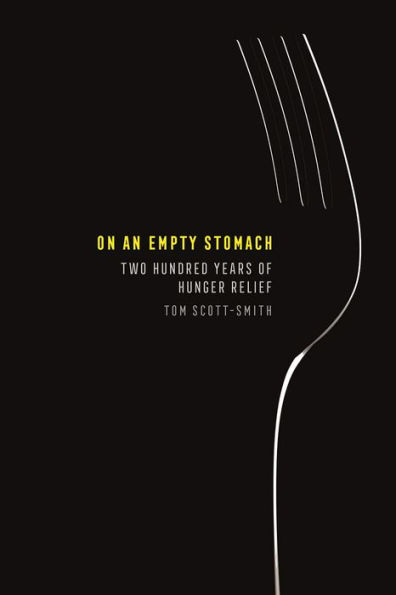
On an Empty Stomach: Two Hundred Years of Hunger Relief in Franklin, TN
Current price: $35.00
Barnes and Noble
On an Empty Stomach: Two Hundred Years of Hunger Relief in Franklin, TN
Current price: $35.00
Loading Inventory...
Size: Hardcover
On an Empty Stomach
examines the practical techniques humanitarians have used to manage and measure starvation, from Victorian "scientific" soup kitchens to spaceage, highprotein foods. Tracing the evolution of these techniques since the start of the nineteenth century, Tom ScottSmith argues that humanitarianism is not a simple story of progress and improvement, but rather is profoundly shaped by sociopolitical conditions. Aid is often presented as an apolitical and technical project, but the way humanitarians conceive and tackle human needs has always been deeply influenced by culture, politics, and society. Txhese influences extend down to the most detailed mechanisms for measuring malnutrition and providing sustenance.
As ScottSmith shows, over the past century, the humanitarian approach to hunger has redefined food as nutrients and hunger as a medical condition. Aid has become more individualized, medicalized, and rationalized, shaped by modernism in bureaucracy, commerce, and food technology.
focuses on the gains and losses that result, examining the complex compromises that arise between efficiency of distribution and quality of care. ScottSmith concludes that humanitarian groups have developed an approach to the empty stomach that is dependent on compact, commercially produced devices and is often paternalistic and culturally insensitive.
examines the practical techniques humanitarians have used to manage and measure starvation, from Victorian "scientific" soup kitchens to spaceage, highprotein foods. Tracing the evolution of these techniques since the start of the nineteenth century, Tom ScottSmith argues that humanitarianism is not a simple story of progress and improvement, but rather is profoundly shaped by sociopolitical conditions. Aid is often presented as an apolitical and technical project, but the way humanitarians conceive and tackle human needs has always been deeply influenced by culture, politics, and society. Txhese influences extend down to the most detailed mechanisms for measuring malnutrition and providing sustenance.
As ScottSmith shows, over the past century, the humanitarian approach to hunger has redefined food as nutrients and hunger as a medical condition. Aid has become more individualized, medicalized, and rationalized, shaped by modernism in bureaucracy, commerce, and food technology.
focuses on the gains and losses that result, examining the complex compromises that arise between efficiency of distribution and quality of care. ScottSmith concludes that humanitarian groups have developed an approach to the empty stomach that is dependent on compact, commercially produced devices and is often paternalistic and culturally insensitive.
On an Empty Stomach
examines the practical techniques humanitarians have used to manage and measure starvation, from Victorian "scientific" soup kitchens to spaceage, highprotein foods. Tracing the evolution of these techniques since the start of the nineteenth century, Tom ScottSmith argues that humanitarianism is not a simple story of progress and improvement, but rather is profoundly shaped by sociopolitical conditions. Aid is often presented as an apolitical and technical project, but the way humanitarians conceive and tackle human needs has always been deeply influenced by culture, politics, and society. Txhese influences extend down to the most detailed mechanisms for measuring malnutrition and providing sustenance.
As ScottSmith shows, over the past century, the humanitarian approach to hunger has redefined food as nutrients and hunger as a medical condition. Aid has become more individualized, medicalized, and rationalized, shaped by modernism in bureaucracy, commerce, and food technology.
focuses on the gains and losses that result, examining the complex compromises that arise between efficiency of distribution and quality of care. ScottSmith concludes that humanitarian groups have developed an approach to the empty stomach that is dependent on compact, commercially produced devices and is often paternalistic and culturally insensitive.
examines the practical techniques humanitarians have used to manage and measure starvation, from Victorian "scientific" soup kitchens to spaceage, highprotein foods. Tracing the evolution of these techniques since the start of the nineteenth century, Tom ScottSmith argues that humanitarianism is not a simple story of progress and improvement, but rather is profoundly shaped by sociopolitical conditions. Aid is often presented as an apolitical and technical project, but the way humanitarians conceive and tackle human needs has always been deeply influenced by culture, politics, and society. Txhese influences extend down to the most detailed mechanisms for measuring malnutrition and providing sustenance.
As ScottSmith shows, over the past century, the humanitarian approach to hunger has redefined food as nutrients and hunger as a medical condition. Aid has become more individualized, medicalized, and rationalized, shaped by modernism in bureaucracy, commerce, and food technology.
focuses on the gains and losses that result, examining the complex compromises that arise between efficiency of distribution and quality of care. ScottSmith concludes that humanitarian groups have developed an approach to the empty stomach that is dependent on compact, commercially produced devices and is often paternalistic and culturally insensitive.
You May Also Like














More About Barnes and Noble at CoolSprings Galleria
Barnes & Noble is the world’s largest retail bookseller and a leading retailer of content, digital media and educational products. Our Nook Digital business offers a lineup of NOOK® tablets and e-Readers and an expansive collection of digital reading content through the NOOK Store®. Barnes & Noble’s mission is to operate the best omni-channel specialty retail business in America, helping both our customers and booksellers reach their aspirations, while being a credit to the communities we serve.
1800 Galleria Blvd #1310, Franklin, TN 37067, United States
Find Barnes and Noble at CoolSprings Galleria in Franklin, TN
Visit Barnes and Noble at CoolSprings Galleria in Franklin, TN
