
Home
Organizational Change the U.S. Customs and Border Protection Agency
Barnes and Noble
Loading Inventory...
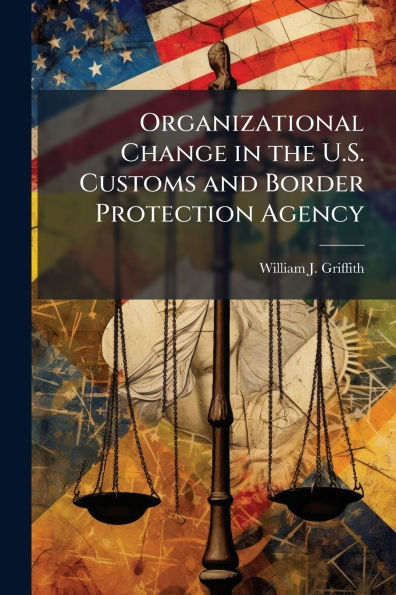
Organizational Change the U.S. Customs and Border Protection Agency in Franklin, TN
Current price: $29.95
Barnes and Noble
Organizational Change the U.S. Customs and Border Protection Agency in Franklin, TN
Current price: $29.95
Loading Inventory...
Size: Hardcover
The creation of the Customs and Border Protection (CBP) in 2003 was a monumental, yet incomplete organizational step towards integrating border protection operations. Customs and Border Protection is constantly improving integration and unity of effort among its operational components: the Office of Field Operations (OFO), Office of Border Patrol (OBP), and the Office of Air and Marine (OAM). In October 2010, Homeland Security Secretary Napolitano approved CBP Commissioner Bersin's request to initiate a Joint Field Command (JFC) configuration modeled on Department of Defense regional unified commands. A JFC groups all elements of OFO, OBP, and OAM in a defined geographical area under one regional commander and headquarters. Although CBP has not conducted a formal assessment of the first JFC in Arizona, confusion surrounds the appropriateness of joint configurations in CBP and any decision to continue implementation across the organization. The question is, is the CBP effort likely to succeed? Joint Field Command - Arizona is only a year old so there are no meaningful empirical measures of effectiveness available. Therefore, this study drew from organization theory to determine why CBP needed to change, to assess the change itself (the JFC), and to examine CBP's implementation of the change. Henry Mintzberg's typology regarding basic organizational configurations provides a means to classify CBP's structure and establish the requirement for change. Insight from organizational design theorists, homeland security experts, and military strategist Everett Dolman provide a valid framework for assessing how well the JFC meets CBP's requirements. Models of organizational change, like the Burke-Litwin model, facilitate an assessment of CBP's transformation because they identify factors influencing the durability and acceptance of reforms. As a functionally diversified organization, CBP represents only a superficial integration of border security agencies because the configu
This work has been selected by scholars as being culturally important, and is part of the knowledge base of civilization as we know it. This work was reproduced from the original artifact, and remains as true to the original work as possible. Therefore, you will see the original copyright references, library stamps (as most of these works have been housed in our most important libraries around the world), and other notations in the work.
This work is in the public domain in the United States of America, and possibly other nations. Within the United States, you may freely copy and distribute this work, as no entity (individual or corporate) has a copyright on the body of the work.
As a reproduction of a historical artifact, this work may contain missing or blurred pages, poor pictures, errant marks, etc. Scholars believe, and we concur, that this work is important enough to be preserved, reproduced, and made generally available to the public. We appreciate your support of the preservation process, and thank you for being an important part of keeping this knowledge alive and relevant.
This work has been selected by scholars as being culturally important, and is part of the knowledge base of civilization as we know it. This work was reproduced from the original artifact, and remains as true to the original work as possible. Therefore, you will see the original copyright references, library stamps (as most of these works have been housed in our most important libraries around the world), and other notations in the work.
This work is in the public domain in the United States of America, and possibly other nations. Within the United States, you may freely copy and distribute this work, as no entity (individual or corporate) has a copyright on the body of the work.
As a reproduction of a historical artifact, this work may contain missing or blurred pages, poor pictures, errant marks, etc. Scholars believe, and we concur, that this work is important enough to be preserved, reproduced, and made generally available to the public. We appreciate your support of the preservation process, and thank you for being an important part of keeping this knowledge alive and relevant.
The creation of the Customs and Border Protection (CBP) in 2003 was a monumental, yet incomplete organizational step towards integrating border protection operations. Customs and Border Protection is constantly improving integration and unity of effort among its operational components: the Office of Field Operations (OFO), Office of Border Patrol (OBP), and the Office of Air and Marine (OAM). In October 2010, Homeland Security Secretary Napolitano approved CBP Commissioner Bersin's request to initiate a Joint Field Command (JFC) configuration modeled on Department of Defense regional unified commands. A JFC groups all elements of OFO, OBP, and OAM in a defined geographical area under one regional commander and headquarters. Although CBP has not conducted a formal assessment of the first JFC in Arizona, confusion surrounds the appropriateness of joint configurations in CBP and any decision to continue implementation across the organization. The question is, is the CBP effort likely to succeed? Joint Field Command - Arizona is only a year old so there are no meaningful empirical measures of effectiveness available. Therefore, this study drew from organization theory to determine why CBP needed to change, to assess the change itself (the JFC), and to examine CBP's implementation of the change. Henry Mintzberg's typology regarding basic organizational configurations provides a means to classify CBP's structure and establish the requirement for change. Insight from organizational design theorists, homeland security experts, and military strategist Everett Dolman provide a valid framework for assessing how well the JFC meets CBP's requirements. Models of organizational change, like the Burke-Litwin model, facilitate an assessment of CBP's transformation because they identify factors influencing the durability and acceptance of reforms. As a functionally diversified organization, CBP represents only a superficial integration of border security agencies because the configu
This work has been selected by scholars as being culturally important, and is part of the knowledge base of civilization as we know it. This work was reproduced from the original artifact, and remains as true to the original work as possible. Therefore, you will see the original copyright references, library stamps (as most of these works have been housed in our most important libraries around the world), and other notations in the work.
This work is in the public domain in the United States of America, and possibly other nations. Within the United States, you may freely copy and distribute this work, as no entity (individual or corporate) has a copyright on the body of the work.
As a reproduction of a historical artifact, this work may contain missing or blurred pages, poor pictures, errant marks, etc. Scholars believe, and we concur, that this work is important enough to be preserved, reproduced, and made generally available to the public. We appreciate your support of the preservation process, and thank you for being an important part of keeping this knowledge alive and relevant.
This work has been selected by scholars as being culturally important, and is part of the knowledge base of civilization as we know it. This work was reproduced from the original artifact, and remains as true to the original work as possible. Therefore, you will see the original copyright references, library stamps (as most of these works have been housed in our most important libraries around the world), and other notations in the work.
This work is in the public domain in the United States of America, and possibly other nations. Within the United States, you may freely copy and distribute this work, as no entity (individual or corporate) has a copyright on the body of the work.
As a reproduction of a historical artifact, this work may contain missing or blurred pages, poor pictures, errant marks, etc. Scholars believe, and we concur, that this work is important enough to be preserved, reproduced, and made generally available to the public. We appreciate your support of the preservation process, and thank you for being an important part of keeping this knowledge alive and relevant.
You May Also Like









More About Barnes and Noble at CoolSprings Galleria
Barnes & Noble is the world’s largest retail bookseller and a leading retailer of content, digital media and educational products. Our Nook Digital business offers a lineup of NOOK® tablets and e-Readers and an expansive collection of digital reading content through the NOOK Store®. Barnes & Noble’s mission is to operate the best omni-channel specialty retail business in America, helping both our customers and booksellers reach their aspirations, while being a credit to the communities we serve.
1800 Galleria Blvd #1310, Franklin, TN 37067, United States
Find Barnes and Noble at CoolSprings Galleria in Franklin, TN
Visit Barnes and Noble at CoolSprings Galleria in Franklin, TN
