Home
Peddling Panaceas: Popular Economists the New Deal Era
Barnes and Noble
Loading Inventory...
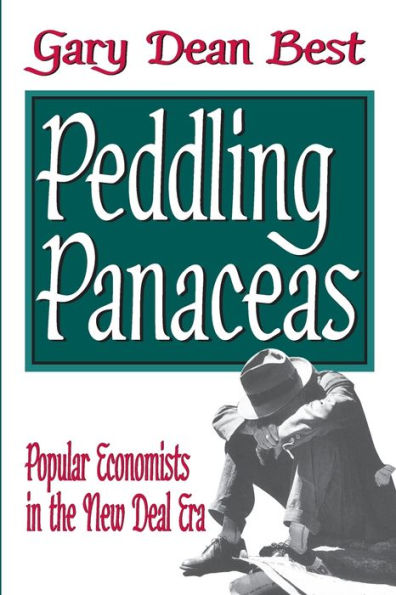
Peddling Panaceas: Popular Economists the New Deal Era in Franklin, TN
Current price: $140.00
Barnes and Noble
Peddling Panaceas: Popular Economists the New Deal Era in Franklin, TN
Current price: $140.00
Loading Inventory...
Size: Hardcover
As the Great Depression dragged on without a recovery, Americans were avid for anything that would help them to understand its causes and possible solutions. During this period, orthodox economists were largely discredited, both in the White House and among the public. Three of the most popular and influential figures of the period--Edward A. Rumely, Stuart Chase, and David Cushman Coyle--were not trained in economics. In Peddling Panaceas, Gary Dean Best analyzes their remedies for the Depression, their proposals for permanent economic reform, and their influence.Each of these men represented a principal economic faction within the New Deal. The inflationists within the New Deal found support from the Committee for the Nation, which was largely the creation of Edward Rumely. Rumely's committee was influential in the early New Deal, but largely passed into eclipse by early 1934. The planners within the New Deal were represented in popular magazines and books by Stuart Chase, who was an engineer and accountant before he began to expound on economics. An early advocate of collectivism, Chase's influence waned after the Supreme Court invalidated two early successes, the NRA and the AAA. David Cushman Coyle, a structural engineer who, like many engineers during the Depression, fancied himself an economist, may be taken as the voice of the followers of Supreme Court Justice Louis Brandeis within the New Deal. Always influential, they became more prominent after the invalidation of the NRA in 1935. These three popular economists not only influenced policy but also educated the American public about the Depression. Scarcely a month went by without an essay by Chase or Coyle in the popular magazines of the decade, and both were also prolific authors of books and pamphlets. Their views and influence help us understand the economic and political climate of the 1930s. Peddling Panaceas will be of interest to economists, cultural historians, political scientists, and sociologists.
As the Great Depression dragged on without a recovery, Americans were avid for anything that would help them to understand its causes and possible solutions. During this period, orthodox economists were largely discredited, both in the White House and among the public. Three of the most popular and influential figures of the period--Edward A. Rumely, Stuart Chase, and David Cushman Coyle--were not trained in economics. In Peddling Panaceas, Gary Dean Best analyzes their remedies for the Depression, their proposals for permanent economic reform, and their influence.Each of these men represented a principal economic faction within the New Deal. The inflationists within the New Deal found support from the Committee for the Nation, which was largely the creation of Edward Rumely. Rumely's committee was influential in the early New Deal, but largely passed into eclipse by early 1934. The planners within the New Deal were represented in popular magazines and books by Stuart Chase, who was an engineer and accountant before he began to expound on economics. An early advocate of collectivism, Chase's influence waned after the Supreme Court invalidated two early successes, the NRA and the AAA. David Cushman Coyle, a structural engineer who, like many engineers during the Depression, fancied himself an economist, may be taken as the voice of the followers of Supreme Court Justice Louis Brandeis within the New Deal. Always influential, they became more prominent after the invalidation of the NRA in 1935. These three popular economists not only influenced policy but also educated the American public about the Depression. Scarcely a month went by without an essay by Chase or Coyle in the popular magazines of the decade, and both were also prolific authors of books and pamphlets. Their views and influence help us understand the economic and political climate of the 1930s. Peddling Panaceas will be of interest to economists, cultural historians, political scientists, and sociologists.
You May Also Like














More About Barnes and Noble at CoolSprings Galleria
Barnes & Noble is the world’s largest retail bookseller and a leading retailer of content, digital media and educational products. Our Nook Digital business offers a lineup of NOOK® tablets and e-Readers and an expansive collection of digital reading content through the NOOK Store®. Barnes & Noble’s mission is to operate the best omni-channel specialty retail business in America, helping both our customers and booksellers reach their aspirations, while being a credit to the communities we serve.
1800 Galleria Blvd #1310, Franklin, TN 37067, United States
Find Barnes and Noble at CoolSprings Galleria in Franklin, TN
Visit Barnes and Noble at CoolSprings Galleria in Franklin, TN