
Home
Perfect Madness: Motherhood the Age of Anxiety
Barnes and Noble
Loading Inventory...
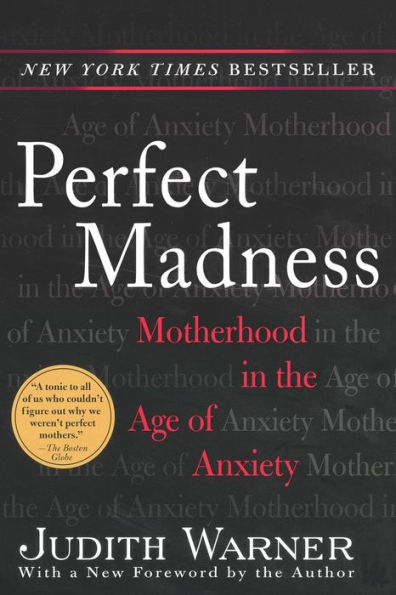
Perfect Madness: Motherhood the Age of Anxiety in Franklin, TN
Current price: $24.00
Barnes and Noble
Perfect Madness: Motherhood the Age of Anxiety in Franklin, TN
Current price: $24.00
Loading Inventory...
Size: Paperback
A
lively
and provocative look at the modern culture of motherhood and at the social, economic, and political forces that shaped current ideas about parenting
What is wrong with this picture? That's the question Judith Warner asks in this national bestseller after taking a good, hard look at the world of modern parentingat anxious women at work and at home and in bed with unhappy husbands.
When Warner had her first child, she was living in Paris, where parents routinely left their children home, with state-subsidized nannies, to join friends in the evening for dinner or to go on dates with their husbands. When she returned to the States, she was stunned by the cultural differences she found toward how people think about effective parentingin particular, assumptions about motherhood. None of the mothers she met seemed happy; instead, they worried about the possibility of not having the perfect child, panicking as each developmental benchmark approached.
Combining close readings of mainstream magazines, TV shows, and pop culture with a thorough command of dominant ideas in recent psychological, social, and economic theory,
Perfect Madness
addresses our cultural assumptions, and examines the forces that have shaped them.
Working in the tradition of classics like Betty Friedan's
The Feminine Mystique
and Christopher Lasch's
The Culture of Narcissism
, and with an awareness of a readership that turned recent hits like
The Bitch in the House
and Allison Pearson's
I Don't Know How She Does It
into bestsellers, Warner offers a context in which to understand parenting culture and the way we live, as well as ways of imagining alternativesactual concrete changesthat might better our lives.
lively
and provocative look at the modern culture of motherhood and at the social, economic, and political forces that shaped current ideas about parenting
What is wrong with this picture? That's the question Judith Warner asks in this national bestseller after taking a good, hard look at the world of modern parentingat anxious women at work and at home and in bed with unhappy husbands.
When Warner had her first child, she was living in Paris, where parents routinely left their children home, with state-subsidized nannies, to join friends in the evening for dinner or to go on dates with their husbands. When she returned to the States, she was stunned by the cultural differences she found toward how people think about effective parentingin particular, assumptions about motherhood. None of the mothers she met seemed happy; instead, they worried about the possibility of not having the perfect child, panicking as each developmental benchmark approached.
Combining close readings of mainstream magazines, TV shows, and pop culture with a thorough command of dominant ideas in recent psychological, social, and economic theory,
Perfect Madness
addresses our cultural assumptions, and examines the forces that have shaped them.
Working in the tradition of classics like Betty Friedan's
The Feminine Mystique
and Christopher Lasch's
The Culture of Narcissism
, and with an awareness of a readership that turned recent hits like
The Bitch in the House
and Allison Pearson's
I Don't Know How She Does It
into bestsellers, Warner offers a context in which to understand parenting culture and the way we live, as well as ways of imagining alternativesactual concrete changesthat might better our lives.
A
lively
and provocative look at the modern culture of motherhood and at the social, economic, and political forces that shaped current ideas about parenting
What is wrong with this picture? That's the question Judith Warner asks in this national bestseller after taking a good, hard look at the world of modern parentingat anxious women at work and at home and in bed with unhappy husbands.
When Warner had her first child, she was living in Paris, where parents routinely left their children home, with state-subsidized nannies, to join friends in the evening for dinner or to go on dates with their husbands. When she returned to the States, she was stunned by the cultural differences she found toward how people think about effective parentingin particular, assumptions about motherhood. None of the mothers she met seemed happy; instead, they worried about the possibility of not having the perfect child, panicking as each developmental benchmark approached.
Combining close readings of mainstream magazines, TV shows, and pop culture with a thorough command of dominant ideas in recent psychological, social, and economic theory,
Perfect Madness
addresses our cultural assumptions, and examines the forces that have shaped them.
Working in the tradition of classics like Betty Friedan's
The Feminine Mystique
and Christopher Lasch's
The Culture of Narcissism
, and with an awareness of a readership that turned recent hits like
The Bitch in the House
and Allison Pearson's
I Don't Know How She Does It
into bestsellers, Warner offers a context in which to understand parenting culture and the way we live, as well as ways of imagining alternativesactual concrete changesthat might better our lives.
lively
and provocative look at the modern culture of motherhood and at the social, economic, and political forces that shaped current ideas about parenting
What is wrong with this picture? That's the question Judith Warner asks in this national bestseller after taking a good, hard look at the world of modern parentingat anxious women at work and at home and in bed with unhappy husbands.
When Warner had her first child, she was living in Paris, where parents routinely left their children home, with state-subsidized nannies, to join friends in the evening for dinner or to go on dates with their husbands. When she returned to the States, she was stunned by the cultural differences she found toward how people think about effective parentingin particular, assumptions about motherhood. None of the mothers she met seemed happy; instead, they worried about the possibility of not having the perfect child, panicking as each developmental benchmark approached.
Combining close readings of mainstream magazines, TV shows, and pop culture with a thorough command of dominant ideas in recent psychological, social, and economic theory,
Perfect Madness
addresses our cultural assumptions, and examines the forces that have shaped them.
Working in the tradition of classics like Betty Friedan's
The Feminine Mystique
and Christopher Lasch's
The Culture of Narcissism
, and with an awareness of a readership that turned recent hits like
The Bitch in the House
and Allison Pearson's
I Don't Know How She Does It
into bestsellers, Warner offers a context in which to understand parenting culture and the way we live, as well as ways of imagining alternativesactual concrete changesthat might better our lives.
You May Also Like









![Perfect Lie [Barnes & Noble Exclusive]](https://prodimage.images-bn.com/pimages/0602498868737_p0_v1_s600x595.jpg)







More About Barnes and Noble at CoolSprings Galleria
Barnes & Noble is the world’s largest retail bookseller and a leading retailer of content, digital media and educational products. Our Nook Digital business offers a lineup of NOOK® tablets and e-Readers and an expansive collection of digital reading content through the NOOK Store®. Barnes & Noble’s mission is to operate the best omni-channel specialty retail business in America, helping both our customers and booksellers reach their aspirations, while being a credit to the communities we serve.
1800 Galleria Blvd #1310, Franklin, TN 37067, United States
Find Barnes and Noble at CoolSprings Galleria in Franklin, TN
Visit Barnes and Noble at CoolSprings Galleria in Franklin, TN