
Home
Philarmonica: Purcell, Matteis, Mrs Philarmonica
Barnes and Noble
Loading Inventory...
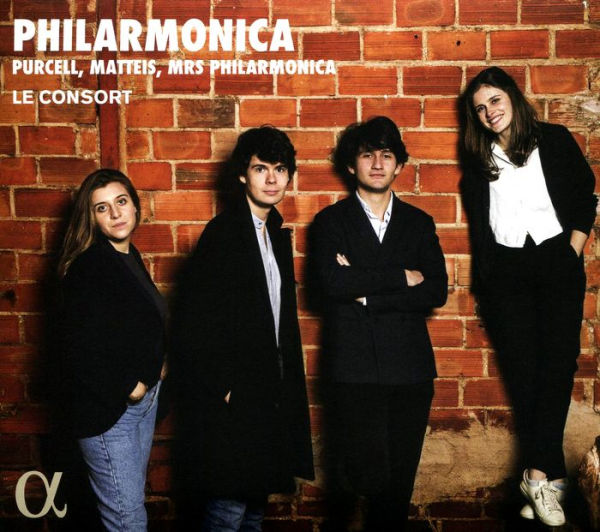
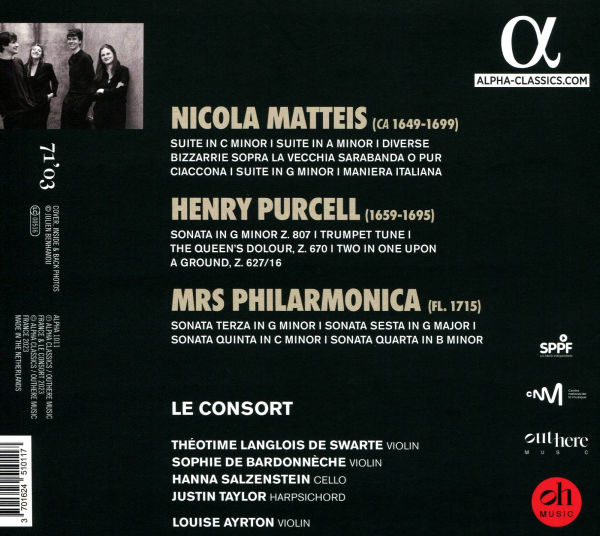
Philarmonica: Purcell, Matteis, Mrs Philarmonica in Franklin, TN
Current price: $22.99
Barnes and Noble
Philarmonica: Purcell, Matteis, Mrs Philarmonica in Franklin, TN
Current price: $22.99
Loading Inventory...
Size: OS
This release from the historical performance group
Le Consort
(two violins, cello, and continuo) has several attractive features from the repertory point of view.
offers three generations of English instrumental music, dating from the Italian import
Nicola Matteis
through
Henry Purcell
to the composer called
Mrs Philarmonica
, active around 1725. She is described in the booklet accurately as a mystery; no one has yet established her identity (or even if she is indeed female, although one assumes she is). She is represented by four trio sonatas (called simply "sonata") that are in a Vivaldian style and are thoroughly enjoyable; recordings of her work are not common, and this zippy one is welcome. Sample the second movement of the
Sonata sesta in G major
, marked Con spirito ma non presto. The performance here might indeed be presto, but it is very exciting. Equally interesting are the works by
, who introduced the Italian style to England and diverted English music from a slavish imitation of French models. His works here are offbeat and often fiery. Sample the "Scaramuccia" finale from the
Suite in A minor
or the finale of the
Suite in G minor
with the title Fancy called hold the Tongue. The
Purcell
pieces are mostly better-known melodies arranged for the small group here, certainly something in keeping with practices of the time, and they provide a few "hits" interspersed among the unfamiliar material. The only real complaint here is the sound from the Christuskirche in Paris; it is noisy and really overdone in music that can speak for itself, and that never sounded like this in the chambers for which it was composed. However, anyone who has ever wondered about
should pick up a copy of this album. ~ James Manheim
Le Consort
(two violins, cello, and continuo) has several attractive features from the repertory point of view.
offers three generations of English instrumental music, dating from the Italian import
Nicola Matteis
through
Henry Purcell
to the composer called
Mrs Philarmonica
, active around 1725. She is described in the booklet accurately as a mystery; no one has yet established her identity (or even if she is indeed female, although one assumes she is). She is represented by four trio sonatas (called simply "sonata") that are in a Vivaldian style and are thoroughly enjoyable; recordings of her work are not common, and this zippy one is welcome. Sample the second movement of the
Sonata sesta in G major
, marked Con spirito ma non presto. The performance here might indeed be presto, but it is very exciting. Equally interesting are the works by
, who introduced the Italian style to England and diverted English music from a slavish imitation of French models. His works here are offbeat and often fiery. Sample the "Scaramuccia" finale from the
Suite in A minor
or the finale of the
Suite in G minor
with the title Fancy called hold the Tongue. The
Purcell
pieces are mostly better-known melodies arranged for the small group here, certainly something in keeping with practices of the time, and they provide a few "hits" interspersed among the unfamiliar material. The only real complaint here is the sound from the Christuskirche in Paris; it is noisy and really overdone in music that can speak for itself, and that never sounded like this in the chambers for which it was composed. However, anyone who has ever wondered about
should pick up a copy of this album. ~ James Manheim
This release from the historical performance group
Le Consort
(two violins, cello, and continuo) has several attractive features from the repertory point of view.
offers three generations of English instrumental music, dating from the Italian import
Nicola Matteis
through
Henry Purcell
to the composer called
Mrs Philarmonica
, active around 1725. She is described in the booklet accurately as a mystery; no one has yet established her identity (or even if she is indeed female, although one assumes she is). She is represented by four trio sonatas (called simply "sonata") that are in a Vivaldian style and are thoroughly enjoyable; recordings of her work are not common, and this zippy one is welcome. Sample the second movement of the
Sonata sesta in G major
, marked Con spirito ma non presto. The performance here might indeed be presto, but it is very exciting. Equally interesting are the works by
, who introduced the Italian style to England and diverted English music from a slavish imitation of French models. His works here are offbeat and often fiery. Sample the "Scaramuccia" finale from the
Suite in A minor
or the finale of the
Suite in G minor
with the title Fancy called hold the Tongue. The
Purcell
pieces are mostly better-known melodies arranged for the small group here, certainly something in keeping with practices of the time, and they provide a few "hits" interspersed among the unfamiliar material. The only real complaint here is the sound from the Christuskirche in Paris; it is noisy and really overdone in music that can speak for itself, and that never sounded like this in the chambers for which it was composed. However, anyone who has ever wondered about
should pick up a copy of this album. ~ James Manheim
Le Consort
(two violins, cello, and continuo) has several attractive features from the repertory point of view.
offers three generations of English instrumental music, dating from the Italian import
Nicola Matteis
through
Henry Purcell
to the composer called
Mrs Philarmonica
, active around 1725. She is described in the booklet accurately as a mystery; no one has yet established her identity (or even if she is indeed female, although one assumes she is). She is represented by four trio sonatas (called simply "sonata") that are in a Vivaldian style and are thoroughly enjoyable; recordings of her work are not common, and this zippy one is welcome. Sample the second movement of the
Sonata sesta in G major
, marked Con spirito ma non presto. The performance here might indeed be presto, but it is very exciting. Equally interesting are the works by
, who introduced the Italian style to England and diverted English music from a slavish imitation of French models. His works here are offbeat and often fiery. Sample the "Scaramuccia" finale from the
Suite in A minor
or the finale of the
Suite in G minor
with the title Fancy called hold the Tongue. The
Purcell
pieces are mostly better-known melodies arranged for the small group here, certainly something in keeping with practices of the time, and they provide a few "hits" interspersed among the unfamiliar material. The only real complaint here is the sound from the Christuskirche in Paris; it is noisy and really overdone in music that can speak for itself, and that never sounded like this in the chambers for which it was composed. However, anyone who has ever wondered about
should pick up a copy of this album. ~ James Manheim
You May Also Like










More About Barnes and Noble at CoolSprings Galleria
Barnes & Noble is the world’s largest retail bookseller and a leading retailer of content, digital media and educational products. Our Nook Digital business offers a lineup of NOOK® tablets and e-Readers and an expansive collection of digital reading content through the NOOK Store®. Barnes & Noble’s mission is to operate the best omni-channel specialty retail business in America, helping both our customers and booksellers reach their aspirations, while being a credit to the communities we serve.
1800 Galleria Blvd #1310, Franklin, TN 37067, United States
Find Barnes and Noble at CoolSprings Galleria in Franklin, TN
Visit Barnes and Noble at CoolSprings Galleria in Franklin, TN