
Home
Philosophy of Teaching
Barnes and Noble
Loading Inventory...
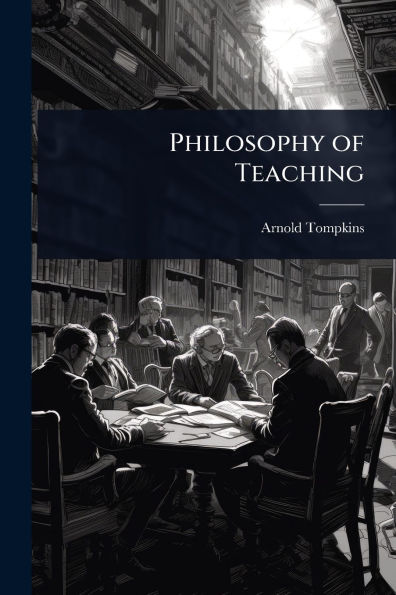
Philosophy of Teaching in Franklin, TN
Current price: $33.95
Barnes and Noble
Philosophy of Teaching in Franklin, TN
Current price: $33.95
Loading Inventory...
Size: Hardcover
From the Introduction.THE term "philosophy of teaching" places the accent on the process of teaching, while the term "philosophy of education" emphasizes the system of principles as such. The philosophy of education will not be attempted; the theme being restricted to the application of philosophic principles to the teaching process. Not that the application of principles is a more worthy object of attention than the system of principles themselves, but because I feel moved to show how helpful in practice, daily and hourly, are the universal principles which philosophy announces.I have no sympathy with the sneer at mere theorists - those who seek principles for their own sake. What should we do without the light they throw upon our pathway! The practical teacher is not always conscious of, and thankful for, the great service rendered by the speculative philosopher. Universal truth seems so remote from the immediate, concrete details of school work that we do not suspect its presence and controlling power. Hegel well protests against the thought that philosophy deals with another world; asserting its subject to be the concrete and ever present facts of life. The practical teacher must sooner or later learn that inspiration and guidance through the daily routine of duty must be sought in universal truth; that specific rules and recipes, which seem to be so helpful because of their easy and immediate application, are really impractical and confusing because they have no germinant power and breadth of application; that his bearings must be taken from the fixed stars, and not from the shifting scenes and lights of the lower atmosphere.The application of universal principles to teaching presupposes a philosophy of education; and the existence of such a philosophy is not always admitted. Even that there is a science of education has been denied; and for stronger reasons may its philosophy be questioned, it being a higher generalization of principles. A distinguished writer, in the "Educational Review," discusses at length the question, "Is there a science of education?" and concludes in these words: "To sum all up in a word, teaching is an art. Therefore there is indeed no science of education."....
From the Introduction.THE term "philosophy of teaching" places the accent on the process of teaching, while the term "philosophy of education" emphasizes the system of principles as such. The philosophy of education will not be attempted; the theme being restricted to the application of philosophic principles to the teaching process. Not that the application of principles is a more worthy object of attention than the system of principles themselves, but because I feel moved to show how helpful in practice, daily and hourly, are the universal principles which philosophy announces.I have no sympathy with the sneer at mere theorists - those who seek principles for their own sake. What should we do without the light they throw upon our pathway! The practical teacher is not always conscious of, and thankful for, the great service rendered by the speculative philosopher. Universal truth seems so remote from the immediate, concrete details of school work that we do not suspect its presence and controlling power. Hegel well protests against the thought that philosophy deals with another world; asserting its subject to be the concrete and ever present facts of life. The practical teacher must sooner or later learn that inspiration and guidance through the daily routine of duty must be sought in universal truth; that specific rules and recipes, which seem to be so helpful because of their easy and immediate application, are really impractical and confusing because they have no germinant power and breadth of application; that his bearings must be taken from the fixed stars, and not from the shifting scenes and lights of the lower atmosphere.The application of universal principles to teaching presupposes a philosophy of education; and the existence of such a philosophy is not always admitted. Even that there is a science of education has been denied; and for stronger reasons may its philosophy be questioned, it being a higher generalization of principles. A distinguished writer, in the "Educational Review," discusses at length the question, "Is there a science of education?" and concludes in these words: "To sum all up in a word, teaching is an art. Therefore there is indeed no science of education."....
You May Also Like













More About Barnes and Noble at CoolSprings Galleria
Barnes & Noble is the world’s largest retail bookseller and a leading retailer of content, digital media and educational products. Our Nook Digital business offers a lineup of NOOK® tablets and e-Readers and an expansive collection of digital reading content through the NOOK Store®. Barnes & Noble’s mission is to operate the best omni-channel specialty retail business in America, helping both our customers and booksellers reach their aspirations, while being a credit to the communities we serve.
1800 Galleria Blvd #1310, Franklin, TN 37067, United States
Find Barnes and Noble at CoolSprings Galleria in Franklin, TN
Visit Barnes and Noble at CoolSprings Galleria in Franklin, TN