
Home
Pianola Ragtime: Early Piano Jazz and Ragtime on Pianola Rolls, Vol. 2
Barnes and Noble
Loading Inventory...
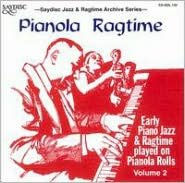
Pianola Ragtime: Early Piano Jazz and Ragtime on Pianola Rolls, Vol. 2 in Franklin, TN
Current price: $22.99
Barnes and Noble
Pianola Ragtime: Early Piano Jazz and Ragtime on Pianola Rolls, Vol. 2 in Franklin, TN
Current price: $22.99
Loading Inventory...
Size: OS
Although in their day they represented a major modern breakthrough in mechanical musical instrumentation, player piano rolls are now largely misunderstood and often maligned through unreasonable comparison with sound recordings. This is entirely unfair, for with piano rolls, the listening experience is determined by how the rolls were originally processed and how they are played back. The technicians who crafted the rolls after the ink or chalk marks were made by a living pianist had the power to enhance or mangle the artist's work, and today any roll spooling at the wrong velocity can sound positively idiotic. The best reproducing pianos were designed by the German mechanical musical instrument firm of M. Welte & Sons, who are credited with making the transition from wooden cylinders to paper rolls, apparently in the late 1870s or thereabouts. The famous Welte-Mignon piano rolls recorded exact performances with unusual precision, encoding information that included pacing, dynamics, and pedal action. Most piano roll recordings, however, including the 27 examples spread across two volumes by the
Saydisc
label in 2006, simply present the notes as aligned on the paper with little or no textural controls beyond the rate at which the rolls are spun, and thankfully the technicians chose reasonable tempi throughout. The wording of the title
Pianola Ragtime: Early Piano Jazz and Ragtime on Pianola Rolls
is most unfortunate, as it invites comparison with actual audio recordings of improvising jazz pianists. Technically speaking, these are not living, breathing jazz performances at all, but rather piano roll renditions of chestnuts from the ragtime and early jazz repertoire, presented in a manner that perfectly reproduces how people across the country heard these melodies in their own parlors, at parties, inside saloons, and deep within bordellos. "Breathing" is an interesting term when used in this discussion, for most player pianos operate through the force of suction. In any case,
has done the world a favor by making these old fashioned entertainments available on the digital format. The second of two volumes is chock-full of fine vintage melodies.
Henry Lodge'
s
"Temptation Rag,"
Fred Meinkin'
"Wabash Blues,"
Cy Seymour'
"Panama Rag,"
Paul Pratt'
"Walhalla (Two Step Craze),"
and the
"Buzzer Rag"
by
Pratt'
s friend and collaborator
May Aufderheide
were staunch entries in the syncopated dance band and early jazz repertoire, along with selections by
James Scott
,
Charles Hunter
, and
Arthur Pryor
. Written by
Cliff Friend
"Bow-Wow Blues (My Mama Treats Me Like a Dog)"
was recorded in 1921 by the
Original Dixieland Jazz Band
with barking effects generated by comedian
Al Bernard
. The pianola realization on this collection is rather straightforward and lasts longer than any of the other tracks -- nearly three-and-a-half minutes, which is near the maximum duration of the average 10 " 78 rpm phonograph record. Given the short duration of this compact disc (a mere 37 minutes), it's unfortunate that the producers didn't release all of this material on one CD rather than splitting the menu in half just to cop a few extra dollars from sales of two albums rather than one. ~ arwulf arwulf
Saydisc
label in 2006, simply present the notes as aligned on the paper with little or no textural controls beyond the rate at which the rolls are spun, and thankfully the technicians chose reasonable tempi throughout. The wording of the title
Pianola Ragtime: Early Piano Jazz and Ragtime on Pianola Rolls
is most unfortunate, as it invites comparison with actual audio recordings of improvising jazz pianists. Technically speaking, these are not living, breathing jazz performances at all, but rather piano roll renditions of chestnuts from the ragtime and early jazz repertoire, presented in a manner that perfectly reproduces how people across the country heard these melodies in their own parlors, at parties, inside saloons, and deep within bordellos. "Breathing" is an interesting term when used in this discussion, for most player pianos operate through the force of suction. In any case,
has done the world a favor by making these old fashioned entertainments available on the digital format. The second of two volumes is chock-full of fine vintage melodies.
Henry Lodge'
s
"Temptation Rag,"
Fred Meinkin'
"Wabash Blues,"
Cy Seymour'
"Panama Rag,"
Paul Pratt'
"Walhalla (Two Step Craze),"
and the
"Buzzer Rag"
by
Pratt'
s friend and collaborator
May Aufderheide
were staunch entries in the syncopated dance band and early jazz repertoire, along with selections by
James Scott
,
Charles Hunter
, and
Arthur Pryor
. Written by
Cliff Friend
"Bow-Wow Blues (My Mama Treats Me Like a Dog)"
was recorded in 1921 by the
Original Dixieland Jazz Band
with barking effects generated by comedian
Al Bernard
. The pianola realization on this collection is rather straightforward and lasts longer than any of the other tracks -- nearly three-and-a-half minutes, which is near the maximum duration of the average 10 " 78 rpm phonograph record. Given the short duration of this compact disc (a mere 37 minutes), it's unfortunate that the producers didn't release all of this material on one CD rather than splitting the menu in half just to cop a few extra dollars from sales of two albums rather than one. ~ arwulf arwulf
Although in their day they represented a major modern breakthrough in mechanical musical instrumentation, player piano rolls are now largely misunderstood and often maligned through unreasonable comparison with sound recordings. This is entirely unfair, for with piano rolls, the listening experience is determined by how the rolls were originally processed and how they are played back. The technicians who crafted the rolls after the ink or chalk marks were made by a living pianist had the power to enhance or mangle the artist's work, and today any roll spooling at the wrong velocity can sound positively idiotic. The best reproducing pianos were designed by the German mechanical musical instrument firm of M. Welte & Sons, who are credited with making the transition from wooden cylinders to paper rolls, apparently in the late 1870s or thereabouts. The famous Welte-Mignon piano rolls recorded exact performances with unusual precision, encoding information that included pacing, dynamics, and pedal action. Most piano roll recordings, however, including the 27 examples spread across two volumes by the
Saydisc
label in 2006, simply present the notes as aligned on the paper with little or no textural controls beyond the rate at which the rolls are spun, and thankfully the technicians chose reasonable tempi throughout. The wording of the title
Pianola Ragtime: Early Piano Jazz and Ragtime on Pianola Rolls
is most unfortunate, as it invites comparison with actual audio recordings of improvising jazz pianists. Technically speaking, these are not living, breathing jazz performances at all, but rather piano roll renditions of chestnuts from the ragtime and early jazz repertoire, presented in a manner that perfectly reproduces how people across the country heard these melodies in their own parlors, at parties, inside saloons, and deep within bordellos. "Breathing" is an interesting term when used in this discussion, for most player pianos operate through the force of suction. In any case,
has done the world a favor by making these old fashioned entertainments available on the digital format. The second of two volumes is chock-full of fine vintage melodies.
Henry Lodge'
s
"Temptation Rag,"
Fred Meinkin'
"Wabash Blues,"
Cy Seymour'
"Panama Rag,"
Paul Pratt'
"Walhalla (Two Step Craze),"
and the
"Buzzer Rag"
by
Pratt'
s friend and collaborator
May Aufderheide
were staunch entries in the syncopated dance band and early jazz repertoire, along with selections by
James Scott
,
Charles Hunter
, and
Arthur Pryor
. Written by
Cliff Friend
"Bow-Wow Blues (My Mama Treats Me Like a Dog)"
was recorded in 1921 by the
Original Dixieland Jazz Band
with barking effects generated by comedian
Al Bernard
. The pianola realization on this collection is rather straightforward and lasts longer than any of the other tracks -- nearly three-and-a-half minutes, which is near the maximum duration of the average 10 " 78 rpm phonograph record. Given the short duration of this compact disc (a mere 37 minutes), it's unfortunate that the producers didn't release all of this material on one CD rather than splitting the menu in half just to cop a few extra dollars from sales of two albums rather than one. ~ arwulf arwulf
Saydisc
label in 2006, simply present the notes as aligned on the paper with little or no textural controls beyond the rate at which the rolls are spun, and thankfully the technicians chose reasonable tempi throughout. The wording of the title
Pianola Ragtime: Early Piano Jazz and Ragtime on Pianola Rolls
is most unfortunate, as it invites comparison with actual audio recordings of improvising jazz pianists. Technically speaking, these are not living, breathing jazz performances at all, but rather piano roll renditions of chestnuts from the ragtime and early jazz repertoire, presented in a manner that perfectly reproduces how people across the country heard these melodies in their own parlors, at parties, inside saloons, and deep within bordellos. "Breathing" is an interesting term when used in this discussion, for most player pianos operate through the force of suction. In any case,
has done the world a favor by making these old fashioned entertainments available on the digital format. The second of two volumes is chock-full of fine vintage melodies.
Henry Lodge'
s
"Temptation Rag,"
Fred Meinkin'
"Wabash Blues,"
Cy Seymour'
"Panama Rag,"
Paul Pratt'
"Walhalla (Two Step Craze),"
and the
"Buzzer Rag"
by
Pratt'
s friend and collaborator
May Aufderheide
were staunch entries in the syncopated dance band and early jazz repertoire, along with selections by
James Scott
,
Charles Hunter
, and
Arthur Pryor
. Written by
Cliff Friend
"Bow-Wow Blues (My Mama Treats Me Like a Dog)"
was recorded in 1921 by the
Original Dixieland Jazz Band
with barking effects generated by comedian
Al Bernard
. The pianola realization on this collection is rather straightforward and lasts longer than any of the other tracks -- nearly three-and-a-half minutes, which is near the maximum duration of the average 10 " 78 rpm phonograph record. Given the short duration of this compact disc (a mere 37 minutes), it's unfortunate that the producers didn't release all of this material on one CD rather than splitting the menu in half just to cop a few extra dollars from sales of two albums rather than one. ~ arwulf arwulf
You May Also Like













More About Barnes and Noble at CoolSprings Galleria
Barnes & Noble is the world’s largest retail bookseller and a leading retailer of content, digital media and educational products. Our Nook Digital business offers a lineup of NOOK® tablets and e-Readers and an expansive collection of digital reading content through the NOOK Store®. Barnes & Noble’s mission is to operate the best omni-channel specialty retail business in America, helping both our customers and booksellers reach their aspirations, while being a credit to the communities we serve.
1800 Galleria Blvd #1310, Franklin, TN 37067, United States
Find Barnes and Noble at CoolSprings Galleria in Franklin, TN
Visit Barnes and Noble at CoolSprings Galleria in Franklin, TN
