
Home
Pictorial Affects, Senses of Rupture: On the Poetics and Culture Popular German Cinema, 1910-1930
Barnes and Noble
Loading Inventory...
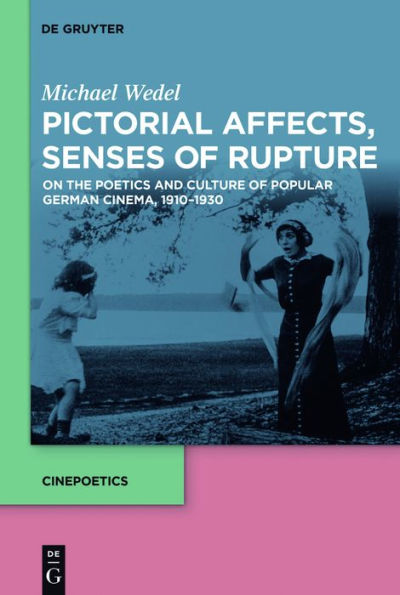
Pictorial Affects, Senses of Rupture: On the Poetics and Culture Popular German Cinema, 1910-1930 in Franklin, TN
Current price: $113.99
Barnes and Noble
Pictorial Affects, Senses of Rupture: On the Poetics and Culture Popular German Cinema, 1910-1930 in Franklin, TN
Current price: $113.99
Loading Inventory...
Size: Hardcover
German film in the Wilhelmine and Weimar periods is regarded as marked by a strong sense of cultural conservatism and the aspiration to be recognized as an art form. This book takes an alternative approach to the history of German cinema from the emergence of the early feature film to the transition to sound by focusing on the poetics of popular genres such as the disaster film, melodrama, the musical and the war film, exploring their cultural reverberations and modes of audience address.
Based on the assumption that popular cinema contributed immensely to the breakthrough of a modern audiovisual "culture of the senses" in Germany between 1910 and 1930,
Pictorial Affects, Senses of Rupture
offers close readings of a number of rarely analyzed films, including one of the first cinematic adaptations of the Titanic disaster from 1912 and the German version of
All Quiet on the Western Front
from 1930. Restoring the films' horizons of historicity by locating them at crucial points of intersection between social, cultural, technological and aesthetic discourses, this book argues for the prominent role popular German cinema’s own forms of discursivity have played within the historical formation of modernity.
Based on the assumption that popular cinema contributed immensely to the breakthrough of a modern audiovisual "culture of the senses" in Germany between 1910 and 1930,
Pictorial Affects, Senses of Rupture
offers close readings of a number of rarely analyzed films, including one of the first cinematic adaptations of the Titanic disaster from 1912 and the German version of
All Quiet on the Western Front
from 1930. Restoring the films' horizons of historicity by locating them at crucial points of intersection between social, cultural, technological and aesthetic discourses, this book argues for the prominent role popular German cinema’s own forms of discursivity have played within the historical formation of modernity.
German film in the Wilhelmine and Weimar periods is regarded as marked by a strong sense of cultural conservatism and the aspiration to be recognized as an art form. This book takes an alternative approach to the history of German cinema from the emergence of the early feature film to the transition to sound by focusing on the poetics of popular genres such as the disaster film, melodrama, the musical and the war film, exploring their cultural reverberations and modes of audience address.
Based on the assumption that popular cinema contributed immensely to the breakthrough of a modern audiovisual "culture of the senses" in Germany between 1910 and 1930,
Pictorial Affects, Senses of Rupture
offers close readings of a number of rarely analyzed films, including one of the first cinematic adaptations of the Titanic disaster from 1912 and the German version of
All Quiet on the Western Front
from 1930. Restoring the films' horizons of historicity by locating them at crucial points of intersection between social, cultural, technological and aesthetic discourses, this book argues for the prominent role popular German cinema’s own forms of discursivity have played within the historical formation of modernity.
Based on the assumption that popular cinema contributed immensely to the breakthrough of a modern audiovisual "culture of the senses" in Germany between 1910 and 1930,
Pictorial Affects, Senses of Rupture
offers close readings of a number of rarely analyzed films, including one of the first cinematic adaptations of the Titanic disaster from 1912 and the German version of
All Quiet on the Western Front
from 1930. Restoring the films' horizons of historicity by locating them at crucial points of intersection between social, cultural, technological and aesthetic discourses, this book argues for the prominent role popular German cinema’s own forms of discursivity have played within the historical formation of modernity.
You May Also Like

















More About Barnes and Noble at CoolSprings Galleria
Barnes & Noble is the world’s largest retail bookseller and a leading retailer of content, digital media and educational products. Our Nook Digital business offers a lineup of NOOK® tablets and e-Readers and an expansive collection of digital reading content through the NOOK Store®. Barnes & Noble’s mission is to operate the best omni-channel specialty retail business in America, helping both our customers and booksellers reach their aspirations, while being a credit to the communities we serve.
1800 Galleria Blvd #1310, Franklin, TN 37067, United States
Find Barnes and Noble at CoolSprings Galleria in Franklin, TN
Visit Barnes and Noble at CoolSprings Galleria in Franklin, TN
