
Home
Power, Resistance, Ideology and the State: Charles Tripp Comparative Politics of Middle East
Barnes and Noble
Loading Inventory...
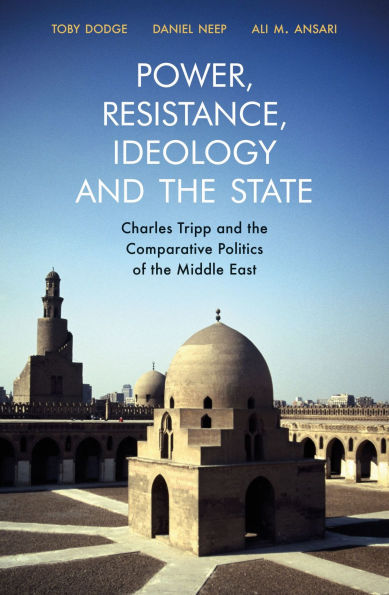
Power, Resistance, Ideology and the State: Charles Tripp Comparative Politics of Middle East in Franklin, TN
Current price: $70.00
Barnes and Noble
Power, Resistance, Ideology and the State: Charles Tripp Comparative Politics of Middle East in Franklin, TN
Current price: $70.00
Loading Inventory...
Size: Hardcover
A wide-ranging, innovative, and essential exploration of the politics of today’s Middle East.
Power, Resistance, Ideology and the State: Charles Tripp and the Comparative Politics of the Middle East
seeks to present a new understanding of a region of unprecedented volatility, where postcolonial projects of state-driven development have now expired, old ruling elites have been delegitimized, and political Islam discredited. The work of Charles Tripp, professor at the School of Oriental and African Studies (SOAS) for over three decades, has shaped a distinct approach to the study of Middle East politics with an analytical sensibility that is empirically rich, theoretically insightful, and historically sensitive. This volume brings together contributions from ten political scientists and historians from across Europe, the United States, and the Middle East, each of which takes Tripp’s work as an intellectual point of departure for studying Middle East politics.
Against this background, the contributors explore the contemporary developments that have emerged to fill the intellectual and material shortcomings created by the systemic failures of economics and politics in the region.
The contributions focus on four themes that are central to an understanding of Middle East politicspower, resistance, ideology, and the stateto examine political trends in cases ranging from Iran and Iraq to Jordan, Lebanon, and Syria. Each chapter combines extensive field research and a knowledge of regional politics with methodological and philosophical reflexivity to produce a collection of papers at the cutting edge of contemporary Middle East Studies.
Power, Resistance, Ideology and the State: Charles Tripp and the Comparative Politics of the Middle East
seeks to present a new understanding of a region of unprecedented volatility, where postcolonial projects of state-driven development have now expired, old ruling elites have been delegitimized, and political Islam discredited. The work of Charles Tripp, professor at the School of Oriental and African Studies (SOAS) for over three decades, has shaped a distinct approach to the study of Middle East politics with an analytical sensibility that is empirically rich, theoretically insightful, and historically sensitive. This volume brings together contributions from ten political scientists and historians from across Europe, the United States, and the Middle East, each of which takes Tripp’s work as an intellectual point of departure for studying Middle East politics.
Against this background, the contributors explore the contemporary developments that have emerged to fill the intellectual and material shortcomings created by the systemic failures of economics and politics in the region.
The contributions focus on four themes that are central to an understanding of Middle East politicspower, resistance, ideology, and the stateto examine political trends in cases ranging from Iran and Iraq to Jordan, Lebanon, and Syria. Each chapter combines extensive field research and a knowledge of regional politics with methodological and philosophical reflexivity to produce a collection of papers at the cutting edge of contemporary Middle East Studies.
A wide-ranging, innovative, and essential exploration of the politics of today’s Middle East.
Power, Resistance, Ideology and the State: Charles Tripp and the Comparative Politics of the Middle East
seeks to present a new understanding of a region of unprecedented volatility, where postcolonial projects of state-driven development have now expired, old ruling elites have been delegitimized, and political Islam discredited. The work of Charles Tripp, professor at the School of Oriental and African Studies (SOAS) for over three decades, has shaped a distinct approach to the study of Middle East politics with an analytical sensibility that is empirically rich, theoretically insightful, and historically sensitive. This volume brings together contributions from ten political scientists and historians from across Europe, the United States, and the Middle East, each of which takes Tripp’s work as an intellectual point of departure for studying Middle East politics.
Against this background, the contributors explore the contemporary developments that have emerged to fill the intellectual and material shortcomings created by the systemic failures of economics and politics in the region.
The contributions focus on four themes that are central to an understanding of Middle East politicspower, resistance, ideology, and the stateto examine political trends in cases ranging from Iran and Iraq to Jordan, Lebanon, and Syria. Each chapter combines extensive field research and a knowledge of regional politics with methodological and philosophical reflexivity to produce a collection of papers at the cutting edge of contemporary Middle East Studies.
Power, Resistance, Ideology and the State: Charles Tripp and the Comparative Politics of the Middle East
seeks to present a new understanding of a region of unprecedented volatility, where postcolonial projects of state-driven development have now expired, old ruling elites have been delegitimized, and political Islam discredited. The work of Charles Tripp, professor at the School of Oriental and African Studies (SOAS) for over three decades, has shaped a distinct approach to the study of Middle East politics with an analytical sensibility that is empirically rich, theoretically insightful, and historically sensitive. This volume brings together contributions from ten political scientists and historians from across Europe, the United States, and the Middle East, each of which takes Tripp’s work as an intellectual point of departure for studying Middle East politics.
Against this background, the contributors explore the contemporary developments that have emerged to fill the intellectual and material shortcomings created by the systemic failures of economics and politics in the region.
The contributions focus on four themes that are central to an understanding of Middle East politicspower, resistance, ideology, and the stateto examine political trends in cases ranging from Iran and Iraq to Jordan, Lebanon, and Syria. Each chapter combines extensive field research and a knowledge of regional politics with methodological and philosophical reflexivity to produce a collection of papers at the cutting edge of contemporary Middle East Studies.
You May Also Like









More About Barnes and Noble at CoolSprings Galleria
Barnes & Noble is the world’s largest retail bookseller and a leading retailer of content, digital media and educational products. Our Nook Digital business offers a lineup of NOOK® tablets and e-Readers and an expansive collection of digital reading content through the NOOK Store®. Barnes & Noble’s mission is to operate the best omni-channel specialty retail business in America, helping both our customers and booksellers reach their aspirations, while being a credit to the communities we serve.
1800 Galleria Blvd #1310, Franklin, TN 37067, United States
Find Barnes and Noble at CoolSprings Galleria in Franklin, TN
Visit Barnes and Noble at CoolSprings Galleria in Franklin, TN
