
Home
Psychosocial Stress and Cardiovascular Disease Women: Concepts, Findings, Future Perspectives
Barnes and Noble
Loading Inventory...
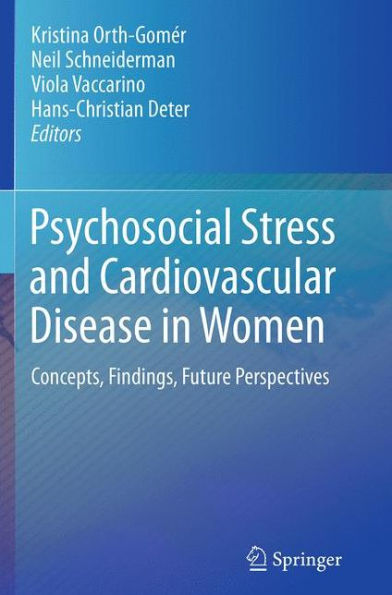
Psychosocial Stress and Cardiovascular Disease Women: Concepts, Findings, Future Perspectives in Franklin, TN
Current price: $109.99
Barnes and Noble
Psychosocial Stress and Cardiovascular Disease Women: Concepts, Findings, Future Perspectives in Franklin, TN
Current price: $109.99
Loading Inventory...
Size: Hardcover
Not long ago, it was assumed that coronary heart disease mainlyor onlyaffected men. Now that CHD is recognized as a leading killer of women as well as men, numerous research studies have been made of its diverse presentations in women, causal factors, and possibilities for prevention and treatment.
The expert contributions to
Psychosocial Stress and Cardiovascular Disease in Women
span the results of this cross-disciplinary awareness. This progressive resource takes a three-dimensional approach to its subject, focusing on epidemiology and risk factors for heart disease in women, the psycho- and neurobiology of stress and coronary disease, and promising clinical interventions. Chapters identify and analyze multiple intersections of social, biological, and psychological factors in affecting women's heart health, from the social dimensions of depression to genetic/environmental interactions to the demands of balancing work and family. These wide-ranging findings will assist and motivate professionals in choosing and creating interventions, developing appropriate prevention strategies, and reducing gender-based disparities in health care. Among the topics covered:
• Enhancing women's heart health: a global perspective.
• Coronary heart disease in women: evolution of our knowledge.
• Gender observations on basic physiological stress mechanisms in men and women.
• Sleep as a means of recovery and restitution in women.
• LifeSkills training: benefiting both genders, for different reasons.
• Gender considerations in psychosocial-behavioral interventions for coronary heart disease.
In particular this book will be helpful for cardiologists and other clinicians who may ask themselves why patients do not seem to make rational choices. "Why do patients not follow the advice they are offered?" is a common complaint. The role of psychosocial stress for patient compliance and adherence can be traced throughout the volume. It is emphasized in the chapters on psychosocial interventions along with other tangible and conceptual suggestions and experiences with psychosocial stress and life style change.
offers a deep practical level of understanding of this epidemic to help expand the work of health and clinical psychologists, sociologists, cardiologists, primary care physicians, and epidemiologists.
The expert contributions to
Psychosocial Stress and Cardiovascular Disease in Women
span the results of this cross-disciplinary awareness. This progressive resource takes a three-dimensional approach to its subject, focusing on epidemiology and risk factors for heart disease in women, the psycho- and neurobiology of stress and coronary disease, and promising clinical interventions. Chapters identify and analyze multiple intersections of social, biological, and psychological factors in affecting women's heart health, from the social dimensions of depression to genetic/environmental interactions to the demands of balancing work and family. These wide-ranging findings will assist and motivate professionals in choosing and creating interventions, developing appropriate prevention strategies, and reducing gender-based disparities in health care. Among the topics covered:
• Enhancing women's heart health: a global perspective.
• Coronary heart disease in women: evolution of our knowledge.
• Gender observations on basic physiological stress mechanisms in men and women.
• Sleep as a means of recovery and restitution in women.
• LifeSkills training: benefiting both genders, for different reasons.
• Gender considerations in psychosocial-behavioral interventions for coronary heart disease.
In particular this book will be helpful for cardiologists and other clinicians who may ask themselves why patients do not seem to make rational choices. "Why do patients not follow the advice they are offered?" is a common complaint. The role of psychosocial stress for patient compliance and adherence can be traced throughout the volume. It is emphasized in the chapters on psychosocial interventions along with other tangible and conceptual suggestions and experiences with psychosocial stress and life style change.
offers a deep practical level of understanding of this epidemic to help expand the work of health and clinical psychologists, sociologists, cardiologists, primary care physicians, and epidemiologists.
Not long ago, it was assumed that coronary heart disease mainlyor onlyaffected men. Now that CHD is recognized as a leading killer of women as well as men, numerous research studies have been made of its diverse presentations in women, causal factors, and possibilities for prevention and treatment.
The expert contributions to
Psychosocial Stress and Cardiovascular Disease in Women
span the results of this cross-disciplinary awareness. This progressive resource takes a three-dimensional approach to its subject, focusing on epidemiology and risk factors for heart disease in women, the psycho- and neurobiology of stress and coronary disease, and promising clinical interventions. Chapters identify and analyze multiple intersections of social, biological, and psychological factors in affecting women's heart health, from the social dimensions of depression to genetic/environmental interactions to the demands of balancing work and family. These wide-ranging findings will assist and motivate professionals in choosing and creating interventions, developing appropriate prevention strategies, and reducing gender-based disparities in health care. Among the topics covered:
• Enhancing women's heart health: a global perspective.
• Coronary heart disease in women: evolution of our knowledge.
• Gender observations on basic physiological stress mechanisms in men and women.
• Sleep as a means of recovery and restitution in women.
• LifeSkills training: benefiting both genders, for different reasons.
• Gender considerations in psychosocial-behavioral interventions for coronary heart disease.
In particular this book will be helpful for cardiologists and other clinicians who may ask themselves why patients do not seem to make rational choices. "Why do patients not follow the advice they are offered?" is a common complaint. The role of psychosocial stress for patient compliance and adherence can be traced throughout the volume. It is emphasized in the chapters on psychosocial interventions along with other tangible and conceptual suggestions and experiences with psychosocial stress and life style change.
offers a deep practical level of understanding of this epidemic to help expand the work of health and clinical psychologists, sociologists, cardiologists, primary care physicians, and epidemiologists.
The expert contributions to
Psychosocial Stress and Cardiovascular Disease in Women
span the results of this cross-disciplinary awareness. This progressive resource takes a three-dimensional approach to its subject, focusing on epidemiology and risk factors for heart disease in women, the psycho- and neurobiology of stress and coronary disease, and promising clinical interventions. Chapters identify and analyze multiple intersections of social, biological, and psychological factors in affecting women's heart health, from the social dimensions of depression to genetic/environmental interactions to the demands of balancing work and family. These wide-ranging findings will assist and motivate professionals in choosing and creating interventions, developing appropriate prevention strategies, and reducing gender-based disparities in health care. Among the topics covered:
• Enhancing women's heart health: a global perspective.
• Coronary heart disease in women: evolution of our knowledge.
• Gender observations on basic physiological stress mechanisms in men and women.
• Sleep as a means of recovery and restitution in women.
• LifeSkills training: benefiting both genders, for different reasons.
• Gender considerations in psychosocial-behavioral interventions for coronary heart disease.
In particular this book will be helpful for cardiologists and other clinicians who may ask themselves why patients do not seem to make rational choices. "Why do patients not follow the advice they are offered?" is a common complaint. The role of psychosocial stress for patient compliance and adherence can be traced throughout the volume. It is emphasized in the chapters on psychosocial interventions along with other tangible and conceptual suggestions and experiences with psychosocial stress and life style change.
offers a deep practical level of understanding of this epidemic to help expand the work of health and clinical psychologists, sociologists, cardiologists, primary care physicians, and epidemiologists.
You May Also Like















More About Barnes and Noble at CoolSprings Galleria
Barnes & Noble is the world’s largest retail bookseller and a leading retailer of content, digital media and educational products. Our Nook Digital business offers a lineup of NOOK® tablets and e-Readers and an expansive collection of digital reading content through the NOOK Store®. Barnes & Noble’s mission is to operate the best omni-channel specialty retail business in America, helping both our customers and booksellers reach their aspirations, while being a credit to the communities we serve.
1800 Galleria Blvd #1310, Franklin, TN 37067, United States
Find Barnes and Noble at CoolSprings Galleria in Franklin, TN
Visit Barnes and Noble at CoolSprings Galleria in Franklin, TN
