
Home
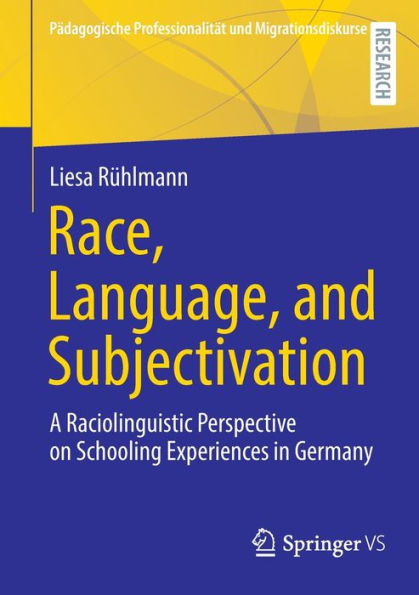
Race, Language, and Subjectivation: A Raciolinguistic Perspective on Schooling Experiences Germany
Barnes and Noble
Loading Inventory...
Race, Language, and Subjectivation: A Raciolinguistic Perspective on Schooling Experiences Germany in Franklin, TN
Current price: $109.99
Barnes and Noble
Race, Language, and Subjectivation: A Raciolinguistic Perspective on Schooling Experiences Germany in Franklin, TN
Current price: $109.99
Loading Inventory...
Size: Paperback
Many school students in Germany are plurilingual and use German and further languages in their daily lives. This use is differently approached and valued. Not only languages spoken, but race, too, plays a role in how language use is addressed in schools. Interviews that were conducted and analyzed with a Grounded Theory approach show that subject positions assigned to students concerning plurilingualism shape how they reflect on experiences in school from a retrospective focus. By turning to a raciolinguistic perspective and drawing on subjectivation theory, the terms used to signify dominantly found re-positionings are ‘raciolinguistic norm’ and ‘raciolinguistic Other’. The results highlight the necessity of focusing in more detail on how listening positionalities shape language use in society and in schools specifically.
Many school students in Germany are plurilingual and use German and further languages in their daily lives. This use is differently approached and valued. Not only languages spoken, but race, too, plays a role in how language use is addressed in schools. Interviews that were conducted and analyzed with a Grounded Theory approach show that subject positions assigned to students concerning plurilingualism shape how they reflect on experiences in school from a retrospective focus. By turning to a raciolinguistic perspective and drawing on subjectivation theory, the terms used to signify dominantly found re-positionings are ‘raciolinguistic norm’ and ‘raciolinguistic Other’. The results highlight the necessity of focusing in more detail on how listening positionalities shape language use in society and in schools specifically.
You May Also Like














More About Barnes and Noble at CoolSprings Galleria
Barnes & Noble is the world’s largest retail bookseller and a leading retailer of content, digital media and educational products. Our Nook Digital business offers a lineup of NOOK® tablets and e-Readers and an expansive collection of digital reading content through the NOOK Store®. Barnes & Noble’s mission is to operate the best omni-channel specialty retail business in America, helping both our customers and booksellers reach their aspirations, while being a credit to the communities we serve.
1800 Galleria Blvd #1310, Franklin, TN 37067, United States
Find Barnes and Noble at CoolSprings Galleria in Franklin, TN
Visit Barnes and Noble at CoolSprings Galleria in Franklin, TN
