
Home
Reading, Writing, and Rigor: Helping Students Achieve Greater Depth of Knowledge Literacy
Barnes and Noble
Loading Inventory...
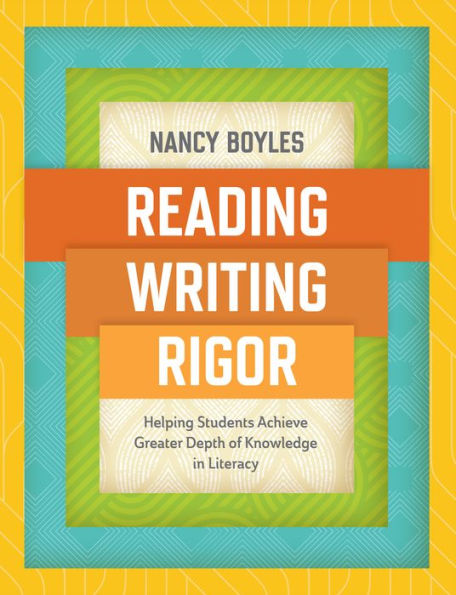
Reading, Writing, and Rigor: Helping Students Achieve Greater Depth of Knowledge Literacy in Franklin, TN
Current price: $35.95
Barnes and Noble
Reading, Writing, and Rigor: Helping Students Achieve Greater Depth of Knowledge Literacy in Franklin, TN
Current price: $35.95
Loading Inventory...
Size: Paperback
What does
rigor
, a word that frequently pops up in conversations about education, really mean? More specifically, what does it mean for
literacy
instruction, and how does it relate to challenging standards-based assessments? In this informative and practical guide, literacy expert Nancy Boyles uses the framework from Webb's Depth of Knowledge (DOK) to answer these questions, offering experience-based advice along with specific examples of K–8 assessment items.
Boyles defines
and shows how it relates to literacy at each DOK level and explains the kind of thinking students will be expected to demonstrate. She then tackles the essence of what teachers need to know about how DOK and its associated rigors are measured on standards-based assessments. Specifically, readers learn how each DOK rigor aligns with
standards,
text complexity,
close reading,
student interaction,
the reading-writing connection, and
formative assessment.
Teachers, coaches, and administrators will find clear guidance, easy-to-implement strategies, dozens of useful teaching tools and resources, and encouragement to help students achieve and demonstrate true rigor in reading and writing.
rigor
, a word that frequently pops up in conversations about education, really mean? More specifically, what does it mean for
literacy
instruction, and how does it relate to challenging standards-based assessments? In this informative and practical guide, literacy expert Nancy Boyles uses the framework from Webb's Depth of Knowledge (DOK) to answer these questions, offering experience-based advice along with specific examples of K–8 assessment items.
Boyles defines
and shows how it relates to literacy at each DOK level and explains the kind of thinking students will be expected to demonstrate. She then tackles the essence of what teachers need to know about how DOK and its associated rigors are measured on standards-based assessments. Specifically, readers learn how each DOK rigor aligns with
standards,
text complexity,
close reading,
student interaction,
the reading-writing connection, and
formative assessment.
Teachers, coaches, and administrators will find clear guidance, easy-to-implement strategies, dozens of useful teaching tools and resources, and encouragement to help students achieve and demonstrate true rigor in reading and writing.
What does
rigor
, a word that frequently pops up in conversations about education, really mean? More specifically, what does it mean for
literacy
instruction, and how does it relate to challenging standards-based assessments? In this informative and practical guide, literacy expert Nancy Boyles uses the framework from Webb's Depth of Knowledge (DOK) to answer these questions, offering experience-based advice along with specific examples of K–8 assessment items.
Boyles defines
and shows how it relates to literacy at each DOK level and explains the kind of thinking students will be expected to demonstrate. She then tackles the essence of what teachers need to know about how DOK and its associated rigors are measured on standards-based assessments. Specifically, readers learn how each DOK rigor aligns with
standards,
text complexity,
close reading,
student interaction,
the reading-writing connection, and
formative assessment.
Teachers, coaches, and administrators will find clear guidance, easy-to-implement strategies, dozens of useful teaching tools and resources, and encouragement to help students achieve and demonstrate true rigor in reading and writing.
rigor
, a word that frequently pops up in conversations about education, really mean? More specifically, what does it mean for
literacy
instruction, and how does it relate to challenging standards-based assessments? In this informative and practical guide, literacy expert Nancy Boyles uses the framework from Webb's Depth of Knowledge (DOK) to answer these questions, offering experience-based advice along with specific examples of K–8 assessment items.
Boyles defines
and shows how it relates to literacy at each DOK level and explains the kind of thinking students will be expected to demonstrate. She then tackles the essence of what teachers need to know about how DOK and its associated rigors are measured on standards-based assessments. Specifically, readers learn how each DOK rigor aligns with
standards,
text complexity,
close reading,
student interaction,
the reading-writing connection, and
formative assessment.
Teachers, coaches, and administrators will find clear guidance, easy-to-implement strategies, dozens of useful teaching tools and resources, and encouragement to help students achieve and demonstrate true rigor in reading and writing.
You May Also Like












More About Barnes and Noble at CoolSprings Galleria
Barnes & Noble is the world’s largest retail bookseller and a leading retailer of content, digital media and educational products. Our Nook Digital business offers a lineup of NOOK® tablets and e-Readers and an expansive collection of digital reading content through the NOOK Store®. Barnes & Noble’s mission is to operate the best omni-channel specialty retail business in America, helping both our customers and booksellers reach their aspirations, while being a credit to the communities we serve.
1800 Galleria Blvd #1310, Franklin, TN 37067, United States
Find Barnes and Noble at CoolSprings Galleria in Franklin, TN
Visit Barnes and Noble at CoolSprings Galleria in Franklin, TN
