
Home
Reformatory Schools: for the Children of Perishing and Dangerous Classes, Juvenile Offenders
Barnes and Noble
Loading Inventory...
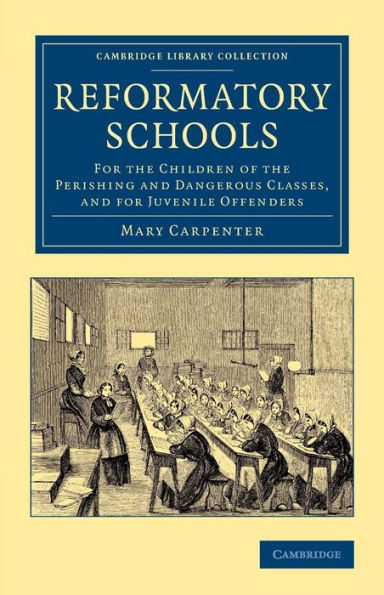
Reformatory Schools: for the Children of Perishing and Dangerous Classes, Juvenile Offenders in Franklin, TN
Current price: $52.00
Barnes and Noble
Reformatory Schools: for the Children of Perishing and Dangerous Classes, Juvenile Offenders in Franklin, TN
Current price: $52.00
Loading Inventory...
Size: Paperback
Daughter of a Unitarian minister and schoolmaster, the penal reformer and educationist Mary Carpenter (1807–77) grew up in a pious family with a strong sense of obligation to those who were less fortunate. Moved by the appalling circumstances of destitute children in Bristol, she established her first ragged school in 1846. In her bid to improve the difficult lives of juvenile delinquents, her enlightened philosophy was one of rehabilitation rather than retribution, emphasising the importance of giving children a sense of self-worth. These views form the basis of this landmark work, first published in 1851. Marshalling a range of evidence in support of her argument, Carpenter highlights the need for radical change in the treatment of young offenders. Her lobbying bore fruit in England with the passage of the Youthful Offenders Act (1854), described as 'the Magna Carta of the neglected child'.
Daughter of a Unitarian minister and schoolmaster, the penal reformer and educationist Mary Carpenter (1807–77) grew up in a pious family with a strong sense of obligation to those who were less fortunate. Moved by the appalling circumstances of destitute children in Bristol, she established her first ragged school in 1846. In her bid to improve the difficult lives of juvenile delinquents, her enlightened philosophy was one of rehabilitation rather than retribution, emphasising the importance of giving children a sense of self-worth. These views form the basis of this landmark work, first published in 1851. Marshalling a range of evidence in support of her argument, Carpenter highlights the need for radical change in the treatment of young offenders. Her lobbying bore fruit in England with the passage of the Youthful Offenders Act (1854), described as 'the Magna Carta of the neglected child'.
You May Also Like

![19.99 [Dangerous ver.] [Barnes & Noble Exclusive]](https://prodimage.images-bn.com/pimages/0198704016127_p0_v2_s600x595.jpg)







More About Barnes and Noble at CoolSprings Galleria
Barnes & Noble is the world’s largest retail bookseller and a leading retailer of content, digital media and educational products. Our Nook Digital business offers a lineup of NOOK® tablets and e-Readers and an expansive collection of digital reading content through the NOOK Store®. Barnes & Noble’s mission is to operate the best omni-channel specialty retail business in America, helping both our customers and booksellers reach their aspirations, while being a credit to the communities we serve.
1800 Galleria Blvd #1310, Franklin, TN 37067, United States
Find Barnes and Noble at CoolSprings Galleria in Franklin, TN
Visit Barnes and Noble at CoolSprings Galleria in Franklin, TN
