
Home
Revisiting Intelligence and Policy: Problems with Politicization Receptivity
Barnes and Noble
Loading Inventory...
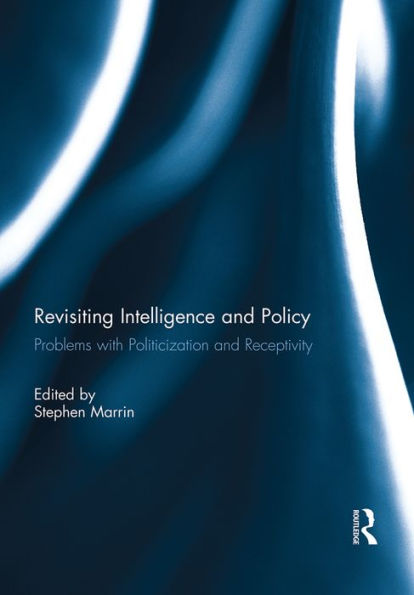
Revisiting Intelligence and Policy: Problems with Politicization Receptivity in Franklin, TN
Current price: $190.00
Barnes and Noble
Revisiting Intelligence and Policy: Problems with Politicization Receptivity in Franklin, TN
Current price: $190.00
Loading Inventory...
Size: Hardcover
The relationship between intelligence organizations and the national security policymakers which they support has its ups and downs. Sometimes the relationship is a good one; communication flows and both sides benefit from the interaction, but sometimes difficulties arise and problems develop. For example, when knowledge is required for decision but is not available or is inaccurate the outcome is frequently described as an intelligence failure. A subset of this kind of intelligence failure occurs when knowledge is distorted in order to reinforce or oppose policymaker preferences or expectations. Another less successful outcome occurs when good, accurate knowledge is not used to improve policy, but is instead set aside or ignored by those who have the responsibility and obligation to make decisions.
This collection explores the difficulties that can arise in the relationship between intelligence and policy. The chapters consider both politicization of, and lack of receptiveness to, intelligence on the part of policymakers from a variety of different angles. Readers will find that this book challenges conventional wisdom and offers new ways of thinking about this important but understudied area.
This book was published as a special issue of
Intelligence and National Security
.
This collection explores the difficulties that can arise in the relationship between intelligence and policy. The chapters consider both politicization of, and lack of receptiveness to, intelligence on the part of policymakers from a variety of different angles. Readers will find that this book challenges conventional wisdom and offers new ways of thinking about this important but understudied area.
This book was published as a special issue of
Intelligence and National Security
.
The relationship between intelligence organizations and the national security policymakers which they support has its ups and downs. Sometimes the relationship is a good one; communication flows and both sides benefit from the interaction, but sometimes difficulties arise and problems develop. For example, when knowledge is required for decision but is not available or is inaccurate the outcome is frequently described as an intelligence failure. A subset of this kind of intelligence failure occurs when knowledge is distorted in order to reinforce or oppose policymaker preferences or expectations. Another less successful outcome occurs when good, accurate knowledge is not used to improve policy, but is instead set aside or ignored by those who have the responsibility and obligation to make decisions.
This collection explores the difficulties that can arise in the relationship between intelligence and policy. The chapters consider both politicization of, and lack of receptiveness to, intelligence on the part of policymakers from a variety of different angles. Readers will find that this book challenges conventional wisdom and offers new ways of thinking about this important but understudied area.
This book was published as a special issue of
Intelligence and National Security
.
This collection explores the difficulties that can arise in the relationship between intelligence and policy. The chapters consider both politicization of, and lack of receptiveness to, intelligence on the part of policymakers from a variety of different angles. Readers will find that this book challenges conventional wisdom and offers new ways of thinking about this important but understudied area.
This book was published as a special issue of
Intelligence and National Security
.
You May Also Like















More About Barnes and Noble at CoolSprings Galleria
Barnes & Noble is the world’s largest retail bookseller and a leading retailer of content, digital media and educational products. Our Nook Digital business offers a lineup of NOOK® tablets and e-Readers and an expansive collection of digital reading content through the NOOK Store®. Barnes & Noble’s mission is to operate the best omni-channel specialty retail business in America, helping both our customers and booksellers reach their aspirations, while being a credit to the communities we serve.
1800 Galleria Blvd #1310, Franklin, TN 37067, United States
Find Barnes and Noble at CoolSprings Galleria in Franklin, TN
Visit Barnes and Noble at CoolSprings Galleria in Franklin, TN
