
Home
Robotic Process Automation: Management, Technology, Applications
Barnes and Noble
Loading Inventory...
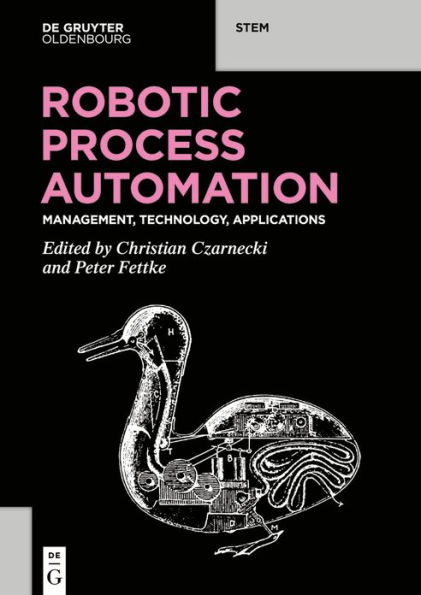
Robotic Process Automation: Management, Technology, Applications in Franklin, TN
Current price: $60.99
Barnes and Noble
Robotic Process Automation: Management, Technology, Applications in Franklin, TN
Current price: $60.99
Loading Inventory...
Size: Paperback
This book brings together experts from research and practice. It includes the design of innovative Robot Process Automation (RPA) concepts, the discussion of related research fields (e.g., Artificial Intelligence, AI), the evaluation of existing software products, and findings from real-life implementation projects.
Similar to the substitution of physical work in manufacturing (blue collar automation), Robotic Process Automation tries to substitute intellectual work in office and administration processes with software robots (white-collar automation). The starting point for the development of RPA was the observation that – despite the use of process-oriented enterprise systems (such as ERP, CRM and BPM systems) – additional manual activities are still indispensable today. In the RPA approach, these manual activities are learned and automated by software robots, either by defining rules or by observing manual activities.
RPA is related to business process management, machine learning, and artificial intelligence. Tools for RPA originated from dedicated stand-alone software. Today, RPA functionalities are also integrated into elaborated process management suites. From a conceptual perspective, RPA can be structured into input components (sensors in the wide sense), an intelligence center, and output components (actuators in the wide sense). From a strategic perspective, the impact of RPA can be related to the support of existing tasks, the complete substitution of human activities, and the innovation of processes as well as business models.
At present, high expectations are related to the use of RPA in the improvement of software-supported business processes. Manual activities are learned and automated by software robots that interact with existing applications via the presentation layer. In combination with artificial intelligence (AI) as well as innovative interfaces (e. g., voice recognition) RPA creates a novel level of automation for office and administration processes. Its benefit potential reaches a return on investment (ROI) up-to 800% that is documented in various case studies.
Similar to the substitution of physical work in manufacturing (blue collar automation), Robotic Process Automation tries to substitute intellectual work in office and administration processes with software robots (white-collar automation). The starting point for the development of RPA was the observation that – despite the use of process-oriented enterprise systems (such as ERP, CRM and BPM systems) – additional manual activities are still indispensable today. In the RPA approach, these manual activities are learned and automated by software robots, either by defining rules or by observing manual activities.
RPA is related to business process management, machine learning, and artificial intelligence. Tools for RPA originated from dedicated stand-alone software. Today, RPA functionalities are also integrated into elaborated process management suites. From a conceptual perspective, RPA can be structured into input components (sensors in the wide sense), an intelligence center, and output components (actuators in the wide sense). From a strategic perspective, the impact of RPA can be related to the support of existing tasks, the complete substitution of human activities, and the innovation of processes as well as business models.
At present, high expectations are related to the use of RPA in the improvement of software-supported business processes. Manual activities are learned and automated by software robots that interact with existing applications via the presentation layer. In combination with artificial intelligence (AI) as well as innovative interfaces (e. g., voice recognition) RPA creates a novel level of automation for office and administration processes. Its benefit potential reaches a return on investment (ROI) up-to 800% that is documented in various case studies.
This book brings together experts from research and practice. It includes the design of innovative Robot Process Automation (RPA) concepts, the discussion of related research fields (e.g., Artificial Intelligence, AI), the evaluation of existing software products, and findings from real-life implementation projects.
Similar to the substitution of physical work in manufacturing (blue collar automation), Robotic Process Automation tries to substitute intellectual work in office and administration processes with software robots (white-collar automation). The starting point for the development of RPA was the observation that – despite the use of process-oriented enterprise systems (such as ERP, CRM and BPM systems) – additional manual activities are still indispensable today. In the RPA approach, these manual activities are learned and automated by software robots, either by defining rules or by observing manual activities.
RPA is related to business process management, machine learning, and artificial intelligence. Tools for RPA originated from dedicated stand-alone software. Today, RPA functionalities are also integrated into elaborated process management suites. From a conceptual perspective, RPA can be structured into input components (sensors in the wide sense), an intelligence center, and output components (actuators in the wide sense). From a strategic perspective, the impact of RPA can be related to the support of existing tasks, the complete substitution of human activities, and the innovation of processes as well as business models.
At present, high expectations are related to the use of RPA in the improvement of software-supported business processes. Manual activities are learned and automated by software robots that interact with existing applications via the presentation layer. In combination with artificial intelligence (AI) as well as innovative interfaces (e. g., voice recognition) RPA creates a novel level of automation for office and administration processes. Its benefit potential reaches a return on investment (ROI) up-to 800% that is documented in various case studies.
Similar to the substitution of physical work in manufacturing (blue collar automation), Robotic Process Automation tries to substitute intellectual work in office and administration processes with software robots (white-collar automation). The starting point for the development of RPA was the observation that – despite the use of process-oriented enterprise systems (such as ERP, CRM and BPM systems) – additional manual activities are still indispensable today. In the RPA approach, these manual activities are learned and automated by software robots, either by defining rules or by observing manual activities.
RPA is related to business process management, machine learning, and artificial intelligence. Tools for RPA originated from dedicated stand-alone software. Today, RPA functionalities are also integrated into elaborated process management suites. From a conceptual perspective, RPA can be structured into input components (sensors in the wide sense), an intelligence center, and output components (actuators in the wide sense). From a strategic perspective, the impact of RPA can be related to the support of existing tasks, the complete substitution of human activities, and the innovation of processes as well as business models.
At present, high expectations are related to the use of RPA in the improvement of software-supported business processes. Manual activities are learned and automated by software robots that interact with existing applications via the presentation layer. In combination with artificial intelligence (AI) as well as innovative interfaces (e. g., voice recognition) RPA creates a novel level of automation for office and administration processes. Its benefit potential reaches a return on investment (ROI) up-to 800% that is documented in various case studies.
You May Also Like









More About Barnes and Noble at CoolSprings Galleria
Barnes & Noble is the world’s largest retail bookseller and a leading retailer of content, digital media and educational products. Our Nook Digital business offers a lineup of NOOK® tablets and e-Readers and an expansive collection of digital reading content through the NOOK Store®. Barnes & Noble’s mission is to operate the best omni-channel specialty retail business in America, helping both our customers and booksellers reach their aspirations, while being a credit to the communities we serve.
1800 Galleria Blvd #1310, Franklin, TN 37067, United States
Find Barnes and Noble at CoolSprings Galleria in Franklin, TN
Visit Barnes and Noble at CoolSprings Galleria in Franklin, TN
