Home
Roman Birmingham 6: Overview and synthesis of 1934-2019 excavations at Metchley Roman Fort, Birmingham
Barnes and Noble
Loading Inventory...
Roman Birmingham 6: Overview and synthesis of 1934-2019 excavations at Metchley Roman Fort, Birmingham in Franklin, TN
Current price: $49.00
Barnes and Noble
Roman Birmingham 6: Overview and synthesis of 1934-2019 excavations at Metchley Roman Fort, Birmingham in Franklin, TN
Current price: $49.00
Loading Inventory...
Size: OS
This is an open access title available under the terms of a CC BY-NC-ND 4.0 License. It is free to read, download and share on the BAR Digital platform.
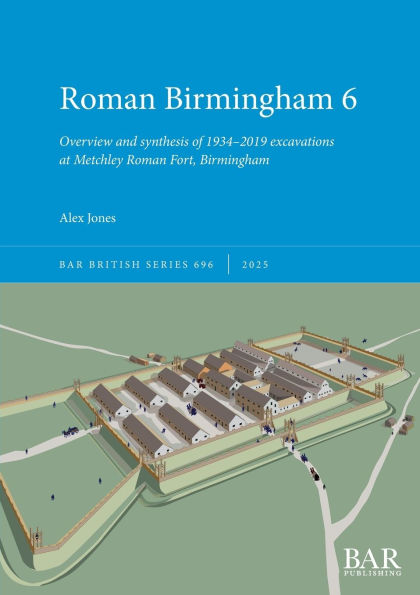
This volume provides an overview and synthesis of excavations from 1934 to 2019 at Metchley Roman forts, Birmingham, one of the most extensively investigated Roman military complexes in the midlands.
The first fort of mid-Neronian date may have been occupied by a garrison of around 1,000 auxiliaries. The fort was later enlarged by annexes on three sides. It was succeeded by a military stores depot. After a short abandonment, a smaller Flavian fort was occupied briefly.
The internal buildings of timber-framed construction were well-preserved, including a rare double barrack block, granaries, workshops, the praetorium, stables and store buildings. This volume includes specialist overviews of the small finds, pottery and environmental evidence.
This book has been published with the support of a Historic England publication grant.
This volume provides an overview and synthesis of excavations from 1934 to 2019 at Metchley Roman forts, Birmingham, one of the most extensively investigated Roman military complexes in the midlands.
The first fort of mid-Neronian date may have been occupied by a garrison of around 1,000 auxiliaries. The fort was later enlarged by annexes on three sides. It was succeeded by a military stores depot. After a short abandonment, a smaller Flavian fort was occupied briefly.
The internal buildings of timber-framed construction were well-preserved, including a rare double barrack block, granaries, workshops, the praetorium, stables and store buildings. This volume includes specialist overviews of the small finds, pottery and environmental evidence.
This book has been published with the support of a Historic England publication grant.
This is an open access title available under the terms of a CC BY-NC-ND 4.0 License. It is free to read, download and share on the BAR Digital platform.
This volume provides an overview and synthesis of excavations from 1934 to 2019 at Metchley Roman forts, Birmingham, one of the most extensively investigated Roman military complexes in the midlands.
The first fort of mid-Neronian date may have been occupied by a garrison of around 1,000 auxiliaries. The fort was later enlarged by annexes on three sides. It was succeeded by a military stores depot. After a short abandonment, a smaller Flavian fort was occupied briefly.
The internal buildings of timber-framed construction were well-preserved, including a rare double barrack block, granaries, workshops, the praetorium, stables and store buildings. This volume includes specialist overviews of the small finds, pottery and environmental evidence.
This book has been published with the support of a Historic England publication grant.
This volume provides an overview and synthesis of excavations from 1934 to 2019 at Metchley Roman forts, Birmingham, one of the most extensively investigated Roman military complexes in the midlands.
The first fort of mid-Neronian date may have been occupied by a garrison of around 1,000 auxiliaries. The fort was later enlarged by annexes on three sides. It was succeeded by a military stores depot. After a short abandonment, a smaller Flavian fort was occupied briefly.
The internal buildings of timber-framed construction were well-preserved, including a rare double barrack block, granaries, workshops, the praetorium, stables and store buildings. This volume includes specialist overviews of the small finds, pottery and environmental evidence.
This book has been published with the support of a Historic England publication grant.
You May Also Like
















More About Barnes and Noble at CoolSprings Galleria
Barnes & Noble is the world’s largest retail bookseller and a leading retailer of content, digital media and educational products. Our Nook Digital business offers a lineup of NOOK® tablets and e-Readers and an expansive collection of digital reading content through the NOOK Store®. Barnes & Noble’s mission is to operate the best omni-channel specialty retail business in America, helping both our customers and booksellers reach their aspirations, while being a credit to the communities we serve.
1800 Galleria Blvd #1310, Franklin, TN 37067, United States
Find Barnes and Noble at CoolSprings Galleria in Franklin, TN
Visit Barnes and Noble at CoolSprings Galleria in Franklin, TN