
Home
Russia, China, and the United States Central Asia
Barnes and Noble
Loading Inventory...
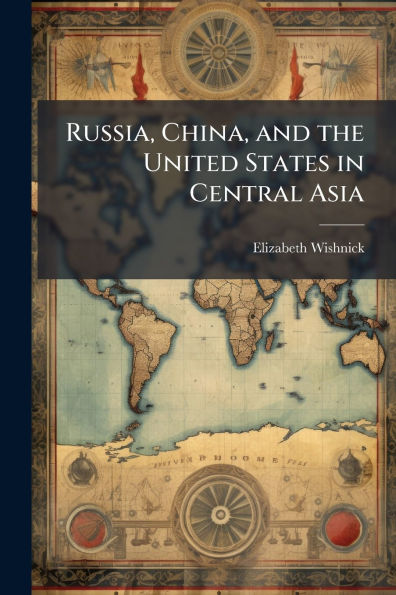
Russia, China, and the United States Central Asia in Franklin, TN
Current price: $29.95
Barnes and Noble
Russia, China, and the United States Central Asia in Franklin, TN
Current price: $29.95
Loading Inventory...
Size: Hardcover
Russia and China have been reacting to the pressures of changing U.S.-Central Asia policy over the past 5 years as has the United States. In response to the "color" revolutions, they achieved broad agreement on the priority of regime security and the need to limit the long-term military presence of the United States in Central Asia. These are also two key areas-defining the political path of Central Asian states and securing a strategic foothold in the region-where the United States finds itself in competition with Russia and China. The Russia-China partnership should not be seen as an anti-U.S. bloc, nor should the Shanghai Cooperation Organization (SCO) be viewed as entirely cohesive. Although there is considerable suspicion of U.S. designs on Central Asia, divergent interests within the SCO, among Central Asian states, and especially between Russia and China serve to limit any coordinated anti-U.S. activity. Despite the fissures within the SCO and the competitive tendencies within the Sino-Russian partnership, the United States will not have an easy time achieving its aims in Central Asia. The author documents how American policy goals-energy cooperation, regional security, and support for democracy and the rule of law-continue to run at cross-purposes with one another. In particular, she asserts that competition to secure basing arrangements and energy contracts only benefits authoritarian regimes at the expense of enduring regional security. She argues further that the rhetoric about a new Cold War in the aftermath of the Georgian crisis, and the more general tendency to view U.S.-Russia-China competition in the region with 19th century lenses, as some sort of "new great game," obscures the common interests the great powers share in addressing transnational problems in Central Asia.
This work has been selected by scholars as being culturally important, and is part of the knowledge base of civilization as we know it. This work was reproduced from the original artifact, and remains as true to the original work as possible. Therefore, you will see the original copyright references, library stamps (as most of these works have been housed in our most important libraries around the world), and other notations in the work.
This work is in the public domain in the United States of America, and possibly other nations. Within the United States, you may freely copy and distribute this work, as no entity (individual or corporate) has a copyright on the body of the work.
As a reproduction of a historical artifact, this work may contain missing or blurred pages, poor pictures, errant marks, etc. Scholars believe, and we concur, that this work is important enough to be preserved, reproduced, and made generally available to the public. We appreciate your support of the preservation process, and thank you for being an important part of keeping this knowledge alive and relevant.
This work has been selected by scholars as being culturally important, and is part of the knowledge base of civilization as we know it. This work was reproduced from the original artifact, and remains as true to the original work as possible. Therefore, you will see the original copyright references, library stamps (as most of these works have been housed in our most important libraries around the world), and other notations in the work.
This work is in the public domain in the United States of America, and possibly other nations. Within the United States, you may freely copy and distribute this work, as no entity (individual or corporate) has a copyright on the body of the work.
As a reproduction of a historical artifact, this work may contain missing or blurred pages, poor pictures, errant marks, etc. Scholars believe, and we concur, that this work is important enough to be preserved, reproduced, and made generally available to the public. We appreciate your support of the preservation process, and thank you for being an important part of keeping this knowledge alive and relevant.
Russia and China have been reacting to the pressures of changing U.S.-Central Asia policy over the past 5 years as has the United States. In response to the "color" revolutions, they achieved broad agreement on the priority of regime security and the need to limit the long-term military presence of the United States in Central Asia. These are also two key areas-defining the political path of Central Asian states and securing a strategic foothold in the region-where the United States finds itself in competition with Russia and China. The Russia-China partnership should not be seen as an anti-U.S. bloc, nor should the Shanghai Cooperation Organization (SCO) be viewed as entirely cohesive. Although there is considerable suspicion of U.S. designs on Central Asia, divergent interests within the SCO, among Central Asian states, and especially between Russia and China serve to limit any coordinated anti-U.S. activity. Despite the fissures within the SCO and the competitive tendencies within the Sino-Russian partnership, the United States will not have an easy time achieving its aims in Central Asia. The author documents how American policy goals-energy cooperation, regional security, and support for democracy and the rule of law-continue to run at cross-purposes with one another. In particular, she asserts that competition to secure basing arrangements and energy contracts only benefits authoritarian regimes at the expense of enduring regional security. She argues further that the rhetoric about a new Cold War in the aftermath of the Georgian crisis, and the more general tendency to view U.S.-Russia-China competition in the region with 19th century lenses, as some sort of "new great game," obscures the common interests the great powers share in addressing transnational problems in Central Asia.
This work has been selected by scholars as being culturally important, and is part of the knowledge base of civilization as we know it. This work was reproduced from the original artifact, and remains as true to the original work as possible. Therefore, you will see the original copyright references, library stamps (as most of these works have been housed in our most important libraries around the world), and other notations in the work.
This work is in the public domain in the United States of America, and possibly other nations. Within the United States, you may freely copy and distribute this work, as no entity (individual or corporate) has a copyright on the body of the work.
As a reproduction of a historical artifact, this work may contain missing or blurred pages, poor pictures, errant marks, etc. Scholars believe, and we concur, that this work is important enough to be preserved, reproduced, and made generally available to the public. We appreciate your support of the preservation process, and thank you for being an important part of keeping this knowledge alive and relevant.
This work has been selected by scholars as being culturally important, and is part of the knowledge base of civilization as we know it. This work was reproduced from the original artifact, and remains as true to the original work as possible. Therefore, you will see the original copyright references, library stamps (as most of these works have been housed in our most important libraries around the world), and other notations in the work.
This work is in the public domain in the United States of America, and possibly other nations. Within the United States, you may freely copy and distribute this work, as no entity (individual or corporate) has a copyright on the body of the work.
As a reproduction of a historical artifact, this work may contain missing or blurred pages, poor pictures, errant marks, etc. Scholars believe, and we concur, that this work is important enough to be preserved, reproduced, and made generally available to the public. We appreciate your support of the preservation process, and thank you for being an important part of keeping this knowledge alive and relevant.
You May Also Like









More About Barnes and Noble at CoolSprings Galleria
Barnes & Noble is the world’s largest retail bookseller and a leading retailer of content, digital media and educational products. Our Nook Digital business offers a lineup of NOOK® tablets and e-Readers and an expansive collection of digital reading content through the NOOK Store®. Barnes & Noble’s mission is to operate the best omni-channel specialty retail business in America, helping both our customers and booksellers reach their aspirations, while being a credit to the communities we serve.
1800 Galleria Blvd #1310, Franklin, TN 37067, United States
Find Barnes and Noble at CoolSprings Galleria in Franklin, TN
Visit Barnes and Noble at CoolSprings Galleria in Franklin, TN
