
Home
Science and Method
Barnes and Noble
Loading Inventory...
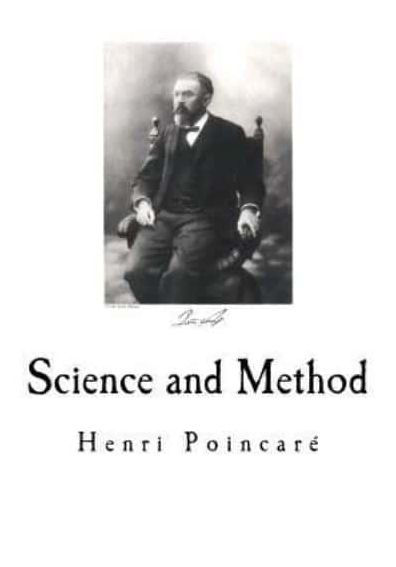
Science and Method in Franklin, TN
Current price: $8.95
Barnes and Noble
Science and Method in Franklin, TN
Current price: $8.95
Loading Inventory...
Size: OS
Science and Method
Henri Poincaré
Translated by George Bruce Halsted
Jules Henri Poincaré 29 April 1854 - 17 July 1912, was a French mathematician, theoretical physicist, engineer, and a philosopher of science. He is often described as a polymath, and in mathematics as The Last Universalist by Eric Temple Bell, since he excelled in all fields of the discipline as it existed during his lifetime.
I bring together here different studies relating more or less directly to questions of scientific methodology. The scientific method consists in observing and experimenting; if the scientist had at his disposal infinite time, it would only be necessary to say to him: 'Look and notice well'; but, as there is not time to see everything, and as it is better not to see than to see wrongly, it is necessary for him to make choice. The first question, therefore, is how he should make this choice. This question presents itself as well to the physicist as to the historian; it presents itself equally to the mathematician, and the principles which should guide each are not without analogy. The scientist conforms to them instinctively, and one can, reflecting on these principles, foretell the future of mathematics.
We shall understand them better yet if we observe the scientist at work, and first of all it is necessary to know the psychologic mechanism of invention and, in particular, that of mathematical creation. Observation of the processes of the work of the mathematician is particularly instructive for the psychologist.
Introduction
Book I. Science and the Scientist
The Choice of Facts
The Future of Mathematics
Mathematical Creation
Chance
Book II. Mathematical Reasoning
The Relativity of Space
Mathematical Definitions and Teaching
Mathematics and Logic
The New Logics
The Latest Efforts of the Logisticians
Book III. The New Mechanics
Mechanics and Radium
Mechanics and Optics
The New Mechanics and Astronomy
Book IV. Astronomic Science
The Milky Way and the Theory of Gases
French Geodesy
General Conclusions
Henri Poincaré
Translated by George Bruce Halsted
Jules Henri Poincaré 29 April 1854 - 17 July 1912, was a French mathematician, theoretical physicist, engineer, and a philosopher of science. He is often described as a polymath, and in mathematics as The Last Universalist by Eric Temple Bell, since he excelled in all fields of the discipline as it existed during his lifetime.
I bring together here different studies relating more or less directly to questions of scientific methodology. The scientific method consists in observing and experimenting; if the scientist had at his disposal infinite time, it would only be necessary to say to him: 'Look and notice well'; but, as there is not time to see everything, and as it is better not to see than to see wrongly, it is necessary for him to make choice. The first question, therefore, is how he should make this choice. This question presents itself as well to the physicist as to the historian; it presents itself equally to the mathematician, and the principles which should guide each are not without analogy. The scientist conforms to them instinctively, and one can, reflecting on these principles, foretell the future of mathematics.
We shall understand them better yet if we observe the scientist at work, and first of all it is necessary to know the psychologic mechanism of invention and, in particular, that of mathematical creation. Observation of the processes of the work of the mathematician is particularly instructive for the psychologist.
Introduction
Book I. Science and the Scientist
The Choice of Facts
The Future of Mathematics
Mathematical Creation
Chance
Book II. Mathematical Reasoning
The Relativity of Space
Mathematical Definitions and Teaching
Mathematics and Logic
The New Logics
The Latest Efforts of the Logisticians
Book III. The New Mechanics
Mechanics and Radium
Mechanics and Optics
The New Mechanics and Astronomy
Book IV. Astronomic Science
The Milky Way and the Theory of Gases
French Geodesy
General Conclusions
Science and Method
Henri Poincaré
Translated by George Bruce Halsted
Jules Henri Poincaré 29 April 1854 - 17 July 1912, was a French mathematician, theoretical physicist, engineer, and a philosopher of science. He is often described as a polymath, and in mathematics as The Last Universalist by Eric Temple Bell, since he excelled in all fields of the discipline as it existed during his lifetime.
I bring together here different studies relating more or less directly to questions of scientific methodology. The scientific method consists in observing and experimenting; if the scientist had at his disposal infinite time, it would only be necessary to say to him: 'Look and notice well'; but, as there is not time to see everything, and as it is better not to see than to see wrongly, it is necessary for him to make choice. The first question, therefore, is how he should make this choice. This question presents itself as well to the physicist as to the historian; it presents itself equally to the mathematician, and the principles which should guide each are not without analogy. The scientist conforms to them instinctively, and one can, reflecting on these principles, foretell the future of mathematics.
We shall understand them better yet if we observe the scientist at work, and first of all it is necessary to know the psychologic mechanism of invention and, in particular, that of mathematical creation. Observation of the processes of the work of the mathematician is particularly instructive for the psychologist.
Introduction
Book I. Science and the Scientist
The Choice of Facts
The Future of Mathematics
Mathematical Creation
Chance
Book II. Mathematical Reasoning
The Relativity of Space
Mathematical Definitions and Teaching
Mathematics and Logic
The New Logics
The Latest Efforts of the Logisticians
Book III. The New Mechanics
Mechanics and Radium
Mechanics and Optics
The New Mechanics and Astronomy
Book IV. Astronomic Science
The Milky Way and the Theory of Gases
French Geodesy
General Conclusions
Henri Poincaré
Translated by George Bruce Halsted
Jules Henri Poincaré 29 April 1854 - 17 July 1912, was a French mathematician, theoretical physicist, engineer, and a philosopher of science. He is often described as a polymath, and in mathematics as The Last Universalist by Eric Temple Bell, since he excelled in all fields of the discipline as it existed during his lifetime.
I bring together here different studies relating more or less directly to questions of scientific methodology. The scientific method consists in observing and experimenting; if the scientist had at his disposal infinite time, it would only be necessary to say to him: 'Look and notice well'; but, as there is not time to see everything, and as it is better not to see than to see wrongly, it is necessary for him to make choice. The first question, therefore, is how he should make this choice. This question presents itself as well to the physicist as to the historian; it presents itself equally to the mathematician, and the principles which should guide each are not without analogy. The scientist conforms to them instinctively, and one can, reflecting on these principles, foretell the future of mathematics.
We shall understand them better yet if we observe the scientist at work, and first of all it is necessary to know the psychologic mechanism of invention and, in particular, that of mathematical creation. Observation of the processes of the work of the mathematician is particularly instructive for the psychologist.
Introduction
Book I. Science and the Scientist
The Choice of Facts
The Future of Mathematics
Mathematical Creation
Chance
Book II. Mathematical Reasoning
The Relativity of Space
Mathematical Definitions and Teaching
Mathematics and Logic
The New Logics
The Latest Efforts of the Logisticians
Book III. The New Mechanics
Mechanics and Radium
Mechanics and Optics
The New Mechanics and Astronomy
Book IV. Astronomic Science
The Milky Way and the Theory of Gases
French Geodesy
General Conclusions
You May Also Like














More About Barnes and Noble at CoolSprings Galleria
Barnes & Noble is the world’s largest retail bookseller and a leading retailer of content, digital media and educational products. Our Nook Digital business offers a lineup of NOOK® tablets and e-Readers and an expansive collection of digital reading content through the NOOK Store®. Barnes & Noble’s mission is to operate the best omni-channel specialty retail business in America, helping both our customers and booksellers reach their aspirations, while being a credit to the communities we serve.
1800 Galleria Blvd #1310, Franklin, TN 37067, United States
Find Barnes and Noble at CoolSprings Galleria in Franklin, TN
Visit Barnes and Noble at CoolSprings Galleria in Franklin, TN
