
Home
Sea Level Rise in Florida: Science, Impacts, and Options
Barnes and Noble
Loading Inventory...
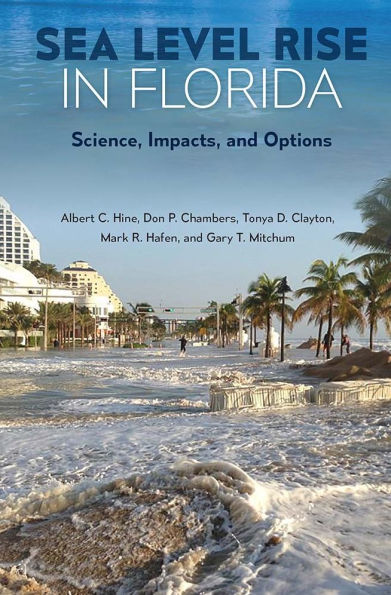
Sea Level Rise in Florida: Science, Impacts, and Options in Franklin, TN
Current price: $34.95
Barnes and Noble
Sea Level Rise in Florida: Science, Impacts, and Options in Franklin, TN
Current price: $34.95
Loading Inventory...
Size: OS
“A scientifically credible and highly readable account of what is likely the greatest threat to Florida’s environment, economy, and culture over the coming decades.”—Reed F. Noss, author of
Forgotten Grasslands of the South
“Every Floridian should read this book. It is the clearest and most readable description of how and why the sea level changes and what the future has in store for us.”—Orrin H. Pilkey, coauthor of
Global Climate Change: A Primer
Sea levels are rising—globally and in Florida. Climatologists, geologists, oceanographers, and the overwhelming majority of the scientific community expect a continuation of this trend for centuries to come. While Florida’s natural history indicates that there is nothing new about the changing elevation of the sea, what
is
new—and alarming—is the combination of the rising seas and the evergrowing, immobile human infrastructure near the coasts: highrise condos, suburban developments, tourist meccas, and international metropolises.
The stakes are particularly high in Florida, where much of the landscape is already topographically low and underlain by permeable limestone. Modernday sealevel rise poses unprecedented challenges for sustainability, urban planning, and political action.
Sea Level Rise in Florida
offers an indepth examination of the rise and fall of sea levels in the past and the science behind the current data, both measured and projected. The authors also discuss ongoing and potential consequences for natural marine and coastal systems and how we can begin to plan strategically for the inevitable changes.
Forgotten Grasslands of the South
“Every Floridian should read this book. It is the clearest and most readable description of how and why the sea level changes and what the future has in store for us.”—Orrin H. Pilkey, coauthor of
Global Climate Change: A Primer
Sea levels are rising—globally and in Florida. Climatologists, geologists, oceanographers, and the overwhelming majority of the scientific community expect a continuation of this trend for centuries to come. While Florida’s natural history indicates that there is nothing new about the changing elevation of the sea, what
is
new—and alarming—is the combination of the rising seas and the evergrowing, immobile human infrastructure near the coasts: highrise condos, suburban developments, tourist meccas, and international metropolises.
The stakes are particularly high in Florida, where much of the landscape is already topographically low and underlain by permeable limestone. Modernday sealevel rise poses unprecedented challenges for sustainability, urban planning, and political action.
Sea Level Rise in Florida
offers an indepth examination of the rise and fall of sea levels in the past and the science behind the current data, both measured and projected. The authors also discuss ongoing and potential consequences for natural marine and coastal systems and how we can begin to plan strategically for the inevitable changes.
“A scientifically credible and highly readable account of what is likely the greatest threat to Florida’s environment, economy, and culture over the coming decades.”—Reed F. Noss, author of
Forgotten Grasslands of the South
“Every Floridian should read this book. It is the clearest and most readable description of how and why the sea level changes and what the future has in store for us.”—Orrin H. Pilkey, coauthor of
Global Climate Change: A Primer
Sea levels are rising—globally and in Florida. Climatologists, geologists, oceanographers, and the overwhelming majority of the scientific community expect a continuation of this trend for centuries to come. While Florida’s natural history indicates that there is nothing new about the changing elevation of the sea, what
is
new—and alarming—is the combination of the rising seas and the evergrowing, immobile human infrastructure near the coasts: highrise condos, suburban developments, tourist meccas, and international metropolises.
The stakes are particularly high in Florida, where much of the landscape is already topographically low and underlain by permeable limestone. Modernday sealevel rise poses unprecedented challenges for sustainability, urban planning, and political action.
Sea Level Rise in Florida
offers an indepth examination of the rise and fall of sea levels in the past and the science behind the current data, both measured and projected. The authors also discuss ongoing and potential consequences for natural marine and coastal systems and how we can begin to plan strategically for the inevitable changes.
Forgotten Grasslands of the South
“Every Floridian should read this book. It is the clearest and most readable description of how and why the sea level changes and what the future has in store for us.”—Orrin H. Pilkey, coauthor of
Global Climate Change: A Primer
Sea levels are rising—globally and in Florida. Climatologists, geologists, oceanographers, and the overwhelming majority of the scientific community expect a continuation of this trend for centuries to come. While Florida’s natural history indicates that there is nothing new about the changing elevation of the sea, what
is
new—and alarming—is the combination of the rising seas and the evergrowing, immobile human infrastructure near the coasts: highrise condos, suburban developments, tourist meccas, and international metropolises.
The stakes are particularly high in Florida, where much of the landscape is already topographically low and underlain by permeable limestone. Modernday sealevel rise poses unprecedented challenges for sustainability, urban planning, and political action.
Sea Level Rise in Florida
offers an indepth examination of the rise and fall of sea levels in the past and the science behind the current data, both measured and projected. The authors also discuss ongoing and potential consequences for natural marine and coastal systems and how we can begin to plan strategically for the inevitable changes.
You May Also Like














More About Barnes and Noble at CoolSprings Galleria
Barnes & Noble is the world’s largest retail bookseller and a leading retailer of content, digital media and educational products. Our Nook Digital business offers a lineup of NOOK® tablets and e-Readers and an expansive collection of digital reading content through the NOOK Store®. Barnes & Noble’s mission is to operate the best omni-channel specialty retail business in America, helping both our customers and booksellers reach their aspirations, while being a credit to the communities we serve.
1800 Galleria Blvd #1310, Franklin, TN 37067, United States
Find Barnes and Noble at CoolSprings Galleria in Franklin, TN
Visit Barnes and Noble at CoolSprings Galleria in Franklin, TN
