
Home
Sense-Making: New Sensory Methods for Exploring the Past and Imagining Possible Futures
Barnes and Noble
Loading Inventory...
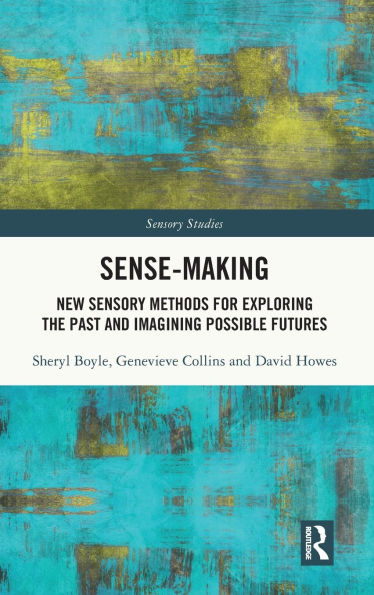
Sense-Making: New Sensory Methods for Exploring the Past and Imagining Possible Futures in Franklin, TN
Current price: $190.00
Barnes and Noble
Sense-Making: New Sensory Methods for Exploring the Past and Imagining Possible Futures in Franklin, TN
Current price: $190.00
Loading Inventory...
Size: Hardcover
In this highly innovative work, the senses are liberated from the confines of the present to serve as vehicles for accessing other historical periods and imagined futures.
Sense-Making
builds on the burgeoning field of sensory ethnography by introducing a pair of methodologies—sensory (re)construction and sensorial extrapolationCexpressly devised to facilitate time-travel.
The first part offers a survey and critique of extant work in sensory archeology and sensory futures. The second part presents a case study of sensory (re)construction in action, focusing on Thornbury Castle (1508—1521) in the UK. The third part probes the life of the senses on the "final frontier", the "next habitat" of humanity—namely, outer space. These sensory case studies are not purely architectural or purely futuristic. They are, at the same time, exercises in "arts-based practice" or "research-creation," where the authors do not just carry out bibliographic research and write about pasts and futures, they make them.
is necessary reading for the international community of sensory studies scholars, as well as those with interests spanning material culture, museum and heritage studies, visual and auditory culture, experimental psychology, design and digital technology.
Sense-Making
builds on the burgeoning field of sensory ethnography by introducing a pair of methodologies—sensory (re)construction and sensorial extrapolationCexpressly devised to facilitate time-travel.
The first part offers a survey and critique of extant work in sensory archeology and sensory futures. The second part presents a case study of sensory (re)construction in action, focusing on Thornbury Castle (1508—1521) in the UK. The third part probes the life of the senses on the "final frontier", the "next habitat" of humanity—namely, outer space. These sensory case studies are not purely architectural or purely futuristic. They are, at the same time, exercises in "arts-based practice" or "research-creation," where the authors do not just carry out bibliographic research and write about pasts and futures, they make them.
is necessary reading for the international community of sensory studies scholars, as well as those with interests spanning material culture, museum and heritage studies, visual and auditory culture, experimental psychology, design and digital technology.
In this highly innovative work, the senses are liberated from the confines of the present to serve as vehicles for accessing other historical periods and imagined futures.
Sense-Making
builds on the burgeoning field of sensory ethnography by introducing a pair of methodologies—sensory (re)construction and sensorial extrapolationCexpressly devised to facilitate time-travel.
The first part offers a survey and critique of extant work in sensory archeology and sensory futures. The second part presents a case study of sensory (re)construction in action, focusing on Thornbury Castle (1508—1521) in the UK. The third part probes the life of the senses on the "final frontier", the "next habitat" of humanity—namely, outer space. These sensory case studies are not purely architectural or purely futuristic. They are, at the same time, exercises in "arts-based practice" or "research-creation," where the authors do not just carry out bibliographic research and write about pasts and futures, they make them.
is necessary reading for the international community of sensory studies scholars, as well as those with interests spanning material culture, museum and heritage studies, visual and auditory culture, experimental psychology, design and digital technology.
Sense-Making
builds on the burgeoning field of sensory ethnography by introducing a pair of methodologies—sensory (re)construction and sensorial extrapolationCexpressly devised to facilitate time-travel.
The first part offers a survey and critique of extant work in sensory archeology and sensory futures. The second part presents a case study of sensory (re)construction in action, focusing on Thornbury Castle (1508—1521) in the UK. The third part probes the life of the senses on the "final frontier", the "next habitat" of humanity—namely, outer space. These sensory case studies are not purely architectural or purely futuristic. They are, at the same time, exercises in "arts-based practice" or "research-creation," where the authors do not just carry out bibliographic research and write about pasts and futures, they make them.
is necessary reading for the international community of sensory studies scholars, as well as those with interests spanning material culture, museum and heritage studies, visual and auditory culture, experimental psychology, design and digital technology.
You May Also Like












More About Barnes and Noble at CoolSprings Galleria
Barnes & Noble is the world’s largest retail bookseller and a leading retailer of content, digital media and educational products. Our Nook Digital business offers a lineup of NOOK® tablets and e-Readers and an expansive collection of digital reading content through the NOOK Store®. Barnes & Noble’s mission is to operate the best omni-channel specialty retail business in America, helping both our customers and booksellers reach their aspirations, while being a credit to the communities we serve.
1800 Galleria Blvd #1310, Franklin, TN 37067, United States
Find Barnes and Noble at CoolSprings Galleria in Franklin, TN
Visit Barnes and Noble at CoolSprings Galleria in Franklin, TN
