
Home
Sensory Perception, History and Geology: The Afterlife of Molyneux's Question British, American Australian Landscape Painting Cultural Thought
Barnes and Noble
Loading Inventory...
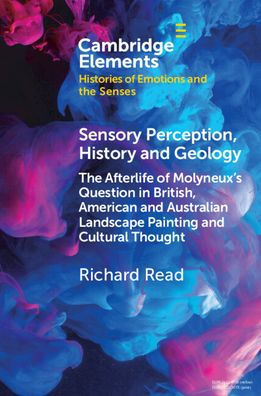
Sensory Perception, History and Geology: The Afterlife of Molyneux's Question British, American Australian Landscape Painting Cultural Thought in Franklin, TN
Current price: $23.00
Barnes and Noble
Sensory Perception, History and Geology: The Afterlife of Molyneux's Question British, American Australian Landscape Painting Cultural Thought in Franklin, TN
Current price: $23.00
Loading Inventory...
Size: Paperback
William Molyneux's question to John Locke about whether a blind man restored to sight could name the difference between a cube and a sphere without touching them shaped fundamental conflicts in philosophy, theology and science between empirical and idealist answers that are radically alien to current ways of seeing and feeling but were born of colonizing ambitions whose devastating genocidal and ecocidal consequences intensify today. This Element demonstrates how landscape paintings of unfamiliar terrains required historical and geological subject matter to supply tactile associations for empirical recognition of space, whereas idealism conferred unmediated but no less coercive sensory access. Close visual and verbal analysis using photographs of pictorial sites trace vividly different responses to the question, from those of William Hazlitt and John Ruskin in Britain to those of nineteenth-century authors and artists in the United States and Australia, including Ralph Waldo Emerson, Thomas Cole, William Haseltine, Fitz Henry Lane and Eugene von Guérard.
William Molyneux's question to John Locke about whether a blind man restored to sight could name the difference between a cube and a sphere without touching them shaped fundamental conflicts in philosophy, theology and science between empirical and idealist answers that are radically alien to current ways of seeing and feeling but were born of colonizing ambitions whose devastating genocidal and ecocidal consequences intensify today. This Element demonstrates how landscape paintings of unfamiliar terrains required historical and geological subject matter to supply tactile associations for empirical recognition of space, whereas idealism conferred unmediated but no less coercive sensory access. Close visual and verbal analysis using photographs of pictorial sites trace vividly different responses to the question, from those of William Hazlitt and John Ruskin in Britain to those of nineteenth-century authors and artists in the United States and Australia, including Ralph Waldo Emerson, Thomas Cole, William Haseltine, Fitz Henry Lane and Eugene von Guérard.
You May Also Like















More About Barnes and Noble at CoolSprings Galleria
Barnes & Noble is the world’s largest retail bookseller and a leading retailer of content, digital media and educational products. Our Nook Digital business offers a lineup of NOOK® tablets and e-Readers and an expansive collection of digital reading content through the NOOK Store®. Barnes & Noble’s mission is to operate the best omni-channel specialty retail business in America, helping both our customers and booksellers reach their aspirations, while being a credit to the communities we serve.
1800 Galleria Blvd #1310, Franklin, TN 37067, United States
Find Barnes and Noble at CoolSprings Galleria in Franklin, TN
Visit Barnes and Noble at CoolSprings Galleria in Franklin, TN
