
Home
Service-Learning to Advance Access & Success: Bridging Institutional and Community Capacity
Barnes and Noble
Loading Inventory...
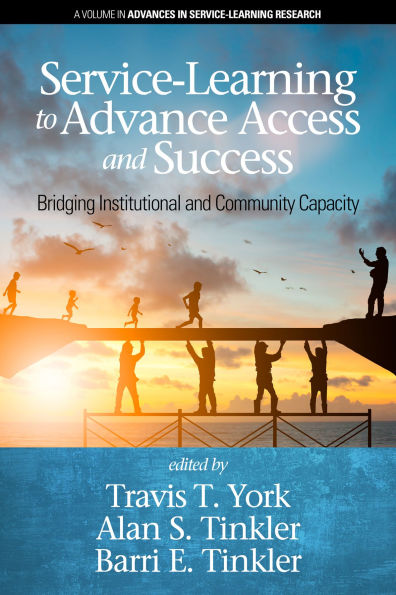
Service-Learning to Advance Access & Success: Bridging Institutional and Community Capacity in Franklin, TN
Current price: $115.00
Barnes and Noble
Service-Learning to Advance Access & Success: Bridging Institutional and Community Capacity in Franklin, TN
Current price: $115.00
Loading Inventory...
Size: Hardcover
Throughout the 90s and early 2000s, servicelearning research was intensely focused on the student outcomes. That body of research has effectively brought servicelearning from the fringes into the mainstream of institutionalized pedagogies. In the past decade servicelearning research has experienced an infusion of exploration in three distinct ways: first, largescale quantitative methodologies; second, a proliferation of research that has explored how different subgroups of students experience the pedagogy differently, thusly resulting in variation among outcomes; and third, a focus on the experiences and outcomes associated for communities and community partners engaged in servicelearning.
In an effort to support these movements, this volume of the Advances in ServiceLearning Research series, ServiceLearning to Advance Access & Success: Bridging Institutional and Community Capacity, focuses on how servicelearning can advance access and success. Not simply access and success of students, but the ways that servicelearning can advance access and success for all through bridging institutional and community capacity building. The chapters in this volume serve as a testament to the ways in which servicelearning research continue to be advanced by thoughtful scholarpractitioners.
The 12 chapters included in this volume are organized into three sections. The first section focuses on how institutional and community partnerships can be leveraged to build community capacity. The second section focuses on how institutions might build their own capacity to effect change for the good of society. The third and final section focuses on six studies exploring the relationship servicelearning pedagogy has with access and success for students. Of the six studies, three are situated within the context of teacherpreparation programs.
In an effort to support these movements, this volume of the Advances in ServiceLearning Research series, ServiceLearning to Advance Access & Success: Bridging Institutional and Community Capacity, focuses on how servicelearning can advance access and success. Not simply access and success of students, but the ways that servicelearning can advance access and success for all through bridging institutional and community capacity building. The chapters in this volume serve as a testament to the ways in which servicelearning research continue to be advanced by thoughtful scholarpractitioners.
The 12 chapters included in this volume are organized into three sections. The first section focuses on how institutional and community partnerships can be leveraged to build community capacity. The second section focuses on how institutions might build their own capacity to effect change for the good of society. The third and final section focuses on six studies exploring the relationship servicelearning pedagogy has with access and success for students. Of the six studies, three are situated within the context of teacherpreparation programs.
Throughout the 90s and early 2000s, servicelearning research was intensely focused on the student outcomes. That body of research has effectively brought servicelearning from the fringes into the mainstream of institutionalized pedagogies. In the past decade servicelearning research has experienced an infusion of exploration in three distinct ways: first, largescale quantitative methodologies; second, a proliferation of research that has explored how different subgroups of students experience the pedagogy differently, thusly resulting in variation among outcomes; and third, a focus on the experiences and outcomes associated for communities and community partners engaged in servicelearning.
In an effort to support these movements, this volume of the Advances in ServiceLearning Research series, ServiceLearning to Advance Access & Success: Bridging Institutional and Community Capacity, focuses on how servicelearning can advance access and success. Not simply access and success of students, but the ways that servicelearning can advance access and success for all through bridging institutional and community capacity building. The chapters in this volume serve as a testament to the ways in which servicelearning research continue to be advanced by thoughtful scholarpractitioners.
The 12 chapters included in this volume are organized into three sections. The first section focuses on how institutional and community partnerships can be leveraged to build community capacity. The second section focuses on how institutions might build their own capacity to effect change for the good of society. The third and final section focuses on six studies exploring the relationship servicelearning pedagogy has with access and success for students. Of the six studies, three are situated within the context of teacherpreparation programs.
In an effort to support these movements, this volume of the Advances in ServiceLearning Research series, ServiceLearning to Advance Access & Success: Bridging Institutional and Community Capacity, focuses on how servicelearning can advance access and success. Not simply access and success of students, but the ways that servicelearning can advance access and success for all through bridging institutional and community capacity building. The chapters in this volume serve as a testament to the ways in which servicelearning research continue to be advanced by thoughtful scholarpractitioners.
The 12 chapters included in this volume are organized into three sections. The first section focuses on how institutional and community partnerships can be leveraged to build community capacity. The second section focuses on how institutions might build their own capacity to effect change for the good of society. The third and final section focuses on six studies exploring the relationship servicelearning pedagogy has with access and success for students. Of the six studies, three are situated within the context of teacherpreparation programs.
You May Also Like









More About Barnes and Noble at CoolSprings Galleria
Barnes & Noble is the world’s largest retail bookseller and a leading retailer of content, digital media and educational products. Our Nook Digital business offers a lineup of NOOK® tablets and e-Readers and an expansive collection of digital reading content through the NOOK Store®. Barnes & Noble’s mission is to operate the best omni-channel specialty retail business in America, helping both our customers and booksellers reach their aspirations, while being a credit to the communities we serve.
1800 Galleria Blvd #1310, Franklin, TN 37067, United States
Find Barnes and Noble at CoolSprings Galleria in Franklin, TN
Visit Barnes and Noble at CoolSprings Galleria in Franklin, TN
