
Home
Shiva Dancing at King Arthur's Court: What Yoga Stories and Western Myths Tell Us About Ourselves
Barnes and Noble
Loading Inventory...
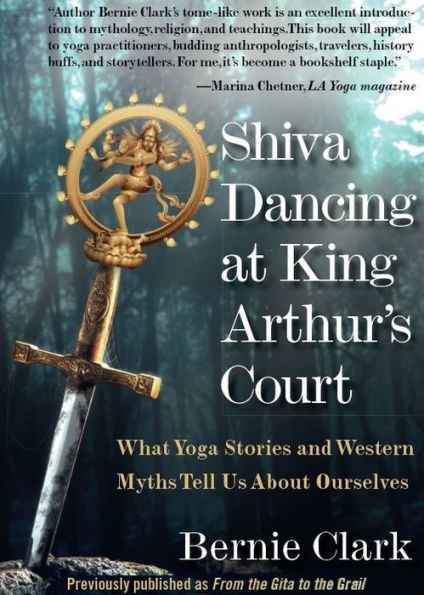
Shiva Dancing at King Arthur's Court: What Yoga Stories and Western Myths Tell Us About Ourselves in Franklin, TN
Current price: $24.99
Barnes and Noble
Shiva Dancing at King Arthur's Court: What Yoga Stories and Western Myths Tell Us About Ourselves in Franklin, TN
Current price: $24.99
Loading Inventory...
Size: Paperback
The importance of stories East and West are illustrated through the model proposed by the great 20th century mythologist, Joseph Campbell: myths, or stories, serve four great functions - the mystical, the cosmological, the sociological and the psychological function.
What is the meaning of Shiva dancing on a dwarf named Avidya? Why does Vishnu sleep upon an endless snake? To what did the Buddha awaken? What do we mean by soul? Is the emotion of love different in the East from the experienced in the West? Did the West's prototypical lovers Tristan and Isolde feel the same kind of rapture that Radha and Krishna reveled in? And what are the proper roles for women today according the stories found East and West?
Despite the popularity of Yoga, the stories from its land of birth are very strange to Western ears. What do these ancient symbols mean, what are they trying to teach us, and how should we incorporate this knowledge into our Western lifestyle? Every myth is a map to some deep cultural and personal landscape. By looking at the myths of the East along with the stories that people in the West grew up with, we are given opportunities to select the best maps available, or to create new ones to help guide us through the uncertainties of modern living. By exploring myths East and West, this book shine a light on the landscapes within and allows us to choose the appropriate map we want to follow
What is the meaning of Shiva dancing on a dwarf named Avidya? Why does Vishnu sleep upon an endless snake? To what did the Buddha awaken? What do we mean by soul? Is the emotion of love different in the East from the experienced in the West? Did the West's prototypical lovers Tristan and Isolde feel the same kind of rapture that Radha and Krishna reveled in? And what are the proper roles for women today according the stories found East and West?
Despite the popularity of Yoga, the stories from its land of birth are very strange to Western ears. What do these ancient symbols mean, what are they trying to teach us, and how should we incorporate this knowledge into our Western lifestyle? Every myth is a map to some deep cultural and personal landscape. By looking at the myths of the East along with the stories that people in the West grew up with, we are given opportunities to select the best maps available, or to create new ones to help guide us through the uncertainties of modern living. By exploring myths East and West, this book shine a light on the landscapes within and allows us to choose the appropriate map we want to follow
The importance of stories East and West are illustrated through the model proposed by the great 20th century mythologist, Joseph Campbell: myths, or stories, serve four great functions - the mystical, the cosmological, the sociological and the psychological function.
What is the meaning of Shiva dancing on a dwarf named Avidya? Why does Vishnu sleep upon an endless snake? To what did the Buddha awaken? What do we mean by soul? Is the emotion of love different in the East from the experienced in the West? Did the West's prototypical lovers Tristan and Isolde feel the same kind of rapture that Radha and Krishna reveled in? And what are the proper roles for women today according the stories found East and West?
Despite the popularity of Yoga, the stories from its land of birth are very strange to Western ears. What do these ancient symbols mean, what are they trying to teach us, and how should we incorporate this knowledge into our Western lifestyle? Every myth is a map to some deep cultural and personal landscape. By looking at the myths of the East along with the stories that people in the West grew up with, we are given opportunities to select the best maps available, or to create new ones to help guide us through the uncertainties of modern living. By exploring myths East and West, this book shine a light on the landscapes within and allows us to choose the appropriate map we want to follow
What is the meaning of Shiva dancing on a dwarf named Avidya? Why does Vishnu sleep upon an endless snake? To what did the Buddha awaken? What do we mean by soul? Is the emotion of love different in the East from the experienced in the West? Did the West's prototypical lovers Tristan and Isolde feel the same kind of rapture that Radha and Krishna reveled in? And what are the proper roles for women today according the stories found East and West?
Despite the popularity of Yoga, the stories from its land of birth are very strange to Western ears. What do these ancient symbols mean, what are they trying to teach us, and how should we incorporate this knowledge into our Western lifestyle? Every myth is a map to some deep cultural and personal landscape. By looking at the myths of the East along with the stories that people in the West grew up with, we are given opportunities to select the best maps available, or to create new ones to help guide us through the uncertainties of modern living. By exploring myths East and West, this book shine a light on the landscapes within and allows us to choose the appropriate map we want to follow
You May Also Like












More About Barnes and Noble at CoolSprings Galleria
Barnes & Noble is the world’s largest retail bookseller and a leading retailer of content, digital media and educational products. Our Nook Digital business offers a lineup of NOOK® tablets and e-Readers and an expansive collection of digital reading content through the NOOK Store®. Barnes & Noble’s mission is to operate the best omni-channel specialty retail business in America, helping both our customers and booksellers reach their aspirations, while being a credit to the communities we serve.
1800 Galleria Blvd #1310, Franklin, TN 37067, United States
Find Barnes and Noble at CoolSprings Galleria in Franklin, TN
Visit Barnes and Noble at CoolSprings Galleria in Franklin, TN
