
Home
Simple electronics with GPIO Zero: Take control of the real world your Raspberry Pi
Barnes and Noble
Loading Inventory...
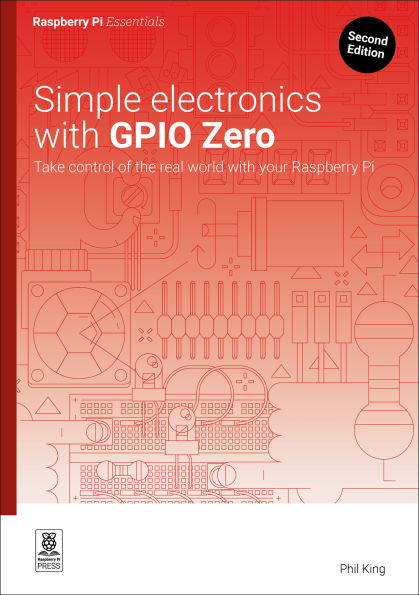
Simple electronics with GPIO Zero: Take control of the real world your Raspberry Pi in Franklin, TN
Current price: $14.99
Barnes and Noble
Simple electronics with GPIO Zero: Take control of the real world your Raspberry Pi in Franklin, TN
Current price: $14.99
Loading Inventory...
Size: Paperback
There are many things that distinguish Raspberry Pi from other computers.
The GPIO header might just be the most significant of them all — it allows you to connect electronic components to your Raspberry Pi and control them with code you've written yourself.
The most popular programming language for controlling electronics on a Raspberry Pi is Python, particularly the code in the GPIO Zero library, which you can use to control LEDs, sensors, motors, and many more components.
With this book, you’ll learn how to use GPIO Zero as you build a series of simple electronics projects:
Program some LED lights
Add a push button to your project
Build a motion-sensing alarm
Create your own distance rangefinder
Make a laser-powered tripwire
Build a Raspberry Pi robot
The GPIO pins on your Raspberry Pi open up a whole new world of possibilities — specifically, the physical world around you. It may seem daunting at first, but you'll be creating electronic circuits and controlling them with code before you know it. Grab your breadboard and start taking control of the real world with your Raspberry Pi today!
Updated for the latest Raspberry Pi devices, this book has all the information you need to get started.
The GPIO header might just be the most significant of them all — it allows you to connect electronic components to your Raspberry Pi and control them with code you've written yourself.
The most popular programming language for controlling electronics on a Raspberry Pi is Python, particularly the code in the GPIO Zero library, which you can use to control LEDs, sensors, motors, and many more components.
With this book, you’ll learn how to use GPIO Zero as you build a series of simple electronics projects:
Program some LED lights
Add a push button to your project
Build a motion-sensing alarm
Create your own distance rangefinder
Make a laser-powered tripwire
Build a Raspberry Pi robot
The GPIO pins on your Raspberry Pi open up a whole new world of possibilities — specifically, the physical world around you. It may seem daunting at first, but you'll be creating electronic circuits and controlling them with code before you know it. Grab your breadboard and start taking control of the real world with your Raspberry Pi today!
Updated for the latest Raspberry Pi devices, this book has all the information you need to get started.
There are many things that distinguish Raspberry Pi from other computers.
The GPIO header might just be the most significant of them all — it allows you to connect electronic components to your Raspberry Pi and control them with code you've written yourself.
The most popular programming language for controlling electronics on a Raspberry Pi is Python, particularly the code in the GPIO Zero library, which you can use to control LEDs, sensors, motors, and many more components.
With this book, you’ll learn how to use GPIO Zero as you build a series of simple electronics projects:
Program some LED lights
Add a push button to your project
Build a motion-sensing alarm
Create your own distance rangefinder
Make a laser-powered tripwire
Build a Raspberry Pi robot
The GPIO pins on your Raspberry Pi open up a whole new world of possibilities — specifically, the physical world around you. It may seem daunting at first, but you'll be creating electronic circuits and controlling them with code before you know it. Grab your breadboard and start taking control of the real world with your Raspberry Pi today!
Updated for the latest Raspberry Pi devices, this book has all the information you need to get started.
The GPIO header might just be the most significant of them all — it allows you to connect electronic components to your Raspberry Pi and control them with code you've written yourself.
The most popular programming language for controlling electronics on a Raspberry Pi is Python, particularly the code in the GPIO Zero library, which you can use to control LEDs, sensors, motors, and many more components.
With this book, you’ll learn how to use GPIO Zero as you build a series of simple electronics projects:
Program some LED lights
Add a push button to your project
Build a motion-sensing alarm
Create your own distance rangefinder
Make a laser-powered tripwire
Build a Raspberry Pi robot
The GPIO pins on your Raspberry Pi open up a whole new world of possibilities — specifically, the physical world around you. It may seem daunting at first, but you'll be creating electronic circuits and controlling them with code before you know it. Grab your breadboard and start taking control of the real world with your Raspberry Pi today!
Updated for the latest Raspberry Pi devices, this book has all the information you need to get started.
You May Also Like















More About Barnes and Noble at CoolSprings Galleria
Barnes & Noble is the world’s largest retail bookseller and a leading retailer of content, digital media and educational products. Our Nook Digital business offers a lineup of NOOK® tablets and e-Readers and an expansive collection of digital reading content through the NOOK Store®. Barnes & Noble’s mission is to operate the best omni-channel specialty retail business in America, helping both our customers and booksellers reach their aspirations, while being a credit to the communities we serve.
1800 Galleria Blvd #1310, Franklin, TN 37067, United States
Find Barnes and Noble at CoolSprings Galleria in Franklin, TN
Visit Barnes and Noble at CoolSprings Galleria in Franklin, TN
