
Home
Sinking Chicago: Climate Change and the Remaking of a Flood-Prone Environment
Barnes and Noble
Loading Inventory...
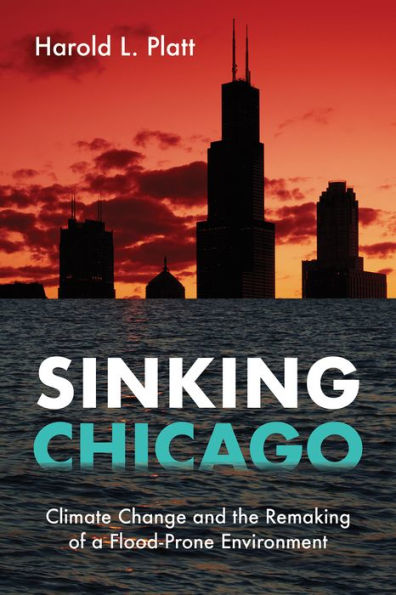
Sinking Chicago: Climate Change and the Remaking of a Flood-Prone Environment in Franklin, TN
Current price: $32.95
Barnes and Noble
Sinking Chicago: Climate Change and the Remaking of a Flood-Prone Environment in Franklin, TN
Current price: $32.95
Loading Inventory...
Size: OS
In
Sinking Chicago,
Harold Platt shows how people responded to climate change in one American city over a hundred-and-fifty-year period. During a long dry spell before 1945, city residents lost sight of the connections between land use, flood control, and water quality. Then, a combination of suburban sprawl and a wet period of extreme weather events created damaging runoff surges that sank Chicago and contaminated drinking supplies with raw sewage.
Chicagoans had to learn how to remake a city built on a prairie wetland. They organized a grassroots movement to protect the six river watersheds in the semi-sacred forest preserves from being turned into open sewers, like the Chicago River. The politics of outdoor recreation clashed with the politics of water management. Platt charts a growing constituency of citizens who fought a corrupt political machine to reclaim the region's waterways and Lake Michigan as a single eco-system. Environmentalists contested policymakers' heroic, big-technology approaches with small-scale solutions for a flood-prone environment.
Sinking Chicago
lays out a roadmap to future planning outcomes.
Sinking Chicago,
Harold Platt shows how people responded to climate change in one American city over a hundred-and-fifty-year period. During a long dry spell before 1945, city residents lost sight of the connections between land use, flood control, and water quality. Then, a combination of suburban sprawl and a wet period of extreme weather events created damaging runoff surges that sank Chicago and contaminated drinking supplies with raw sewage.
Chicagoans had to learn how to remake a city built on a prairie wetland. They organized a grassroots movement to protect the six river watersheds in the semi-sacred forest preserves from being turned into open sewers, like the Chicago River. The politics of outdoor recreation clashed with the politics of water management. Platt charts a growing constituency of citizens who fought a corrupt political machine to reclaim the region's waterways and Lake Michigan as a single eco-system. Environmentalists contested policymakers' heroic, big-technology approaches with small-scale solutions for a flood-prone environment.
Sinking Chicago
lays out a roadmap to future planning outcomes.
In
Sinking Chicago,
Harold Platt shows how people responded to climate change in one American city over a hundred-and-fifty-year period. During a long dry spell before 1945, city residents lost sight of the connections between land use, flood control, and water quality. Then, a combination of suburban sprawl and a wet period of extreme weather events created damaging runoff surges that sank Chicago and contaminated drinking supplies with raw sewage.
Chicagoans had to learn how to remake a city built on a prairie wetland. They organized a grassroots movement to protect the six river watersheds in the semi-sacred forest preserves from being turned into open sewers, like the Chicago River. The politics of outdoor recreation clashed with the politics of water management. Platt charts a growing constituency of citizens who fought a corrupt political machine to reclaim the region's waterways and Lake Michigan as a single eco-system. Environmentalists contested policymakers' heroic, big-technology approaches with small-scale solutions for a flood-prone environment.
Sinking Chicago
lays out a roadmap to future planning outcomes.
Sinking Chicago,
Harold Platt shows how people responded to climate change in one American city over a hundred-and-fifty-year period. During a long dry spell before 1945, city residents lost sight of the connections between land use, flood control, and water quality. Then, a combination of suburban sprawl and a wet period of extreme weather events created damaging runoff surges that sank Chicago and contaminated drinking supplies with raw sewage.
Chicagoans had to learn how to remake a city built on a prairie wetland. They organized a grassroots movement to protect the six river watersheds in the semi-sacred forest preserves from being turned into open sewers, like the Chicago River. The politics of outdoor recreation clashed with the politics of water management. Platt charts a growing constituency of citizens who fought a corrupt political machine to reclaim the region's waterways and Lake Michigan as a single eco-system. Environmentalists contested policymakers' heroic, big-technology approaches with small-scale solutions for a flood-prone environment.
Sinking Chicago
lays out a roadmap to future planning outcomes.
You May Also Like










More About Barnes and Noble at CoolSprings Galleria
Barnes & Noble is the world’s largest retail bookseller and a leading retailer of content, digital media and educational products. Our Nook Digital business offers a lineup of NOOK® tablets and e-Readers and an expansive collection of digital reading content through the NOOK Store®. Barnes & Noble’s mission is to operate the best omni-channel specialty retail business in America, helping both our customers and booksellers reach their aspirations, while being a credit to the communities we serve.
1800 Galleria Blvd #1310, Franklin, TN 37067, United States
Find Barnes and Noble at CoolSprings Galleria in Franklin, TN
Visit Barnes and Noble at CoolSprings Galleria in Franklin, TN
