
Home
South Pacific Air War Volume 4: Buna & Milne Bay, September 1942
Barnes and Noble
Loading Inventory...
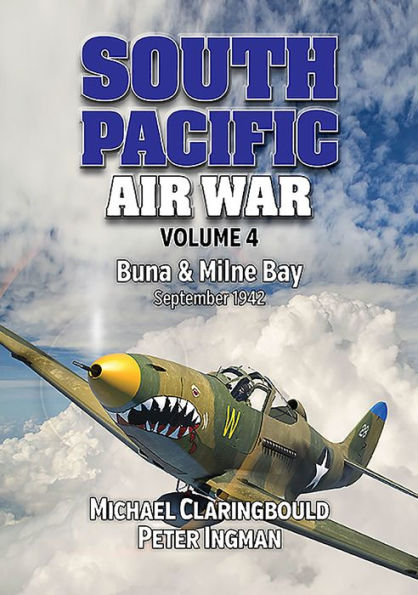
South Pacific Air War Volume 4: Buna & Milne Bay, September 1942 in Franklin, TN
Current price: $34.95
Barnes and Noble
South Pacific Air War Volume 4: Buna & Milne Bay, September 1942 in Franklin, TN
Current price: $34.95
Loading Inventory...
Size: OS
Volume Four chronicles aerial warfare in the South Pacific in the critical period between 19 June and 8 September 1942. It can be read alone or as a continuation of the first three volumes that spanned the first six months of the Pacific War, culminating in the Battle of the Coral Sea.
Unlike the previous three volumes, no aircraft carriers appeared in New Guinea waters. Instead, the air war was fought solely by landbased air units. This was in the face of an increasingly complex strategic situation that saw the Japanese land at both Buna and Milne Bay. For the first time, airpower in the theater was tasked to support the land forces of both sides which became engaged in a bloody struggle in the mountains of Papua and then the narrow muddy quagmire of Milne Bay.
Two veteran Japanese air groups, the Tainan and No. 4 Kokutai, continued their Herculean struggle against mounting Allied opposition. In the face of continued attrition, Japanese pilots had many notable successes including several coveted aerial victories against B17s. Then, from August a plethora of fresh Japanese units arrived in theater including the No. 2, No. 6, Chitose, Misawa and Kisarazu Kokutai.
USAAF P39s and RAAF P40Es responded with low level close support missions and B25s, B26s and B17s ramped up an unrelenting bombing campaign. Towards the end of the period A20A strafers made their combat debut, portending a radical blueprint for future attack tactics in the theater.
Never before has this campaign been chronicled in such detail, with Allied accounts matched against Japanese records for a truly factual account of the conflict.
Unlike the previous three volumes, no aircraft carriers appeared in New Guinea waters. Instead, the air war was fought solely by landbased air units. This was in the face of an increasingly complex strategic situation that saw the Japanese land at both Buna and Milne Bay. For the first time, airpower in the theater was tasked to support the land forces of both sides which became engaged in a bloody struggle in the mountains of Papua and then the narrow muddy quagmire of Milne Bay.
Two veteran Japanese air groups, the Tainan and No. 4 Kokutai, continued their Herculean struggle against mounting Allied opposition. In the face of continued attrition, Japanese pilots had many notable successes including several coveted aerial victories against B17s. Then, from August a plethora of fresh Japanese units arrived in theater including the No. 2, No. 6, Chitose, Misawa and Kisarazu Kokutai.
USAAF P39s and RAAF P40Es responded with low level close support missions and B25s, B26s and B17s ramped up an unrelenting bombing campaign. Towards the end of the period A20A strafers made their combat debut, portending a radical blueprint for future attack tactics in the theater.
Never before has this campaign been chronicled in such detail, with Allied accounts matched against Japanese records for a truly factual account of the conflict.
Volume Four chronicles aerial warfare in the South Pacific in the critical period between 19 June and 8 September 1942. It can be read alone or as a continuation of the first three volumes that spanned the first six months of the Pacific War, culminating in the Battle of the Coral Sea.
Unlike the previous three volumes, no aircraft carriers appeared in New Guinea waters. Instead, the air war was fought solely by landbased air units. This was in the face of an increasingly complex strategic situation that saw the Japanese land at both Buna and Milne Bay. For the first time, airpower in the theater was tasked to support the land forces of both sides which became engaged in a bloody struggle in the mountains of Papua and then the narrow muddy quagmire of Milne Bay.
Two veteran Japanese air groups, the Tainan and No. 4 Kokutai, continued their Herculean struggle against mounting Allied opposition. In the face of continued attrition, Japanese pilots had many notable successes including several coveted aerial victories against B17s. Then, from August a plethora of fresh Japanese units arrived in theater including the No. 2, No. 6, Chitose, Misawa and Kisarazu Kokutai.
USAAF P39s and RAAF P40Es responded with low level close support missions and B25s, B26s and B17s ramped up an unrelenting bombing campaign. Towards the end of the period A20A strafers made their combat debut, portending a radical blueprint for future attack tactics in the theater.
Never before has this campaign been chronicled in such detail, with Allied accounts matched against Japanese records for a truly factual account of the conflict.
Unlike the previous three volumes, no aircraft carriers appeared in New Guinea waters. Instead, the air war was fought solely by landbased air units. This was in the face of an increasingly complex strategic situation that saw the Japanese land at both Buna and Milne Bay. For the first time, airpower in the theater was tasked to support the land forces of both sides which became engaged in a bloody struggle in the mountains of Papua and then the narrow muddy quagmire of Milne Bay.
Two veteran Japanese air groups, the Tainan and No. 4 Kokutai, continued their Herculean struggle against mounting Allied opposition. In the face of continued attrition, Japanese pilots had many notable successes including several coveted aerial victories against B17s. Then, from August a plethora of fresh Japanese units arrived in theater including the No. 2, No. 6, Chitose, Misawa and Kisarazu Kokutai.
USAAF P39s and RAAF P40Es responded with low level close support missions and B25s, B26s and B17s ramped up an unrelenting bombing campaign. Towards the end of the period A20A strafers made their combat debut, portending a radical blueprint for future attack tactics in the theater.
Never before has this campaign been chronicled in such detail, with Allied accounts matched against Japanese records for a truly factual account of the conflict.
You May Also Like












More About Barnes and Noble at CoolSprings Galleria
Barnes & Noble is the world’s largest retail bookseller and a leading retailer of content, digital media and educational products. Our Nook Digital business offers a lineup of NOOK® tablets and e-Readers and an expansive collection of digital reading content through the NOOK Store®. Barnes & Noble’s mission is to operate the best omni-channel specialty retail business in America, helping both our customers and booksellers reach their aspirations, while being a credit to the communities we serve.
1800 Galleria Blvd #1310, Franklin, TN 37067, United States
Find Barnes and Noble at CoolSprings Galleria in Franklin, TN
Visit Barnes and Noble at CoolSprings Galleria in Franklin, TN