
Home
Soviet and Nazi Defectors: Counter-Intelligence WW2 the Cold War
Barnes and Noble
Loading Inventory...
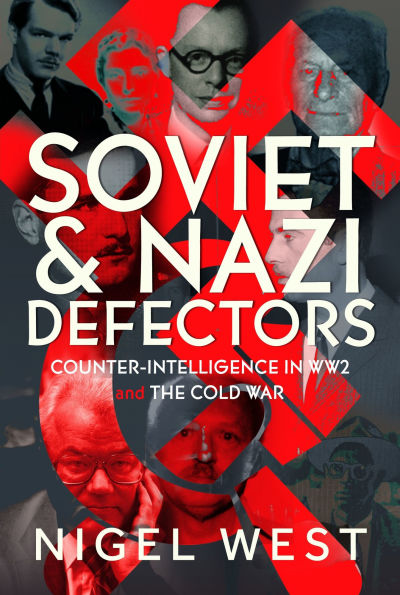
Soviet and Nazi Defectors: Counter-Intelligence WW2 the Cold War in Franklin, TN
Current price: $39.95
Barnes and Noble
Soviet and Nazi Defectors: Counter-Intelligence WW2 the Cold War in Franklin, TN
Current price: $39.95
Loading Inventory...
Size: Hardcover
“… a valuable introduction to the role of defectors in counterintelligence operations and a fine contribution to intelligence literature.” Studies in Intelligence
A wellinformed defector is the most dangerous counterintelligence commodity because it takes a spy to catch a spy. Very occasionally, an agent, especially a mole or an intelligence professional, will make a mistake and incriminate themselves, but usually it is a denunciation, a tip, or a vague clue from a defector that will provide the vital information required to expose the source of a leak.
Relying on recentlydeclassified intelligence files and interviews with defectors, their handlers, their families, and their victims, Nigel West has analysed nine examples of wartime and postwar defections to shed new light on the phenomenon.
Defectors are notoriously difficult to handle, and resettle, because of the range of genuine or invented motives that led them to take such drastic action. Some will provide a noble political motive, seeking to impress their host, while others may be driven by less worthy compulsions – perhaps greed, revenge, career disappointment, envy, anger, or nothing more complicated that a desire to start a life afresh with a different partner.
Defectors are the stockintrade for all counterintelligence specialists who seek the background and context of corridor gossip and watercooler chat cannot be substituted by any amount of technical surveillance, overhead reconnaissance or hard tointerpret intercepted communications. This is the essence of Human Intelligence, and goes to the heart of loyalty, trust, betrayal and deception – the very DNA of espionage.
These nine examples of switching sides all involve intelligence professionals who followed the example of Erich Vermehren. Because of his religious convictions, Vermehren felt compelled to desert the Abwehr in January 1944, even though this meant the arrest of his parents and siblings who were consigned to Sachsenhausen concentration camp. West traced Vermehren, then living under an alias in Switzerland, to hear his story firsthand. He then interviewed the British MI6 officer who had engineered the covert exfiltration from Istanbul of both the German and his wife.
Sometimes a defection may be the result of a period of cultivation, as happened with Vladimir Petrov, who was gently persuaded over many months by his Polish dentist to abandon his clandestine role as rezident in Canberra for a chicken farm. The intermediary, Dr Michael Bialoguski, admitted to the author that right up to the moment of his defection, he and his Australian Security Intelligence Organisation colleagues were not entirely sure of Petrov’s true status.
Once resettled, a defector’s life has daily challenges, as was explained by Yuri Rastvorov’s widow, herself a CIA counterintelligence officer, who recalled the day she had to tell their two daughters that their father was not a Czech tennis coach, but an NKVD defector who had been based in Tokyo.
A wellinformed defector is the most dangerous counterintelligence commodity because it takes a spy to catch a spy. Very occasionally, an agent, especially a mole or an intelligence professional, will make a mistake and incriminate themselves, but usually it is a denunciation, a tip, or a vague clue from a defector that will provide the vital information required to expose the source of a leak.
Relying on recentlydeclassified intelligence files and interviews with defectors, their handlers, their families, and their victims, Nigel West has analysed nine examples of wartime and postwar defections to shed new light on the phenomenon.
Defectors are notoriously difficult to handle, and resettle, because of the range of genuine or invented motives that led them to take such drastic action. Some will provide a noble political motive, seeking to impress their host, while others may be driven by less worthy compulsions – perhaps greed, revenge, career disappointment, envy, anger, or nothing more complicated that a desire to start a life afresh with a different partner.
Defectors are the stockintrade for all counterintelligence specialists who seek the background and context of corridor gossip and watercooler chat cannot be substituted by any amount of technical surveillance, overhead reconnaissance or hard tointerpret intercepted communications. This is the essence of Human Intelligence, and goes to the heart of loyalty, trust, betrayal and deception – the very DNA of espionage.
These nine examples of switching sides all involve intelligence professionals who followed the example of Erich Vermehren. Because of his religious convictions, Vermehren felt compelled to desert the Abwehr in January 1944, even though this meant the arrest of his parents and siblings who were consigned to Sachsenhausen concentration camp. West traced Vermehren, then living under an alias in Switzerland, to hear his story firsthand. He then interviewed the British MI6 officer who had engineered the covert exfiltration from Istanbul of both the German and his wife.
Sometimes a defection may be the result of a period of cultivation, as happened with Vladimir Petrov, who was gently persuaded over many months by his Polish dentist to abandon his clandestine role as rezident in Canberra for a chicken farm. The intermediary, Dr Michael Bialoguski, admitted to the author that right up to the moment of his defection, he and his Australian Security Intelligence Organisation colleagues were not entirely sure of Petrov’s true status.
Once resettled, a defector’s life has daily challenges, as was explained by Yuri Rastvorov’s widow, herself a CIA counterintelligence officer, who recalled the day she had to tell their two daughters that their father was not a Czech tennis coach, but an NKVD defector who had been based in Tokyo.
“… a valuable introduction to the role of defectors in counterintelligence operations and a fine contribution to intelligence literature.” Studies in Intelligence
A wellinformed defector is the most dangerous counterintelligence commodity because it takes a spy to catch a spy. Very occasionally, an agent, especially a mole or an intelligence professional, will make a mistake and incriminate themselves, but usually it is a denunciation, a tip, or a vague clue from a defector that will provide the vital information required to expose the source of a leak.
Relying on recentlydeclassified intelligence files and interviews with defectors, their handlers, their families, and their victims, Nigel West has analysed nine examples of wartime and postwar defections to shed new light on the phenomenon.
Defectors are notoriously difficult to handle, and resettle, because of the range of genuine or invented motives that led them to take such drastic action. Some will provide a noble political motive, seeking to impress their host, while others may be driven by less worthy compulsions – perhaps greed, revenge, career disappointment, envy, anger, or nothing more complicated that a desire to start a life afresh with a different partner.
Defectors are the stockintrade for all counterintelligence specialists who seek the background and context of corridor gossip and watercooler chat cannot be substituted by any amount of technical surveillance, overhead reconnaissance or hard tointerpret intercepted communications. This is the essence of Human Intelligence, and goes to the heart of loyalty, trust, betrayal and deception – the very DNA of espionage.
These nine examples of switching sides all involve intelligence professionals who followed the example of Erich Vermehren. Because of his religious convictions, Vermehren felt compelled to desert the Abwehr in January 1944, even though this meant the arrest of his parents and siblings who were consigned to Sachsenhausen concentration camp. West traced Vermehren, then living under an alias in Switzerland, to hear his story firsthand. He then interviewed the British MI6 officer who had engineered the covert exfiltration from Istanbul of both the German and his wife.
Sometimes a defection may be the result of a period of cultivation, as happened with Vladimir Petrov, who was gently persuaded over many months by his Polish dentist to abandon his clandestine role as rezident in Canberra for a chicken farm. The intermediary, Dr Michael Bialoguski, admitted to the author that right up to the moment of his defection, he and his Australian Security Intelligence Organisation colleagues were not entirely sure of Petrov’s true status.
Once resettled, a defector’s life has daily challenges, as was explained by Yuri Rastvorov’s widow, herself a CIA counterintelligence officer, who recalled the day she had to tell their two daughters that their father was not a Czech tennis coach, but an NKVD defector who had been based in Tokyo.
A wellinformed defector is the most dangerous counterintelligence commodity because it takes a spy to catch a spy. Very occasionally, an agent, especially a mole or an intelligence professional, will make a mistake and incriminate themselves, but usually it is a denunciation, a tip, or a vague clue from a defector that will provide the vital information required to expose the source of a leak.
Relying on recentlydeclassified intelligence files and interviews with defectors, their handlers, their families, and their victims, Nigel West has analysed nine examples of wartime and postwar defections to shed new light on the phenomenon.
Defectors are notoriously difficult to handle, and resettle, because of the range of genuine or invented motives that led them to take such drastic action. Some will provide a noble political motive, seeking to impress their host, while others may be driven by less worthy compulsions – perhaps greed, revenge, career disappointment, envy, anger, or nothing more complicated that a desire to start a life afresh with a different partner.
Defectors are the stockintrade for all counterintelligence specialists who seek the background and context of corridor gossip and watercooler chat cannot be substituted by any amount of technical surveillance, overhead reconnaissance or hard tointerpret intercepted communications. This is the essence of Human Intelligence, and goes to the heart of loyalty, trust, betrayal and deception – the very DNA of espionage.
These nine examples of switching sides all involve intelligence professionals who followed the example of Erich Vermehren. Because of his religious convictions, Vermehren felt compelled to desert the Abwehr in January 1944, even though this meant the arrest of his parents and siblings who were consigned to Sachsenhausen concentration camp. West traced Vermehren, then living under an alias in Switzerland, to hear his story firsthand. He then interviewed the British MI6 officer who had engineered the covert exfiltration from Istanbul of both the German and his wife.
Sometimes a defection may be the result of a period of cultivation, as happened with Vladimir Petrov, who was gently persuaded over many months by his Polish dentist to abandon his clandestine role as rezident in Canberra for a chicken farm. The intermediary, Dr Michael Bialoguski, admitted to the author that right up to the moment of his defection, he and his Australian Security Intelligence Organisation colleagues were not entirely sure of Petrov’s true status.
Once resettled, a defector’s life has daily challenges, as was explained by Yuri Rastvorov’s widow, herself a CIA counterintelligence officer, who recalled the day she had to tell their two daughters that their father was not a Czech tennis coach, but an NKVD defector who had been based in Tokyo.
You May Also Like















More About Barnes and Noble at CoolSprings Galleria
Barnes & Noble is the world’s largest retail bookseller and a leading retailer of content, digital media and educational products. Our Nook Digital business offers a lineup of NOOK® tablets and e-Readers and an expansive collection of digital reading content through the NOOK Store®. Barnes & Noble’s mission is to operate the best omni-channel specialty retail business in America, helping both our customers and booksellers reach their aspirations, while being a credit to the communities we serve.
1800 Galleria Blvd #1310, Franklin, TN 37067, United States
Find Barnes and Noble at CoolSprings Galleria in Franklin, TN
Visit Barnes and Noble at CoolSprings Galleria in Franklin, TN
