
Home
Standing the Breach
Barnes and Noble
Loading Inventory...
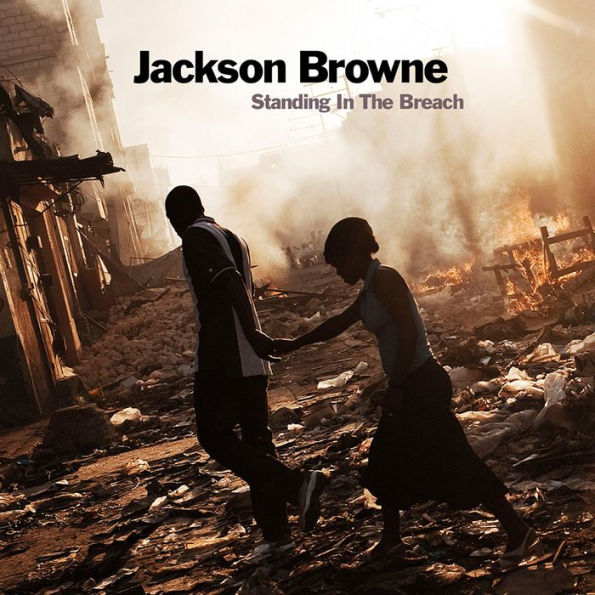
Standing the Breach in Franklin, TN
Current price: $15.99
Barnes and Noble
Standing the Breach in Franklin, TN
Current price: $15.99
Loading Inventory...
Size: CD
On
Jackson Browne
's first studio recording since 2008, the man who defined the '70s singer/songwriter generation finds a fresh way of dealing with the world as it is both personally and politically -- by going back to his own roots. Lyrically,
Browne
is inspired in a way he hasn't been since 1976's
The Pretender
, and this recording's production aesthetic adheres closer to that of even earlier records. His core accompanists are guitarists
Greg Leisz
and
Val McCallum
, with an all-star cast. Socio-political songs are plentiful, but these come from an intimate -- and therefore more appealing -- perspective; he often uses personal memory to frame his concerns. The opener is a (finally) finished version of "The Birds of St. Marks," a song begun in 1967 and performed live intermittently but never recorded in a studio. Its sound harkens back to the
the Byrds
. Jangly guitars and an electric 12-string solo frame its introspective lyrics. "Yeah Yeah" borrows the changes from
Lou Reed
's "Sweet Jane" and pulls them off anew in a love song: "And you paid for the love that we've got, you paid/And you made for the heart when we fought and you stayedâ?¦" "Leaving Winslow" is a West Coast country song whose locale was namechecked in "Take It Easy," yet this isn't an exercise in nostalgia but a solid, and sometimes humorous, paean to acceptance and the desire to disappear. Few writers could deliver a poignant song where surfing transitions to environmentalism and the historical consequences of empire.
can, and does -- with obvious melodic inspiration from
Paul McCartney
-- on "If I Could Be Anywhere," where step by step, the political is equated with personal responsibility. There are two exceptional covers that introduce the record's latter half. Both are stellar love songs that are nonetheless topical, and both are by true song poets. The first is a stunning folk-rock arrangement of
Woody Guthrie
's "You Know the Night," while "Walls and Doors" is a translation of Cuban songwriter/guitarist
Carlos Varela
's "Las Paredes y Puertas," and features him and his trio. The latter is a lilting romantic ballad, arranged to underscore both the composer's and
's personas. Only "Which Side Are You On" sounds "preachy," but that's because it is; it employs the same gospel-blues lyric scheme
Bob Dylan
did on "You Gotta Serve Somebody" but to secular ends. The title track, led by the songwriter and his piano, is a testament to the power of irrepressible hope and resilience: "Though the world may tremble and our foundations crack/We will all assemble and we will build them back." Closer "Her" is one of
's classic broken love songs; its sadness echoes long after the album whispers to a close.
Standing in the Breach
is a back to the basics
album, and is all the better for it. He's no longer speaking at anyone, but conversing from the well of his own experience. ~ Thom Jurek
Jackson Browne
's first studio recording since 2008, the man who defined the '70s singer/songwriter generation finds a fresh way of dealing with the world as it is both personally and politically -- by going back to his own roots. Lyrically,
Browne
is inspired in a way he hasn't been since 1976's
The Pretender
, and this recording's production aesthetic adheres closer to that of even earlier records. His core accompanists are guitarists
Greg Leisz
and
Val McCallum
, with an all-star cast. Socio-political songs are plentiful, but these come from an intimate -- and therefore more appealing -- perspective; he often uses personal memory to frame his concerns. The opener is a (finally) finished version of "The Birds of St. Marks," a song begun in 1967 and performed live intermittently but never recorded in a studio. Its sound harkens back to the
the Byrds
. Jangly guitars and an electric 12-string solo frame its introspective lyrics. "Yeah Yeah" borrows the changes from
Lou Reed
's "Sweet Jane" and pulls them off anew in a love song: "And you paid for the love that we've got, you paid/And you made for the heart when we fought and you stayedâ?¦" "Leaving Winslow" is a West Coast country song whose locale was namechecked in "Take It Easy," yet this isn't an exercise in nostalgia but a solid, and sometimes humorous, paean to acceptance and the desire to disappear. Few writers could deliver a poignant song where surfing transitions to environmentalism and the historical consequences of empire.
can, and does -- with obvious melodic inspiration from
Paul McCartney
-- on "If I Could Be Anywhere," where step by step, the political is equated with personal responsibility. There are two exceptional covers that introduce the record's latter half. Both are stellar love songs that are nonetheless topical, and both are by true song poets. The first is a stunning folk-rock arrangement of
Woody Guthrie
's "You Know the Night," while "Walls and Doors" is a translation of Cuban songwriter/guitarist
Carlos Varela
's "Las Paredes y Puertas," and features him and his trio. The latter is a lilting romantic ballad, arranged to underscore both the composer's and
's personas. Only "Which Side Are You On" sounds "preachy," but that's because it is; it employs the same gospel-blues lyric scheme
Bob Dylan
did on "You Gotta Serve Somebody" but to secular ends. The title track, led by the songwriter and his piano, is a testament to the power of irrepressible hope and resilience: "Though the world may tremble and our foundations crack/We will all assemble and we will build them back." Closer "Her" is one of
's classic broken love songs; its sadness echoes long after the album whispers to a close.
Standing in the Breach
is a back to the basics
album, and is all the better for it. He's no longer speaking at anyone, but conversing from the well of his own experience. ~ Thom Jurek
On
Jackson Browne
's first studio recording since 2008, the man who defined the '70s singer/songwriter generation finds a fresh way of dealing with the world as it is both personally and politically -- by going back to his own roots. Lyrically,
Browne
is inspired in a way he hasn't been since 1976's
The Pretender
, and this recording's production aesthetic adheres closer to that of even earlier records. His core accompanists are guitarists
Greg Leisz
and
Val McCallum
, with an all-star cast. Socio-political songs are plentiful, but these come from an intimate -- and therefore more appealing -- perspective; he often uses personal memory to frame his concerns. The opener is a (finally) finished version of "The Birds of St. Marks," a song begun in 1967 and performed live intermittently but never recorded in a studio. Its sound harkens back to the
the Byrds
. Jangly guitars and an electric 12-string solo frame its introspective lyrics. "Yeah Yeah" borrows the changes from
Lou Reed
's "Sweet Jane" and pulls them off anew in a love song: "And you paid for the love that we've got, you paid/And you made for the heart when we fought and you stayedâ?¦" "Leaving Winslow" is a West Coast country song whose locale was namechecked in "Take It Easy," yet this isn't an exercise in nostalgia but a solid, and sometimes humorous, paean to acceptance and the desire to disappear. Few writers could deliver a poignant song where surfing transitions to environmentalism and the historical consequences of empire.
can, and does -- with obvious melodic inspiration from
Paul McCartney
-- on "If I Could Be Anywhere," where step by step, the political is equated with personal responsibility. There are two exceptional covers that introduce the record's latter half. Both are stellar love songs that are nonetheless topical, and both are by true song poets. The first is a stunning folk-rock arrangement of
Woody Guthrie
's "You Know the Night," while "Walls and Doors" is a translation of Cuban songwriter/guitarist
Carlos Varela
's "Las Paredes y Puertas," and features him and his trio. The latter is a lilting romantic ballad, arranged to underscore both the composer's and
's personas. Only "Which Side Are You On" sounds "preachy," but that's because it is; it employs the same gospel-blues lyric scheme
Bob Dylan
did on "You Gotta Serve Somebody" but to secular ends. The title track, led by the songwriter and his piano, is a testament to the power of irrepressible hope and resilience: "Though the world may tremble and our foundations crack/We will all assemble and we will build them back." Closer "Her" is one of
's classic broken love songs; its sadness echoes long after the album whispers to a close.
Standing in the Breach
is a back to the basics
album, and is all the better for it. He's no longer speaking at anyone, but conversing from the well of his own experience. ~ Thom Jurek
Jackson Browne
's first studio recording since 2008, the man who defined the '70s singer/songwriter generation finds a fresh way of dealing with the world as it is both personally and politically -- by going back to his own roots. Lyrically,
Browne
is inspired in a way he hasn't been since 1976's
The Pretender
, and this recording's production aesthetic adheres closer to that of even earlier records. His core accompanists are guitarists
Greg Leisz
and
Val McCallum
, with an all-star cast. Socio-political songs are plentiful, but these come from an intimate -- and therefore more appealing -- perspective; he often uses personal memory to frame his concerns. The opener is a (finally) finished version of "The Birds of St. Marks," a song begun in 1967 and performed live intermittently but never recorded in a studio. Its sound harkens back to the
the Byrds
. Jangly guitars and an electric 12-string solo frame its introspective lyrics. "Yeah Yeah" borrows the changes from
Lou Reed
's "Sweet Jane" and pulls them off anew in a love song: "And you paid for the love that we've got, you paid/And you made for the heart when we fought and you stayedâ?¦" "Leaving Winslow" is a West Coast country song whose locale was namechecked in "Take It Easy," yet this isn't an exercise in nostalgia but a solid, and sometimes humorous, paean to acceptance and the desire to disappear. Few writers could deliver a poignant song where surfing transitions to environmentalism and the historical consequences of empire.
can, and does -- with obvious melodic inspiration from
Paul McCartney
-- on "If I Could Be Anywhere," where step by step, the political is equated with personal responsibility. There are two exceptional covers that introduce the record's latter half. Both are stellar love songs that are nonetheless topical, and both are by true song poets. The first is a stunning folk-rock arrangement of
Woody Guthrie
's "You Know the Night," while "Walls and Doors" is a translation of Cuban songwriter/guitarist
Carlos Varela
's "Las Paredes y Puertas," and features him and his trio. The latter is a lilting romantic ballad, arranged to underscore both the composer's and
's personas. Only "Which Side Are You On" sounds "preachy," but that's because it is; it employs the same gospel-blues lyric scheme
Bob Dylan
did on "You Gotta Serve Somebody" but to secular ends. The title track, led by the songwriter and his piano, is a testament to the power of irrepressible hope and resilience: "Though the world may tremble and our foundations crack/We will all assemble and we will build them back." Closer "Her" is one of
's classic broken love songs; its sadness echoes long after the album whispers to a close.
Standing in the Breach
is a back to the basics
album, and is all the better for it. He's no longer speaking at anyone, but conversing from the well of his own experience. ~ Thom Jurek
You May Also Like














More About Barnes and Noble at CoolSprings Galleria
Barnes & Noble is the world’s largest retail bookseller and a leading retailer of content, digital media and educational products. Our Nook Digital business offers a lineup of NOOK® tablets and e-Readers and an expansive collection of digital reading content through the NOOK Store®. Barnes & Noble’s mission is to operate the best omni-channel specialty retail business in America, helping both our customers and booksellers reach their aspirations, while being a credit to the communities we serve.
1800 Galleria Blvd #1310, Franklin, TN 37067, United States
Find Barnes and Noble at CoolSprings Galleria in Franklin, TN
Visit Barnes and Noble at CoolSprings Galleria in Franklin, TN
