
Home
Starving Africa Feeds the Well Fed West
Barnes and Noble
Loading Inventory...
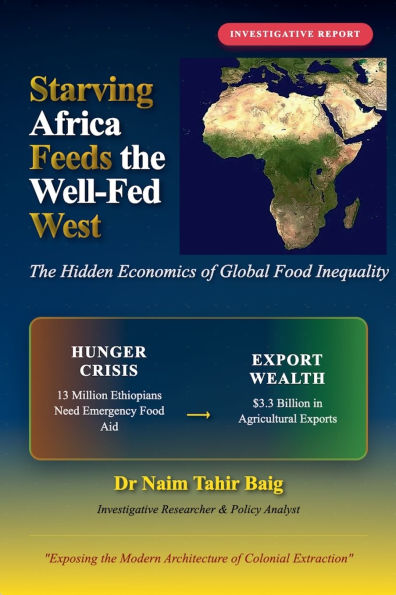
Starving Africa Feeds the Well Fed West in Franklin, TN
Current price: $49.99
Barnes and Noble
Starving Africa Feeds the Well Fed West in Franklin, TN
Current price: $49.99
Loading Inventory...
Size: Paperback
Book Description
Starving Africa Feeds the Well-Fed West: The Hidden Economics of Global Food Inequality
is a groundbreaking exposé that reveals one of the most profound injustices of our time. While millions of Africans face hunger and malnutrition, the continent's agricultural systems are systematically structured to feed wealthy Western consumers, perpetuating a modern form of economic colonialism that extracts wealth from African communities while enriching multinational corporations.
Dr. Naim Tahir Baig, a distinguished scholar in International Relations and Contemporary Global Affairs, presents a meticulously researched analysis that traces the roots of this paradox from colonial agricultural policies to contemporary structural adjustment programs, corporate land grabbing, and international trade agreements. Through compelling case studies-from Kenyan flower farms that drain Lake Naivasha to supply European markets, to Ghanaian cocoa farmers who cannot afford the chocolate made from their own labor-the book demonstrates how historical patterns of exploitation have evolved into sophisticated systems of economic control.
The book unveils the hidden mechanisms of extraction: how debt diplomacy forces African governments to prioritize export crops over food security, how multinational corporations control agricultural value chains from seed to supermarket shelf, how UN peacekeeping missions often function to secure resource extraction rather than protect civilians, and how climate change impacts are weaponized to justify further intervention in African agricultural systems. Dr. Baig's analysis is particularly powerful in its examination of gender dimensions, showing how women's agricultural labor is systematically exploited while their traditional roles in food production are undermined.
Yet this is not merely a critique-it is a call to action. The final chapters document the growing African food sovereignty movement and provide a comprehensive roadmap for agricultural liberation. From successful agroecological transitions in Malawi to community-led resistance movements across the continent, Dr. Baig demonstrates that alternatives exist and are expanding despite overwhelming structural obstacles. The book concludes with practical strategies for debt cancellation, land reform, and the transformation of international trade relations that could enable Africa to feed itself while engaging with the world on equitable terms.
Written with both academic rigor and moral urgency, this book is essential reading for anyone seeking to understand how global economic relationships perpetuate hunger amid abundance, and how they can be transformed to prioritize human dignity over corporate profits. Dr. Baig's work stands as both a devastating indictment of contemporary economic colonialism and an inspiring vision of what African agricultural liberation could achieve.
Starving Africa Feeds the Well-Fed West: The Hidden Economics of Global Food Inequality
is a groundbreaking exposé that reveals one of the most profound injustices of our time. While millions of Africans face hunger and malnutrition, the continent's agricultural systems are systematically structured to feed wealthy Western consumers, perpetuating a modern form of economic colonialism that extracts wealth from African communities while enriching multinational corporations.
Dr. Naim Tahir Baig, a distinguished scholar in International Relations and Contemporary Global Affairs, presents a meticulously researched analysis that traces the roots of this paradox from colonial agricultural policies to contemporary structural adjustment programs, corporate land grabbing, and international trade agreements. Through compelling case studies-from Kenyan flower farms that drain Lake Naivasha to supply European markets, to Ghanaian cocoa farmers who cannot afford the chocolate made from their own labor-the book demonstrates how historical patterns of exploitation have evolved into sophisticated systems of economic control.
The book unveils the hidden mechanisms of extraction: how debt diplomacy forces African governments to prioritize export crops over food security, how multinational corporations control agricultural value chains from seed to supermarket shelf, how UN peacekeeping missions often function to secure resource extraction rather than protect civilians, and how climate change impacts are weaponized to justify further intervention in African agricultural systems. Dr. Baig's analysis is particularly powerful in its examination of gender dimensions, showing how women's agricultural labor is systematically exploited while their traditional roles in food production are undermined.
Yet this is not merely a critique-it is a call to action. The final chapters document the growing African food sovereignty movement and provide a comprehensive roadmap for agricultural liberation. From successful agroecological transitions in Malawi to community-led resistance movements across the continent, Dr. Baig demonstrates that alternatives exist and are expanding despite overwhelming structural obstacles. The book concludes with practical strategies for debt cancellation, land reform, and the transformation of international trade relations that could enable Africa to feed itself while engaging with the world on equitable terms.
Written with both academic rigor and moral urgency, this book is essential reading for anyone seeking to understand how global economic relationships perpetuate hunger amid abundance, and how they can be transformed to prioritize human dignity over corporate profits. Dr. Baig's work stands as both a devastating indictment of contemporary economic colonialism and an inspiring vision of what African agricultural liberation could achieve.
Book Description
Starving Africa Feeds the Well-Fed West: The Hidden Economics of Global Food Inequality
is a groundbreaking exposé that reveals one of the most profound injustices of our time. While millions of Africans face hunger and malnutrition, the continent's agricultural systems are systematically structured to feed wealthy Western consumers, perpetuating a modern form of economic colonialism that extracts wealth from African communities while enriching multinational corporations.
Dr. Naim Tahir Baig, a distinguished scholar in International Relations and Contemporary Global Affairs, presents a meticulously researched analysis that traces the roots of this paradox from colonial agricultural policies to contemporary structural adjustment programs, corporate land grabbing, and international trade agreements. Through compelling case studies-from Kenyan flower farms that drain Lake Naivasha to supply European markets, to Ghanaian cocoa farmers who cannot afford the chocolate made from their own labor-the book demonstrates how historical patterns of exploitation have evolved into sophisticated systems of economic control.
The book unveils the hidden mechanisms of extraction: how debt diplomacy forces African governments to prioritize export crops over food security, how multinational corporations control agricultural value chains from seed to supermarket shelf, how UN peacekeeping missions often function to secure resource extraction rather than protect civilians, and how climate change impacts are weaponized to justify further intervention in African agricultural systems. Dr. Baig's analysis is particularly powerful in its examination of gender dimensions, showing how women's agricultural labor is systematically exploited while their traditional roles in food production are undermined.
Yet this is not merely a critique-it is a call to action. The final chapters document the growing African food sovereignty movement and provide a comprehensive roadmap for agricultural liberation. From successful agroecological transitions in Malawi to community-led resistance movements across the continent, Dr. Baig demonstrates that alternatives exist and are expanding despite overwhelming structural obstacles. The book concludes with practical strategies for debt cancellation, land reform, and the transformation of international trade relations that could enable Africa to feed itself while engaging with the world on equitable terms.
Written with both academic rigor and moral urgency, this book is essential reading for anyone seeking to understand how global economic relationships perpetuate hunger amid abundance, and how they can be transformed to prioritize human dignity over corporate profits. Dr. Baig's work stands as both a devastating indictment of contemporary economic colonialism and an inspiring vision of what African agricultural liberation could achieve.
Starving Africa Feeds the Well-Fed West: The Hidden Economics of Global Food Inequality
is a groundbreaking exposé that reveals one of the most profound injustices of our time. While millions of Africans face hunger and malnutrition, the continent's agricultural systems are systematically structured to feed wealthy Western consumers, perpetuating a modern form of economic colonialism that extracts wealth from African communities while enriching multinational corporations.
Dr. Naim Tahir Baig, a distinguished scholar in International Relations and Contemporary Global Affairs, presents a meticulously researched analysis that traces the roots of this paradox from colonial agricultural policies to contemporary structural adjustment programs, corporate land grabbing, and international trade agreements. Through compelling case studies-from Kenyan flower farms that drain Lake Naivasha to supply European markets, to Ghanaian cocoa farmers who cannot afford the chocolate made from their own labor-the book demonstrates how historical patterns of exploitation have evolved into sophisticated systems of economic control.
The book unveils the hidden mechanisms of extraction: how debt diplomacy forces African governments to prioritize export crops over food security, how multinational corporations control agricultural value chains from seed to supermarket shelf, how UN peacekeeping missions often function to secure resource extraction rather than protect civilians, and how climate change impacts are weaponized to justify further intervention in African agricultural systems. Dr. Baig's analysis is particularly powerful in its examination of gender dimensions, showing how women's agricultural labor is systematically exploited while their traditional roles in food production are undermined.
Yet this is not merely a critique-it is a call to action. The final chapters document the growing African food sovereignty movement and provide a comprehensive roadmap for agricultural liberation. From successful agroecological transitions in Malawi to community-led resistance movements across the continent, Dr. Baig demonstrates that alternatives exist and are expanding despite overwhelming structural obstacles. The book concludes with practical strategies for debt cancellation, land reform, and the transformation of international trade relations that could enable Africa to feed itself while engaging with the world on equitable terms.
Written with both academic rigor and moral urgency, this book is essential reading for anyone seeking to understand how global economic relationships perpetuate hunger amid abundance, and how they can be transformed to prioritize human dignity over corporate profits. Dr. Baig's work stands as both a devastating indictment of contemporary economic colonialism and an inspiring vision of what African agricultural liberation could achieve.
You May Also Like

![Living Well: Dine [Barnes & Noble Exclusive]](https://prodimage.images-bn.com/pimages/0661868319927_p0_v1_s600x595.jpg)








More About Barnes and Noble at CoolSprings Galleria
Barnes & Noble is the world’s largest retail bookseller and a leading retailer of content, digital media and educational products. Our Nook Digital business offers a lineup of NOOK® tablets and e-Readers and an expansive collection of digital reading content through the NOOK Store®. Barnes & Noble’s mission is to operate the best omni-channel specialty retail business in America, helping both our customers and booksellers reach their aspirations, while being a credit to the communities we serve.
1800 Galleria Blvd #1310, Franklin, TN 37067, United States
Find Barnes and Noble at CoolSprings Galleria in Franklin, TN
Visit Barnes and Noble at CoolSprings Galleria in Franklin, TN
