
Home
Subnational Partnerships for Sustainable Development: Transatlantic Cooperation between the United States and Germany
Barnes and Noble
Loading Inventory...
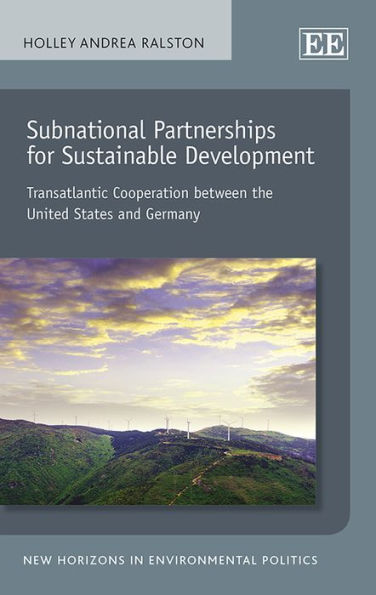
Subnational Partnerships for Sustainable Development: Transatlantic Cooperation between the United States and Germany in Franklin, TN
Current price: $146.00
Barnes and Noble
Subnational Partnerships for Sustainable Development: Transatlantic Cooperation between the United States and Germany in Franklin, TN
Current price: $146.00
Loading Inventory...
Size: OS
This fascinating volume examines the recent increase in subnational environmental policy agreements between different countries, with a particular focus on Germany and the US. Holley Ralston explores why international environmental partnerships are forming at the state level and the factors that both aid and inhibit their longterm success.
The book begins with an indepth analysis of the theoretical and historical frameworks of transnational partnerships, before transitioning into a discussion of specific environmental agreements between US and German states. The following partnerships are covered in detail: California and Bavaria (1995 and 2000), Wisconsin and Bavaria (1998), Maryland and SchleswigHolstein (2002) and California and North RhineWestphalia (2004). Taken together, these examples provide important insights into the ways in which multilevel governance structures allow subnational actors to shape policy developments around global environmental issues.
This timely study the first of its kind on this topic will appeal to both academic researchers and policymakers with an interest in global environmental governance, environmental policymaking, comparative governance and the roles of individuals versus institutions.
The book begins with an indepth analysis of the theoretical and historical frameworks of transnational partnerships, before transitioning into a discussion of specific environmental agreements between US and German states. The following partnerships are covered in detail: California and Bavaria (1995 and 2000), Wisconsin and Bavaria (1998), Maryland and SchleswigHolstein (2002) and California and North RhineWestphalia (2004). Taken together, these examples provide important insights into the ways in which multilevel governance structures allow subnational actors to shape policy developments around global environmental issues.
This timely study the first of its kind on this topic will appeal to both academic researchers and policymakers with an interest in global environmental governance, environmental policymaking, comparative governance and the roles of individuals versus institutions.
This fascinating volume examines the recent increase in subnational environmental policy agreements between different countries, with a particular focus on Germany and the US. Holley Ralston explores why international environmental partnerships are forming at the state level and the factors that both aid and inhibit their longterm success.
The book begins with an indepth analysis of the theoretical and historical frameworks of transnational partnerships, before transitioning into a discussion of specific environmental agreements between US and German states. The following partnerships are covered in detail: California and Bavaria (1995 and 2000), Wisconsin and Bavaria (1998), Maryland and SchleswigHolstein (2002) and California and North RhineWestphalia (2004). Taken together, these examples provide important insights into the ways in which multilevel governance structures allow subnational actors to shape policy developments around global environmental issues.
This timely study the first of its kind on this topic will appeal to both academic researchers and policymakers with an interest in global environmental governance, environmental policymaking, comparative governance and the roles of individuals versus institutions.
The book begins with an indepth analysis of the theoretical and historical frameworks of transnational partnerships, before transitioning into a discussion of specific environmental agreements between US and German states. The following partnerships are covered in detail: California and Bavaria (1995 and 2000), Wisconsin and Bavaria (1998), Maryland and SchleswigHolstein (2002) and California and North RhineWestphalia (2004). Taken together, these examples provide important insights into the ways in which multilevel governance structures allow subnational actors to shape policy developments around global environmental issues.
This timely study the first of its kind on this topic will appeal to both academic researchers and policymakers with an interest in global environmental governance, environmental policymaking, comparative governance and the roles of individuals versus institutions.
You May Also Like











More About Barnes and Noble at CoolSprings Galleria
Barnes & Noble is the world’s largest retail bookseller and a leading retailer of content, digital media and educational products. Our Nook Digital business offers a lineup of NOOK® tablets and e-Readers and an expansive collection of digital reading content through the NOOK Store®. Barnes & Noble’s mission is to operate the best omni-channel specialty retail business in America, helping both our customers and booksellers reach their aspirations, while being a credit to the communities we serve.
1800 Galleria Blvd #1310, Franklin, TN 37067, United States
Find Barnes and Noble at CoolSprings Galleria in Franklin, TN
Visit Barnes and Noble at CoolSprings Galleria in Franklin, TN
