
Home
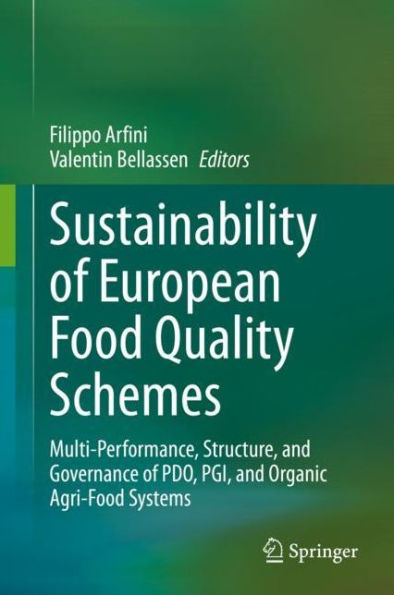
Sustainability of European Food Quality Schemes: Multi-Performance, Structure, and Governance PDO, PGI, Organic Agri-Food Systems
Barnes and Noble
Loading Inventory...
Sustainability of European Food Quality Schemes: Multi-Performance, Structure, and Governance PDO, PGI, Organic Agri-Food Systems in Franklin, TN
Current price: $109.99
Barnes and Noble
Sustainability of European Food Quality Schemes: Multi-Performance, Structure, and Governance PDO, PGI, Organic Agri-Food Systems in Franklin, TN
Current price: $109.99
Loading Inventory...
Size: Hardcover
This edited volume evaluates recent EU quality policy, focusing on the structure, governance, technical specifications and performances – economic, environmental and social – of Food Quality Schemes (FQS) in the European Union and South East Asia. The intended benefits of FQS include generating a fair return for farmers and producers, and enabling consumers to make better‐informed purchasing choices through effective labeling. In addition, policy makers now consider FQS as a means of guaranteeing not only quality in food production, but also sustainability.
Despite these potential benefits, the economic performance of the FQS (e.g. PDO, PGI, organic) has been variable. While some support significant value‐added production, with substantial benefits to producers, consumers and wider economies, many others have failed to become economically sustainable. In addition, the environmental and social performance of FQS remains largely unexamined, with theexception of the environmental performance of organic products.
The editors examine these discrepancies and offer a nuanced evaluation of the effectiveness of such policies. Several unique features make this volume a key resource for those interested in FQS and in the sustainability of food products. The editors provide a concise description of the value chain, the governance and the technical specifications of 27 FQS in Europe and South East Asia. The editors also provide a sustainability assessment of each of these FQS, and support or question the view that FQS are moving from “quality” to “sustainability.” Finally, the volume serves as a repository of key data on these FQS. Readers have access to the raw data necessary to compute the indicators used in the sustainability assessment (eg. value added, number of jobs, quantity of fertilizers, etc), allowing them to conduct novel re-analysis.
The book is designed for an interdisciplinary audience of academics, policymakers, and stakeholders. The compilation of FQS case studies makes it a useful reference for researchers and students of food policy, geography, food anthropology, local and rural development, local agri-food systems and agri-food chains. Stakeholders such as national and European regulators, entities responsible for FQS technical specifications, and embassy staff will also find the information relevant. Additionally, individuals helping to implement food quality schemes, including auditors, producers, and consumer associates, as well as stakeholders in the sustainability of food products, including farmers, farmer's associations, and environmental NGOs, will also find the information relevant and important for their work.
Despite these potential benefits, the economic performance of the FQS (e.g. PDO, PGI, organic) has been variable. While some support significant value‐added production, with substantial benefits to producers, consumers and wider economies, many others have failed to become economically sustainable. In addition, the environmental and social performance of FQS remains largely unexamined, with theexception of the environmental performance of organic products.
The editors examine these discrepancies and offer a nuanced evaluation of the effectiveness of such policies. Several unique features make this volume a key resource for those interested in FQS and in the sustainability of food products. The editors provide a concise description of the value chain, the governance and the technical specifications of 27 FQS in Europe and South East Asia. The editors also provide a sustainability assessment of each of these FQS, and support or question the view that FQS are moving from “quality” to “sustainability.” Finally, the volume serves as a repository of key data on these FQS. Readers have access to the raw data necessary to compute the indicators used in the sustainability assessment (eg. value added, number of jobs, quantity of fertilizers, etc), allowing them to conduct novel re-analysis.
The book is designed for an interdisciplinary audience of academics, policymakers, and stakeholders. The compilation of FQS case studies makes it a useful reference for researchers and students of food policy, geography, food anthropology, local and rural development, local agri-food systems and agri-food chains. Stakeholders such as national and European regulators, entities responsible for FQS technical specifications, and embassy staff will also find the information relevant. Additionally, individuals helping to implement food quality schemes, including auditors, producers, and consumer associates, as well as stakeholders in the sustainability of food products, including farmers, farmer's associations, and environmental NGOs, will also find the information relevant and important for their work.
This edited volume evaluates recent EU quality policy, focusing on the structure, governance, technical specifications and performances – economic, environmental and social – of Food Quality Schemes (FQS) in the European Union and South East Asia. The intended benefits of FQS include generating a fair return for farmers and producers, and enabling consumers to make better‐informed purchasing choices through effective labeling. In addition, policy makers now consider FQS as a means of guaranteeing not only quality in food production, but also sustainability.
Despite these potential benefits, the economic performance of the FQS (e.g. PDO, PGI, organic) has been variable. While some support significant value‐added production, with substantial benefits to producers, consumers and wider economies, many others have failed to become economically sustainable. In addition, the environmental and social performance of FQS remains largely unexamined, with theexception of the environmental performance of organic products.
The editors examine these discrepancies and offer a nuanced evaluation of the effectiveness of such policies. Several unique features make this volume a key resource for those interested in FQS and in the sustainability of food products. The editors provide a concise description of the value chain, the governance and the technical specifications of 27 FQS in Europe and South East Asia. The editors also provide a sustainability assessment of each of these FQS, and support or question the view that FQS are moving from “quality” to “sustainability.” Finally, the volume serves as a repository of key data on these FQS. Readers have access to the raw data necessary to compute the indicators used in the sustainability assessment (eg. value added, number of jobs, quantity of fertilizers, etc), allowing them to conduct novel re-analysis.
The book is designed for an interdisciplinary audience of academics, policymakers, and stakeholders. The compilation of FQS case studies makes it a useful reference for researchers and students of food policy, geography, food anthropology, local and rural development, local agri-food systems and agri-food chains. Stakeholders such as national and European regulators, entities responsible for FQS technical specifications, and embassy staff will also find the information relevant. Additionally, individuals helping to implement food quality schemes, including auditors, producers, and consumer associates, as well as stakeholders in the sustainability of food products, including farmers, farmer's associations, and environmental NGOs, will also find the information relevant and important for their work.
Despite these potential benefits, the economic performance of the FQS (e.g. PDO, PGI, organic) has been variable. While some support significant value‐added production, with substantial benefits to producers, consumers and wider economies, many others have failed to become economically sustainable. In addition, the environmental and social performance of FQS remains largely unexamined, with theexception of the environmental performance of organic products.
The editors examine these discrepancies and offer a nuanced evaluation of the effectiveness of such policies. Several unique features make this volume a key resource for those interested in FQS and in the sustainability of food products. The editors provide a concise description of the value chain, the governance and the technical specifications of 27 FQS in Europe and South East Asia. The editors also provide a sustainability assessment of each of these FQS, and support or question the view that FQS are moving from “quality” to “sustainability.” Finally, the volume serves as a repository of key data on these FQS. Readers have access to the raw data necessary to compute the indicators used in the sustainability assessment (eg. value added, number of jobs, quantity of fertilizers, etc), allowing them to conduct novel re-analysis.
The book is designed for an interdisciplinary audience of academics, policymakers, and stakeholders. The compilation of FQS case studies makes it a useful reference for researchers and students of food policy, geography, food anthropology, local and rural development, local agri-food systems and agri-food chains. Stakeholders such as national and European regulators, entities responsible for FQS technical specifications, and embassy staff will also find the information relevant. Additionally, individuals helping to implement food quality schemes, including auditors, producers, and consumer associates, as well as stakeholders in the sustainability of food products, including farmers, farmer's associations, and environmental NGOs, will also find the information relevant and important for their work.
You May Also Like









More About Barnes and Noble at CoolSprings Galleria
Barnes & Noble is the world’s largest retail bookseller and a leading retailer of content, digital media and educational products. Our Nook Digital business offers a lineup of NOOK® tablets and e-Readers and an expansive collection of digital reading content through the NOOK Store®. Barnes & Noble’s mission is to operate the best omni-channel specialty retail business in America, helping both our customers and booksellers reach their aspirations, while being a credit to the communities we serve.
1800 Galleria Blvd #1310, Franklin, TN 37067, United States
Find Barnes and Noble at CoolSprings Galleria in Franklin, TN
Visit Barnes and Noble at CoolSprings Galleria in Franklin, TN
