
Home
Temptations Ruin: Sovereign Accumulation and the Making of Post-Genocide Turkey
Barnes and Noble
Loading Inventory...
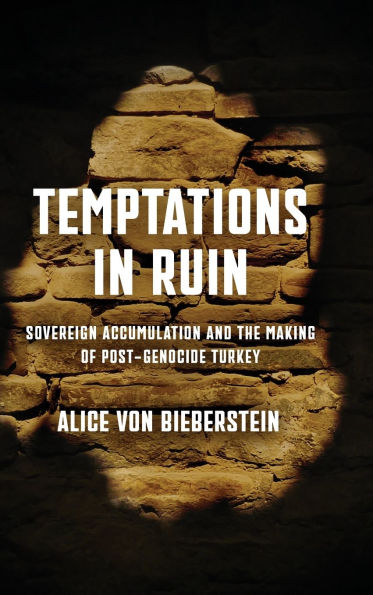
Temptations Ruin: Sovereign Accumulation and the Making of Post-Genocide Turkey in Franklin, TN
Current price: $54.95
Barnes and Noble
Temptations Ruin: Sovereign Accumulation and the Making of Post-Genocide Turkey in Franklin, TN
Current price: $54.95
Loading Inventory...
Size: Hardcover
An ethnographic account of the politicaleconomic afterlife of the Armenian genocide in presentday Turkey
Temptations in Ruin
examines the politicaleconomic afterlife of the Armenian genocide in presentday Turkey, focusing on the region of Muş (Moush). Anthropologist Alice von Bieberstein explores how the 1915 genocide and dispossession of Armenians shaped property regimes, citizenship, and economic logics that continue to reverberate today.
By combining ethnography with historical context and diverse perspectives,
generates new insights into how past violence shapes contemporary economic practices and social relations. To tell this history, von Bieberstein introduces the concept of “sovereign accumulation” to describe the ways in which the state and other actors mobilize histories of sovereign violence for presentday economic benefit. This framework illuminates the legacy of violence and resource extraction present in such practices as urban renewal projects, treasure hunting for “Armenian gold,” and heritage tourism and identifies these practices’ very existence as manifestations of the economic aftermath of the genocide.
uncovers the ways in which the genocide gave rise to a racialized property regime and a recursive movement of sovereign accumulation that builds on and reanimates the Armenian genocide as generative of wealth in the present. And it demonstrates the complex interplay between genocide denial, destruction, and valorization in postgenocide contexts. Highlighting the enduring resonance of genocide, von Bieberstein enhances our understanding of political violence’s longterm impacts on society and on the economy.
Temptations in Ruin
examines the politicaleconomic afterlife of the Armenian genocide in presentday Turkey, focusing on the region of Muş (Moush). Anthropologist Alice von Bieberstein explores how the 1915 genocide and dispossession of Armenians shaped property regimes, citizenship, and economic logics that continue to reverberate today.
By combining ethnography with historical context and diverse perspectives,
generates new insights into how past violence shapes contemporary economic practices and social relations. To tell this history, von Bieberstein introduces the concept of “sovereign accumulation” to describe the ways in which the state and other actors mobilize histories of sovereign violence for presentday economic benefit. This framework illuminates the legacy of violence and resource extraction present in such practices as urban renewal projects, treasure hunting for “Armenian gold,” and heritage tourism and identifies these practices’ very existence as manifestations of the economic aftermath of the genocide.
uncovers the ways in which the genocide gave rise to a racialized property regime and a recursive movement of sovereign accumulation that builds on and reanimates the Armenian genocide as generative of wealth in the present. And it demonstrates the complex interplay between genocide denial, destruction, and valorization in postgenocide contexts. Highlighting the enduring resonance of genocide, von Bieberstein enhances our understanding of political violence’s longterm impacts on society and on the economy.
An ethnographic account of the politicaleconomic afterlife of the Armenian genocide in presentday Turkey
Temptations in Ruin
examines the politicaleconomic afterlife of the Armenian genocide in presentday Turkey, focusing on the region of Muş (Moush). Anthropologist Alice von Bieberstein explores how the 1915 genocide and dispossession of Armenians shaped property regimes, citizenship, and economic logics that continue to reverberate today.
By combining ethnography with historical context and diverse perspectives,
generates new insights into how past violence shapes contemporary economic practices and social relations. To tell this history, von Bieberstein introduces the concept of “sovereign accumulation” to describe the ways in which the state and other actors mobilize histories of sovereign violence for presentday economic benefit. This framework illuminates the legacy of violence and resource extraction present in such practices as urban renewal projects, treasure hunting for “Armenian gold,” and heritage tourism and identifies these practices’ very existence as manifestations of the economic aftermath of the genocide.
uncovers the ways in which the genocide gave rise to a racialized property regime and a recursive movement of sovereign accumulation that builds on and reanimates the Armenian genocide as generative of wealth in the present. And it demonstrates the complex interplay between genocide denial, destruction, and valorization in postgenocide contexts. Highlighting the enduring resonance of genocide, von Bieberstein enhances our understanding of political violence’s longterm impacts on society and on the economy.
Temptations in Ruin
examines the politicaleconomic afterlife of the Armenian genocide in presentday Turkey, focusing on the region of Muş (Moush). Anthropologist Alice von Bieberstein explores how the 1915 genocide and dispossession of Armenians shaped property regimes, citizenship, and economic logics that continue to reverberate today.
By combining ethnography with historical context and diverse perspectives,
generates new insights into how past violence shapes contemporary economic practices and social relations. To tell this history, von Bieberstein introduces the concept of “sovereign accumulation” to describe the ways in which the state and other actors mobilize histories of sovereign violence for presentday economic benefit. This framework illuminates the legacy of violence and resource extraction present in such practices as urban renewal projects, treasure hunting for “Armenian gold,” and heritage tourism and identifies these practices’ very existence as manifestations of the economic aftermath of the genocide.
uncovers the ways in which the genocide gave rise to a racialized property regime and a recursive movement of sovereign accumulation that builds on and reanimates the Armenian genocide as generative of wealth in the present. And it demonstrates the complex interplay between genocide denial, destruction, and valorization in postgenocide contexts. Highlighting the enduring resonance of genocide, von Bieberstein enhances our understanding of political violence’s longterm impacts on society and on the economy.
You May Also Like
















More About Barnes and Noble at CoolSprings Galleria
Barnes & Noble is the world’s largest retail bookseller and a leading retailer of content, digital media and educational products. Our Nook Digital business offers a lineup of NOOK® tablets and e-Readers and an expansive collection of digital reading content through the NOOK Store®. Barnes & Noble’s mission is to operate the best omni-channel specialty retail business in America, helping both our customers and booksellers reach their aspirations, while being a credit to the communities we serve.
1800 Galleria Blvd #1310, Franklin, TN 37067, United States
Find Barnes and Noble at CoolSprings Galleria in Franklin, TN
Visit Barnes and Noble at CoolSprings Galleria in Franklin, TN
