
Home
The Banking Crisis of 1933
Barnes and Noble
Loading Inventory...
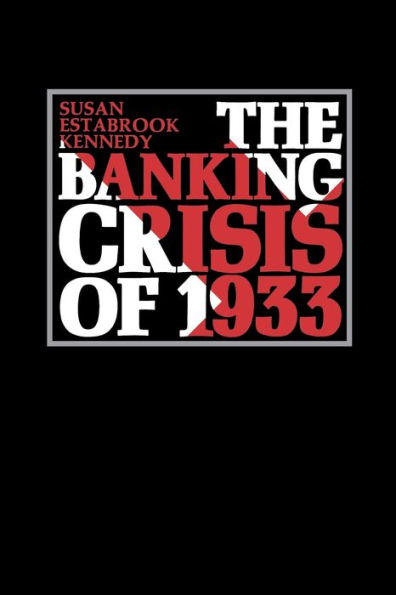
The Banking Crisis of 1933 in Franklin, TN
Current price: $35.00
Barnes and Noble
The Banking Crisis of 1933 in Franklin, TN
Current price: $35.00
Loading Inventory...
Size: Paperback
On March 6, 1933, Franklin D. Roosevelt, less than fortyeight hours after becoming president, ordered the suspension of all banking facilities in the United States. How the nation had reached such a desperate situation and how it responded to the banking "holiday" are examined in this book, the first fulllength study of the crisis.
Although the 1920s had witnessed a wave of bank failures, the situation worsened after the 1929 stock market crash, and by the winter of 19321933, complete banking collapse threatened much of the nation. President Hoover's stopgap measures proved totally inadequate, the author shows, and by March 4, the day of Roosevelt's inauguration, thirtyfour states had declared banking moratoriums. Of special interest in this study is Ms. Kennedy's examination of relations between Herbert Hoover and Franklin D. Roosevelt.
Although the 1920s had witnessed a wave of bank failures, the situation worsened after the 1929 stock market crash, and by the winter of 19321933, complete banking collapse threatened much of the nation. President Hoover's stopgap measures proved totally inadequate, the author shows, and by March 4, the day of Roosevelt's inauguration, thirtyfour states had declared banking moratoriums. Of special interest in this study is Ms. Kennedy's examination of relations between Herbert Hoover and Franklin D. Roosevelt.
On March 6, 1933, Franklin D. Roosevelt, less than fortyeight hours after becoming president, ordered the suspension of all banking facilities in the United States. How the nation had reached such a desperate situation and how it responded to the banking "holiday" are examined in this book, the first fulllength study of the crisis.
Although the 1920s had witnessed a wave of bank failures, the situation worsened after the 1929 stock market crash, and by the winter of 19321933, complete banking collapse threatened much of the nation. President Hoover's stopgap measures proved totally inadequate, the author shows, and by March 4, the day of Roosevelt's inauguration, thirtyfour states had declared banking moratoriums. Of special interest in this study is Ms. Kennedy's examination of relations between Herbert Hoover and Franklin D. Roosevelt.
Although the 1920s had witnessed a wave of bank failures, the situation worsened after the 1929 stock market crash, and by the winter of 19321933, complete banking collapse threatened much of the nation. President Hoover's stopgap measures proved totally inadequate, the author shows, and by March 4, the day of Roosevelt's inauguration, thirtyfour states had declared banking moratoriums. Of special interest in this study is Ms. Kennedy's examination of relations between Herbert Hoover and Franklin D. Roosevelt.
You May Also Like














More About Barnes and Noble at CoolSprings Galleria
Barnes & Noble is the world’s largest retail bookseller and a leading retailer of content, digital media and educational products. Our Nook Digital business offers a lineup of NOOK® tablets and e-Readers and an expansive collection of digital reading content through the NOOK Store®. Barnes & Noble’s mission is to operate the best omni-channel specialty retail business in America, helping both our customers and booksellers reach their aspirations, while being a credit to the communities we serve.
1800 Galleria Blvd #1310, Franklin, TN 37067, United States
Find Barnes and Noble at CoolSprings Galleria in Franklin, TN
Visit Barnes and Noble at CoolSprings Galleria in Franklin, TN
