
Home
The Body and Society: Men, Women, and Sexual Renunciation in Early Christianity
Barnes and Noble
Loading Inventory...
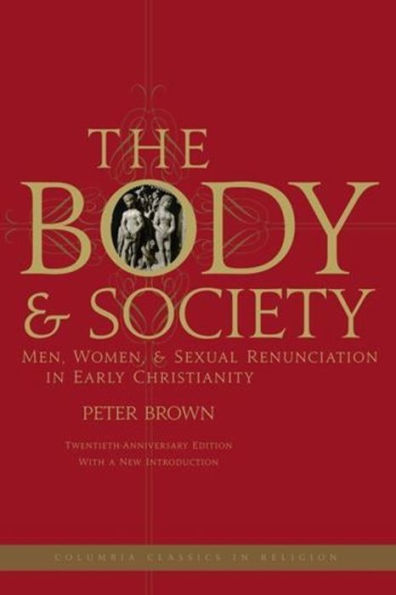
The Body and Society: Men, Women, and Sexual Renunciation in Early Christianity in Franklin, TN
Current price: $36.00
Barnes and Noble
The Body and Society: Men, Women, and Sexual Renunciation in Early Christianity in Franklin, TN
Current price: $36.00
Loading Inventory...
Size: OS
First published in 1988, Peter Brown's
The Body and Society
was a groundbreaking study of the marriage and sexual practices of early Christians in the ancient Mediterranean and Near East. Brown focuses on the practice of permanent sexual renunciation-continence, celibacy, and lifelong virginity-in Christian circles from the first to the fifth centuries A.D. and traces early Christians' preoccupations with sexuality and the body in the work of the period's great writers.
questions how theological views on sexuality and the human body both mirrored and shaped relationships between men and women, Roman aristocracy and slaves, and the married and the celibate. Brown discusses Tertullian, Valentinus, Clement of Alexandria, Origen, Constantine, the Desert Fathers, Jerome, Ambrose, and Augustine, among others, and considers asceticism and society in the Eastern Empire, martyrdom and prophecy, gnostic spiritual guidance, promiscuity among the men and women of the church, monks and marriage in Egypt, the ascetic life of women in fourth-century Jerusalem, and the body and society in the early Middle Ages. In his new introduction, Brown reflects on his work's reception in the scholarly community.
The Body and Society
was a groundbreaking study of the marriage and sexual practices of early Christians in the ancient Mediterranean and Near East. Brown focuses on the practice of permanent sexual renunciation-continence, celibacy, and lifelong virginity-in Christian circles from the first to the fifth centuries A.D. and traces early Christians' preoccupations with sexuality and the body in the work of the period's great writers.
questions how theological views on sexuality and the human body both mirrored and shaped relationships between men and women, Roman aristocracy and slaves, and the married and the celibate. Brown discusses Tertullian, Valentinus, Clement of Alexandria, Origen, Constantine, the Desert Fathers, Jerome, Ambrose, and Augustine, among others, and considers asceticism and society in the Eastern Empire, martyrdom and prophecy, gnostic spiritual guidance, promiscuity among the men and women of the church, monks and marriage in Egypt, the ascetic life of women in fourth-century Jerusalem, and the body and society in the early Middle Ages. In his new introduction, Brown reflects on his work's reception in the scholarly community.
First published in 1988, Peter Brown's
The Body and Society
was a groundbreaking study of the marriage and sexual practices of early Christians in the ancient Mediterranean and Near East. Brown focuses on the practice of permanent sexual renunciation-continence, celibacy, and lifelong virginity-in Christian circles from the first to the fifth centuries A.D. and traces early Christians' preoccupations with sexuality and the body in the work of the period's great writers.
questions how theological views on sexuality and the human body both mirrored and shaped relationships between men and women, Roman aristocracy and slaves, and the married and the celibate. Brown discusses Tertullian, Valentinus, Clement of Alexandria, Origen, Constantine, the Desert Fathers, Jerome, Ambrose, and Augustine, among others, and considers asceticism and society in the Eastern Empire, martyrdom and prophecy, gnostic spiritual guidance, promiscuity among the men and women of the church, monks and marriage in Egypt, the ascetic life of women in fourth-century Jerusalem, and the body and society in the early Middle Ages. In his new introduction, Brown reflects on his work's reception in the scholarly community.
The Body and Society
was a groundbreaking study of the marriage and sexual practices of early Christians in the ancient Mediterranean and Near East. Brown focuses on the practice of permanent sexual renunciation-continence, celibacy, and lifelong virginity-in Christian circles from the first to the fifth centuries A.D. and traces early Christians' preoccupations with sexuality and the body in the work of the period's great writers.
questions how theological views on sexuality and the human body both mirrored and shaped relationships between men and women, Roman aristocracy and slaves, and the married and the celibate. Brown discusses Tertullian, Valentinus, Clement of Alexandria, Origen, Constantine, the Desert Fathers, Jerome, Ambrose, and Augustine, among others, and considers asceticism and society in the Eastern Empire, martyrdom and prophecy, gnostic spiritual guidance, promiscuity among the men and women of the church, monks and marriage in Egypt, the ascetic life of women in fourth-century Jerusalem, and the body and society in the early Middle Ages. In his new introduction, Brown reflects on his work's reception in the scholarly community.
You May Also Like









More About Barnes and Noble at CoolSprings Galleria
Barnes & Noble is the world’s largest retail bookseller and a leading retailer of content, digital media and educational products. Our Nook Digital business offers a lineup of NOOK® tablets and e-Readers and an expansive collection of digital reading content through the NOOK Store®. Barnes & Noble’s mission is to operate the best omni-channel specialty retail business in America, helping both our customers and booksellers reach their aspirations, while being a credit to the communities we serve.
1800 Galleria Blvd #1310, Franklin, TN 37067, United States
Find Barnes and Noble at CoolSprings Galleria in Franklin, TN
Visit Barnes and Noble at CoolSprings Galleria in Franklin, TN