
Home
The Broken Promise of Global Advocacy: Inequality Interest Representation
Barnes and Noble
Loading Inventory...
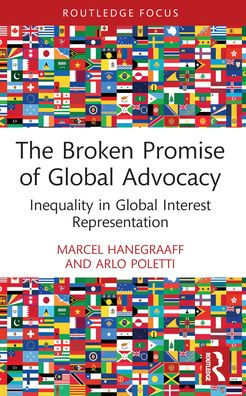
The Broken Promise of Global Advocacy: Inequality Interest Representation in Franklin, TN
Current price: $68.99
Barnes and Noble
The Broken Promise of Global Advocacy: Inequality Interest Representation in Franklin, TN
Current price: $68.99
Loading Inventory...
Size: Hardcover
The Broken Promise of Global Advocacy
addresses two key normative debates associated with the rise of transnational advocacy: whether global interest communities are biased in favor of wealthier countries; and whether the growth of global advocacy implies the emergence of a global civil society truly representative of global constituencies.
The authors address these important debates using original data drawn from a large-scale project which maps all organized interests participating in two international venues: the World Trade Organizations Ministerial Conferences (1995–2017) and the United Nations Climate Summits (1997–2017). They leverage this unique dataset to carry out a systematic empirical assessment of contending views on the factors driving the rise of transnational advocacy. In doing so, the book demonstrates that cross-national differences in global interest representation largely mirror states’ economic power, and that global interest communities are likely to remain dominated by organizations representing national—rather than global—interests.
This book will be of great interest to students and scholars working in comparative politics, public policy, governance, international relations, and international political economy.
addresses two key normative debates associated with the rise of transnational advocacy: whether global interest communities are biased in favor of wealthier countries; and whether the growth of global advocacy implies the emergence of a global civil society truly representative of global constituencies.
The authors address these important debates using original data drawn from a large-scale project which maps all organized interests participating in two international venues: the World Trade Organizations Ministerial Conferences (1995–2017) and the United Nations Climate Summits (1997–2017). They leverage this unique dataset to carry out a systematic empirical assessment of contending views on the factors driving the rise of transnational advocacy. In doing so, the book demonstrates that cross-national differences in global interest representation largely mirror states’ economic power, and that global interest communities are likely to remain dominated by organizations representing national—rather than global—interests.
This book will be of great interest to students and scholars working in comparative politics, public policy, governance, international relations, and international political economy.
The Broken Promise of Global Advocacy
addresses two key normative debates associated with the rise of transnational advocacy: whether global interest communities are biased in favor of wealthier countries; and whether the growth of global advocacy implies the emergence of a global civil society truly representative of global constituencies.
The authors address these important debates using original data drawn from a large-scale project which maps all organized interests participating in two international venues: the World Trade Organizations Ministerial Conferences (1995–2017) and the United Nations Climate Summits (1997–2017). They leverage this unique dataset to carry out a systematic empirical assessment of contending views on the factors driving the rise of transnational advocacy. In doing so, the book demonstrates that cross-national differences in global interest representation largely mirror states’ economic power, and that global interest communities are likely to remain dominated by organizations representing national—rather than global—interests.
This book will be of great interest to students and scholars working in comparative politics, public policy, governance, international relations, and international political economy.
addresses two key normative debates associated with the rise of transnational advocacy: whether global interest communities are biased in favor of wealthier countries; and whether the growth of global advocacy implies the emergence of a global civil society truly representative of global constituencies.
The authors address these important debates using original data drawn from a large-scale project which maps all organized interests participating in two international venues: the World Trade Organizations Ministerial Conferences (1995–2017) and the United Nations Climate Summits (1997–2017). They leverage this unique dataset to carry out a systematic empirical assessment of contending views on the factors driving the rise of transnational advocacy. In doing so, the book demonstrates that cross-national differences in global interest representation largely mirror states’ economic power, and that global interest communities are likely to remain dominated by organizations representing national—rather than global—interests.
This book will be of great interest to students and scholars working in comparative politics, public policy, governance, international relations, and international political economy.
You May Also Like


















More About Barnes and Noble at CoolSprings Galleria
Barnes & Noble is the world’s largest retail bookseller and a leading retailer of content, digital media and educational products. Our Nook Digital business offers a lineup of NOOK® tablets and e-Readers and an expansive collection of digital reading content through the NOOK Store®. Barnes & Noble’s mission is to operate the best omni-channel specialty retail business in America, helping both our customers and booksellers reach their aspirations, while being a credit to the communities we serve.
1800 Galleria Blvd #1310, Franklin, TN 37067, United States
Find Barnes and Noble at CoolSprings Galleria in Franklin, TN
Visit Barnes and Noble at CoolSprings Galleria in Franklin, TN
