
Home
The End of Plagues: Global Battle Against Infectious Disease
Barnes and Noble
Loading Inventory...
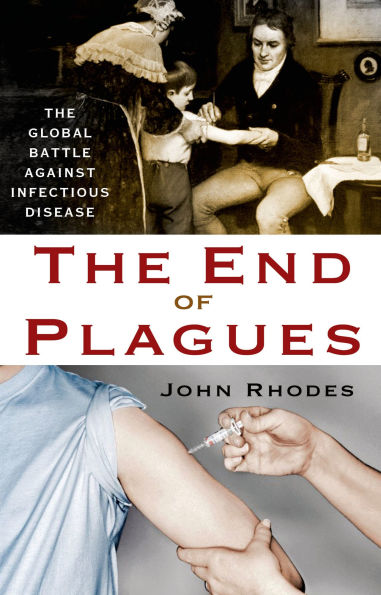
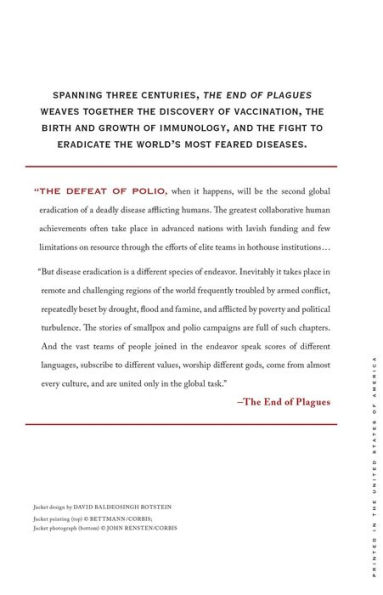
The End of Plagues: Global Battle Against Infectious Disease in Franklin, TN
Current price: $34.99
Barnes and Noble
The End of Plagues: Global Battle Against Infectious Disease in Franklin, TN
Current price: $34.99
Loading Inventory...
Size: Hardcover
World-renowned immunologist John Rhodes’s
The End of Plagues
is “an engaging and expansive exploration of humankind’s quest to defend itself against disease” (
History Today
).
At the turn of the twentieth century, smallpox claimed the lives of two million people per year. By 1979, the disease had been eradicated and victory was declared across the globe. Yet the story of smallpox remains the exception, as today a host of deadly contagions, from polio to AIDS, continue to threaten human health around the world.
Spanning three centuries,
weaves together the discovery of vaccination, the birth and growth of immunology, and the fight to eradicate the world’s most feared diseases. From Edward Jenner’s discovery of vaccination in 1796, to the early nineteenth-century foundling voyages in which chains of orphans, vaccinated one by one, were sent to colonies around the globe, to the development of polio vaccines and the stockpiling of smallpox as a biological weapon in the Cold War, Rhodes charts our fight against these plagues, and shows how vaccinations gave humanity the upper hand.
The End of Plagues
is “an engaging and expansive exploration of humankind’s quest to defend itself against disease” (
History Today
).
At the turn of the twentieth century, smallpox claimed the lives of two million people per year. By 1979, the disease had been eradicated and victory was declared across the globe. Yet the story of smallpox remains the exception, as today a host of deadly contagions, from polio to AIDS, continue to threaten human health around the world.
Spanning three centuries,
weaves together the discovery of vaccination, the birth and growth of immunology, and the fight to eradicate the world’s most feared diseases. From Edward Jenner’s discovery of vaccination in 1796, to the early nineteenth-century foundling voyages in which chains of orphans, vaccinated one by one, were sent to colonies around the globe, to the development of polio vaccines and the stockpiling of smallpox as a biological weapon in the Cold War, Rhodes charts our fight against these plagues, and shows how vaccinations gave humanity the upper hand.
World-renowned immunologist John Rhodes’s
The End of Plagues
is “an engaging and expansive exploration of humankind’s quest to defend itself against disease” (
History Today
).
At the turn of the twentieth century, smallpox claimed the lives of two million people per year. By 1979, the disease had been eradicated and victory was declared across the globe. Yet the story of smallpox remains the exception, as today a host of deadly contagions, from polio to AIDS, continue to threaten human health around the world.
Spanning three centuries,
weaves together the discovery of vaccination, the birth and growth of immunology, and the fight to eradicate the world’s most feared diseases. From Edward Jenner’s discovery of vaccination in 1796, to the early nineteenth-century foundling voyages in which chains of orphans, vaccinated one by one, were sent to colonies around the globe, to the development of polio vaccines and the stockpiling of smallpox as a biological weapon in the Cold War, Rhodes charts our fight against these plagues, and shows how vaccinations gave humanity the upper hand.
The End of Plagues
is “an engaging and expansive exploration of humankind’s quest to defend itself against disease” (
History Today
).
At the turn of the twentieth century, smallpox claimed the lives of two million people per year. By 1979, the disease had been eradicated and victory was declared across the globe. Yet the story of smallpox remains the exception, as today a host of deadly contagions, from polio to AIDS, continue to threaten human health around the world.
Spanning three centuries,
weaves together the discovery of vaccination, the birth and growth of immunology, and the fight to eradicate the world’s most feared diseases. From Edward Jenner’s discovery of vaccination in 1796, to the early nineteenth-century foundling voyages in which chains of orphans, vaccinated one by one, were sent to colonies around the globe, to the development of polio vaccines and the stockpiling of smallpox as a biological weapon in the Cold War, Rhodes charts our fight against these plagues, and shows how vaccinations gave humanity the upper hand.
You May Also Like












More About Barnes and Noble at CoolSprings Galleria
Barnes & Noble is the world’s largest retail bookseller and a leading retailer of content, digital media and educational products. Our Nook Digital business offers a lineup of NOOK® tablets and e-Readers and an expansive collection of digital reading content through the NOOK Store®. Barnes & Noble’s mission is to operate the best omni-channel specialty retail business in America, helping both our customers and booksellers reach their aspirations, while being a credit to the communities we serve.
1800 Galleria Blvd #1310, Franklin, TN 37067, United States
Find Barnes and Noble at CoolSprings Galleria in Franklin, TN
Visit Barnes and Noble at CoolSprings Galleria in Franklin, TN
