
Home
The Faces We Forgot
Barnes and Noble
Loading Inventory...
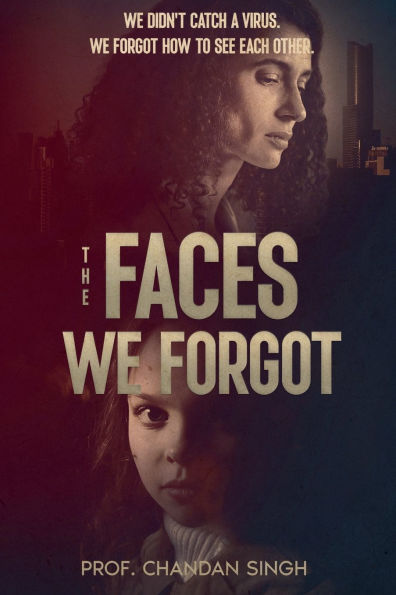
The Faces We Forgot in Franklin, TN
Current price: $26.99
Barnes and Noble
The Faces We Forgot in Franklin, TN
Current price: $26.99
Loading Inventory...
Size: Paperback
WHAT IF ONE MORNING... YOUR MOTHER LOOKED AT YOU AND SAW A STRANGER?
Not because she forgot you - but because her brain could no longer recognize your face.
In 2028, a mysterious epidemic begins in Toronto and spreads across the world.
It's not a virus. Not a war. It's something far more personal.
People wake up and realize they can no longer recognize the faces they love.
Doctors call it
Collective Facial Aphasia (CFA)
- a psychological epidemic born from years of screens, filters, and fractured attention. Humanity hasn't gone blind; it has simply stopped
looking.
As chaos spreads,
Dr. Noor Rahman
, a neuroscientist haunted by her late father's unfinished research, races to find a cure before her own mother forgets her completely. In a society addicted to artificial perfection, Noor discovers that the key to healing may lie in something profoundly analog - attention, memory, and love itself.
When governments and corporations race to commercialize the cure, Noor defies them all. Her 30-day "Analog Recognition Protocol" becomes a global act of rebellion - a movement to bring humanity back to presence, compassion, and connection.
But as the world begins to remember, Noor faces the deepest question of all:
Can love survive a world that has forgotten how to see?
The Faces We Forgot
is a haunting, poetic, and deeply emotional journey through memory, technology, and the human heart. Blending the realism of
Never Let Me Go
with the visionary tone of
Black Mirror
, it reminds us that the cure for blindness was never sight - it was empathy.
Not because she forgot you - but because her brain could no longer recognize your face.
In 2028, a mysterious epidemic begins in Toronto and spreads across the world.
It's not a virus. Not a war. It's something far more personal.
People wake up and realize they can no longer recognize the faces they love.
Doctors call it
Collective Facial Aphasia (CFA)
- a psychological epidemic born from years of screens, filters, and fractured attention. Humanity hasn't gone blind; it has simply stopped
looking.
As chaos spreads,
Dr. Noor Rahman
, a neuroscientist haunted by her late father's unfinished research, races to find a cure before her own mother forgets her completely. In a society addicted to artificial perfection, Noor discovers that the key to healing may lie in something profoundly analog - attention, memory, and love itself.
When governments and corporations race to commercialize the cure, Noor defies them all. Her 30-day "Analog Recognition Protocol" becomes a global act of rebellion - a movement to bring humanity back to presence, compassion, and connection.
But as the world begins to remember, Noor faces the deepest question of all:
Can love survive a world that has forgotten how to see?
The Faces We Forgot
is a haunting, poetic, and deeply emotional journey through memory, technology, and the human heart. Blending the realism of
Never Let Me Go
with the visionary tone of
Black Mirror
, it reminds us that the cure for blindness was never sight - it was empathy.
WHAT IF ONE MORNING... YOUR MOTHER LOOKED AT YOU AND SAW A STRANGER?
Not because she forgot you - but because her brain could no longer recognize your face.
In 2028, a mysterious epidemic begins in Toronto and spreads across the world.
It's not a virus. Not a war. It's something far more personal.
People wake up and realize they can no longer recognize the faces they love.
Doctors call it
Collective Facial Aphasia (CFA)
- a psychological epidemic born from years of screens, filters, and fractured attention. Humanity hasn't gone blind; it has simply stopped
looking.
As chaos spreads,
Dr. Noor Rahman
, a neuroscientist haunted by her late father's unfinished research, races to find a cure before her own mother forgets her completely. In a society addicted to artificial perfection, Noor discovers that the key to healing may lie in something profoundly analog - attention, memory, and love itself.
When governments and corporations race to commercialize the cure, Noor defies them all. Her 30-day "Analog Recognition Protocol" becomes a global act of rebellion - a movement to bring humanity back to presence, compassion, and connection.
But as the world begins to remember, Noor faces the deepest question of all:
Can love survive a world that has forgotten how to see?
The Faces We Forgot
is a haunting, poetic, and deeply emotional journey through memory, technology, and the human heart. Blending the realism of
Never Let Me Go
with the visionary tone of
Black Mirror
, it reminds us that the cure for blindness was never sight - it was empathy.
Not because she forgot you - but because her brain could no longer recognize your face.
In 2028, a mysterious epidemic begins in Toronto and spreads across the world.
It's not a virus. Not a war. It's something far more personal.
People wake up and realize they can no longer recognize the faces they love.
Doctors call it
Collective Facial Aphasia (CFA)
- a psychological epidemic born from years of screens, filters, and fractured attention. Humanity hasn't gone blind; it has simply stopped
looking.
As chaos spreads,
Dr. Noor Rahman
, a neuroscientist haunted by her late father's unfinished research, races to find a cure before her own mother forgets her completely. In a society addicted to artificial perfection, Noor discovers that the key to healing may lie in something profoundly analog - attention, memory, and love itself.
When governments and corporations race to commercialize the cure, Noor defies them all. Her 30-day "Analog Recognition Protocol" becomes a global act of rebellion - a movement to bring humanity back to presence, compassion, and connection.
But as the world begins to remember, Noor faces the deepest question of all:
Can love survive a world that has forgotten how to see?
The Faces We Forgot
is a haunting, poetic, and deeply emotional journey through memory, technology, and the human heart. Blending the realism of
Never Let Me Go
with the visionary tone of
Black Mirror
, it reminds us that the cure for blindness was never sight - it was empathy.
You May Also Like











More About Barnes and Noble at CoolSprings Galleria
Barnes & Noble is the world’s largest retail bookseller and a leading retailer of content, digital media and educational products. Our Nook Digital business offers a lineup of NOOK® tablets and e-Readers and an expansive collection of digital reading content through the NOOK Store®. Barnes & Noble’s mission is to operate the best omni-channel specialty retail business in America, helping both our customers and booksellers reach their aspirations, while being a credit to the communities we serve.
1800 Galleria Blvd #1310, Franklin, TN 37067, United States
Find Barnes and Noble at CoolSprings Galleria in Franklin, TN
Visit Barnes and Noble at CoolSprings Galleria in Franklin, TN
