
Home
The Feeling of Value: Moral Realism Grounded in Phenomenal Consciousness
Barnes and Noble
Loading Inventory...
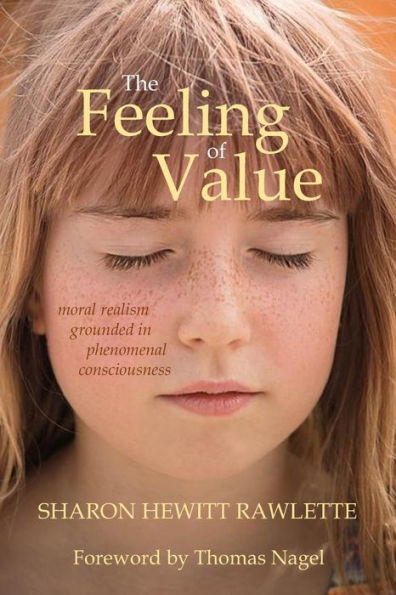
The Feeling of Value: Moral Realism Grounded in Phenomenal Consciousness in Franklin, TN
Current price: $24.95
Barnes and Noble
The Feeling of Value: Moral Realism Grounded in Phenomenal Consciousness in Franklin, TN
Current price: $24.95
Loading Inventory...
Size: OS
Winner of New York University's Dean's Outstanding Dissertation Award
For the past hundred years, ethical theorists have primarily looked for value in external states of affairs or reduced value to a projection of the mind
onto
these same external states of affairs. The result, unsurprisingly, is widespread antirealism about ethics.
In this book, Sharon Hewitt Rawlette turns our metaethical gaze inward and dares us to consider that value, rather than being something "out there," is a quality woven into the very fabric of our conscious experience, in a highly objective way. On this view, our experiences of pleasure and pain, joy and sorrow, ecstasy and despair are not
signs
of value or disvalue. They are
instantiations
of value and disvalue. When we feel pleasure, we are feeling intrinsic goodness itself. And it is from such feelings, argues Rawlette, that we derive the basic content of our normative concepts-that we understand what it
means
for something to be intrinsically good or bad.
Rawlette thus defends a version of analytic descriptivism. And argues that this view, unlike previous theories of moral realism, has the resources to explain where our concept of intrinsic value comes from and how we know when it objectively applies, as well as why we sometimes make mistakes in applying it. She defends this view against G. E. Moore's Open Question Argument as well as shows how these basic facts about intrinsic value can ground facts about instrumental value and value "all things considered." Ultimately, her view offers us the possibility of a robust metaphysical and epistemological justification for many of our strongest moral convictions.
For the past hundred years, ethical theorists have primarily looked for value in external states of affairs or reduced value to a projection of the mind
onto
these same external states of affairs. The result, unsurprisingly, is widespread antirealism about ethics.
In this book, Sharon Hewitt Rawlette turns our metaethical gaze inward and dares us to consider that value, rather than being something "out there," is a quality woven into the very fabric of our conscious experience, in a highly objective way. On this view, our experiences of pleasure and pain, joy and sorrow, ecstasy and despair are not
signs
of value or disvalue. They are
instantiations
of value and disvalue. When we feel pleasure, we are feeling intrinsic goodness itself. And it is from such feelings, argues Rawlette, that we derive the basic content of our normative concepts-that we understand what it
means
for something to be intrinsically good or bad.
Rawlette thus defends a version of analytic descriptivism. And argues that this view, unlike previous theories of moral realism, has the resources to explain where our concept of intrinsic value comes from and how we know when it objectively applies, as well as why we sometimes make mistakes in applying it. She defends this view against G. E. Moore's Open Question Argument as well as shows how these basic facts about intrinsic value can ground facts about instrumental value and value "all things considered." Ultimately, her view offers us the possibility of a robust metaphysical and epistemological justification for many of our strongest moral convictions.
Winner of New York University's Dean's Outstanding Dissertation Award
For the past hundred years, ethical theorists have primarily looked for value in external states of affairs or reduced value to a projection of the mind
onto
these same external states of affairs. The result, unsurprisingly, is widespread antirealism about ethics.
In this book, Sharon Hewitt Rawlette turns our metaethical gaze inward and dares us to consider that value, rather than being something "out there," is a quality woven into the very fabric of our conscious experience, in a highly objective way. On this view, our experiences of pleasure and pain, joy and sorrow, ecstasy and despair are not
signs
of value or disvalue. They are
instantiations
of value and disvalue. When we feel pleasure, we are feeling intrinsic goodness itself. And it is from such feelings, argues Rawlette, that we derive the basic content of our normative concepts-that we understand what it
means
for something to be intrinsically good or bad.
Rawlette thus defends a version of analytic descriptivism. And argues that this view, unlike previous theories of moral realism, has the resources to explain where our concept of intrinsic value comes from and how we know when it objectively applies, as well as why we sometimes make mistakes in applying it. She defends this view against G. E. Moore's Open Question Argument as well as shows how these basic facts about intrinsic value can ground facts about instrumental value and value "all things considered." Ultimately, her view offers us the possibility of a robust metaphysical and epistemological justification for many of our strongest moral convictions.
For the past hundred years, ethical theorists have primarily looked for value in external states of affairs or reduced value to a projection of the mind
onto
these same external states of affairs. The result, unsurprisingly, is widespread antirealism about ethics.
In this book, Sharon Hewitt Rawlette turns our metaethical gaze inward and dares us to consider that value, rather than being something "out there," is a quality woven into the very fabric of our conscious experience, in a highly objective way. On this view, our experiences of pleasure and pain, joy and sorrow, ecstasy and despair are not
signs
of value or disvalue. They are
instantiations
of value and disvalue. When we feel pleasure, we are feeling intrinsic goodness itself. And it is from such feelings, argues Rawlette, that we derive the basic content of our normative concepts-that we understand what it
means
for something to be intrinsically good or bad.
Rawlette thus defends a version of analytic descriptivism. And argues that this view, unlike previous theories of moral realism, has the resources to explain where our concept of intrinsic value comes from and how we know when it objectively applies, as well as why we sometimes make mistakes in applying it. She defends this view against G. E. Moore's Open Question Argument as well as shows how these basic facts about intrinsic value can ground facts about instrumental value and value "all things considered." Ultimately, her view offers us the possibility of a robust metaphysical and epistemological justification for many of our strongest moral convictions.
You May Also Like














More About Barnes and Noble at CoolSprings Galleria
Barnes & Noble is the world’s largest retail bookseller and a leading retailer of content, digital media and educational products. Our Nook Digital business offers a lineup of NOOK® tablets and e-Readers and an expansive collection of digital reading content through the NOOK Store®. Barnes & Noble’s mission is to operate the best omni-channel specialty retail business in America, helping both our customers and booksellers reach their aspirations, while being a credit to the communities we serve.
1800 Galleria Blvd #1310, Franklin, TN 37067, United States
Find Barnes and Noble at CoolSprings Galleria in Franklin, TN
Visit Barnes and Noble at CoolSprings Galleria in Franklin, TN
