
Home
The Fragmented Female Body and Identity: The Postmodern, Feminist, and Multiethnic Writings of Toni Morrison, Theresa Hak Kyung Cha, Phyllis Alesia Perry, Gayl Jones, Emma Pérez, Paula Gunn Allen, and Kathy Acker
Barnes and Noble
Loading Inventory...
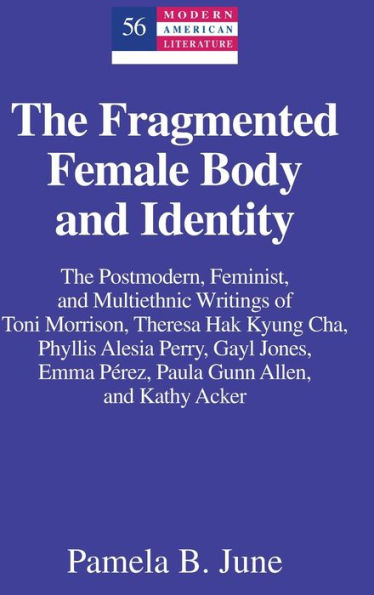
The Fragmented Female Body and Identity: The Postmodern, Feminist, and Multiethnic Writings of Toni Morrison, Theresa Hak Kyung Cha, Phyllis Alesia Perry, Gayl Jones, Emma Pérez, Paula Gunn Allen, and Kathy Acker in Franklin, TN
Current price: $110.60
Barnes and Noble
The Fragmented Female Body and Identity: The Postmodern, Feminist, and Multiethnic Writings of Toni Morrison, Theresa Hak Kyung Cha, Phyllis Alesia Perry, Gayl Jones, Emma Pérez, Paula Gunn Allen, and Kathy Acker in Franklin, TN
Current price: $110.60
Loading Inventory...
Size: OS
The Fragmented Female Body and Identity
explores the symbol of the wounded and scarred female body in selected postmodern, multiethnic American women’s novels, namely Toni Morrison’s
Beloved,
Theresa Hak Kyung Cha’s
Dictée,
Phyllis Alesia Perry’s
Stigmata,
Gayl Jones’s
Corregidora,
Emma Pérez’s
Gulf Dreams,
Paula Gunn Allen’s
The Woman Who Owned the Shadows,
and Kathy Acker’s
Blood and Guts in High School
and
Empire of the Senseless.
In each of these novels, disjointed, postmodern writing reflects the novel’s focus on fragmented female bodies. The wounded and scarred body emerges from various, often intersecting, forms of oppression, including patriarchy, racism, and heteronormativity. This book emphasizes the different and nuanced forms of oppression each woman faces. However, while the fragmented body symbolizes oppression and pain, it also catalyzes resistance through recognition. When female characters recognize some element of a shared oppression, they form bonds with one another. These feminist unities, as a response to multiple forms of oppression, become viable means for resistance and healing.
explores the symbol of the wounded and scarred female body in selected postmodern, multiethnic American women’s novels, namely Toni Morrison’s
Beloved,
Theresa Hak Kyung Cha’s
Dictée,
Phyllis Alesia Perry’s
Stigmata,
Gayl Jones’s
Corregidora,
Emma Pérez’s
Gulf Dreams,
Paula Gunn Allen’s
The Woman Who Owned the Shadows,
and Kathy Acker’s
Blood and Guts in High School
and
Empire of the Senseless.
In each of these novels, disjointed, postmodern writing reflects the novel’s focus on fragmented female bodies. The wounded and scarred body emerges from various, often intersecting, forms of oppression, including patriarchy, racism, and heteronormativity. This book emphasizes the different and nuanced forms of oppression each woman faces. However, while the fragmented body symbolizes oppression and pain, it also catalyzes resistance through recognition. When female characters recognize some element of a shared oppression, they form bonds with one another. These feminist unities, as a response to multiple forms of oppression, become viable means for resistance and healing.
The Fragmented Female Body and Identity
explores the symbol of the wounded and scarred female body in selected postmodern, multiethnic American women’s novels, namely Toni Morrison’s
Beloved,
Theresa Hak Kyung Cha’s
Dictée,
Phyllis Alesia Perry’s
Stigmata,
Gayl Jones’s
Corregidora,
Emma Pérez’s
Gulf Dreams,
Paula Gunn Allen’s
The Woman Who Owned the Shadows,
and Kathy Acker’s
Blood and Guts in High School
and
Empire of the Senseless.
In each of these novels, disjointed, postmodern writing reflects the novel’s focus on fragmented female bodies. The wounded and scarred body emerges from various, often intersecting, forms of oppression, including patriarchy, racism, and heteronormativity. This book emphasizes the different and nuanced forms of oppression each woman faces. However, while the fragmented body symbolizes oppression and pain, it also catalyzes resistance through recognition. When female characters recognize some element of a shared oppression, they form bonds with one another. These feminist unities, as a response to multiple forms of oppression, become viable means for resistance and healing.
explores the symbol of the wounded and scarred female body in selected postmodern, multiethnic American women’s novels, namely Toni Morrison’s
Beloved,
Theresa Hak Kyung Cha’s
Dictée,
Phyllis Alesia Perry’s
Stigmata,
Gayl Jones’s
Corregidora,
Emma Pérez’s
Gulf Dreams,
Paula Gunn Allen’s
The Woman Who Owned the Shadows,
and Kathy Acker’s
Blood and Guts in High School
and
Empire of the Senseless.
In each of these novels, disjointed, postmodern writing reflects the novel’s focus on fragmented female bodies. The wounded and scarred body emerges from various, often intersecting, forms of oppression, including patriarchy, racism, and heteronormativity. This book emphasizes the different and nuanced forms of oppression each woman faces. However, while the fragmented body symbolizes oppression and pain, it also catalyzes resistance through recognition. When female characters recognize some element of a shared oppression, they form bonds with one another. These feminist unities, as a response to multiple forms of oppression, become viable means for resistance and healing.
You May Also Like












More About Barnes and Noble at CoolSprings Galleria
Barnes & Noble is the world’s largest retail bookseller and a leading retailer of content, digital media and educational products. Our Nook Digital business offers a lineup of NOOK® tablets and e-Readers and an expansive collection of digital reading content through the NOOK Store®. Barnes & Noble’s mission is to operate the best omni-channel specialty retail business in America, helping both our customers and booksellers reach their aspirations, while being a credit to the communities we serve.
1800 Galleria Blvd #1310, Franklin, TN 37067, United States
Find Barnes and Noble at CoolSprings Galleria in Franklin, TN
Visit Barnes and Noble at CoolSprings Galleria in Franklin, TN