
Home
The Governance Cycle Parliamentary Democracies: A Computational Social Science Approach
Barnes and Noble
Loading Inventory...
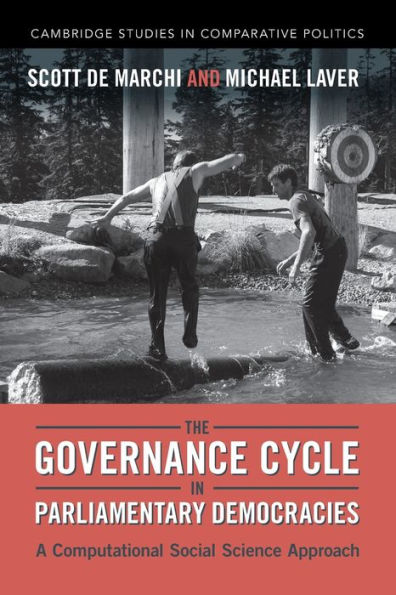
The Governance Cycle Parliamentary Democracies: A Computational Social Science Approach in Franklin, TN
Current price: $117.00
Barnes and Noble
The Governance Cycle Parliamentary Democracies: A Computational Social Science Approach in Franklin, TN
Current price: $117.00
Loading Inventory...
Size: Hardcover
Parliamentary democracy involves a never-ending cycle of elections, government formations, and the need for governments to survive in potentially hostile environments. These conditions require members of any government to make decisions on a large number of issues, some of which sharply divide them. Officials resolve these divisions by 'logrolling'– conceding on issues they care less about, in exchange for reciprocal concessions on issues to which they attach more importance. Though realistically modeling this 'governance cycle' is beyond the scope of traditional formal analysis, this book attacks the problem computationally in two ways. Firstly, it models the behavior of “functionally rational” senior politicians who use informal decision heuristics to navigate their complex high stakes setting. Secondly, by applying computational methods to traditional game theory, it uses artificial intelligence to model how hyper-rational politicians might find strategies that are close to optimal.
Parliamentary democracy involves a never-ending cycle of elections, government formations, and the need for governments to survive in potentially hostile environments. These conditions require members of any government to make decisions on a large number of issues, some of which sharply divide them. Officials resolve these divisions by 'logrolling'– conceding on issues they care less about, in exchange for reciprocal concessions on issues to which they attach more importance. Though realistically modeling this 'governance cycle' is beyond the scope of traditional formal analysis, this book attacks the problem computationally in two ways. Firstly, it models the behavior of “functionally rational” senior politicians who use informal decision heuristics to navigate their complex high stakes setting. Secondly, by applying computational methods to traditional game theory, it uses artificial intelligence to model how hyper-rational politicians might find strategies that are close to optimal.
You May Also Like










More About Barnes and Noble at CoolSprings Galleria
Barnes & Noble is the world’s largest retail bookseller and a leading retailer of content, digital media and educational products. Our Nook Digital business offers a lineup of NOOK® tablets and e-Readers and an expansive collection of digital reading content through the NOOK Store®. Barnes & Noble’s mission is to operate the best omni-channel specialty retail business in America, helping both our customers and booksellers reach their aspirations, while being a credit to the communities we serve.
1800 Galleria Blvd #1310, Franklin, TN 37067, United States
Find Barnes and Noble at CoolSprings Galleria in Franklin, TN
Visit Barnes and Noble at CoolSprings Galleria in Franklin, TN
