
Home
The Language of Feminine Beauty Russian and Japanese Societies
Barnes and Noble
Loading Inventory...
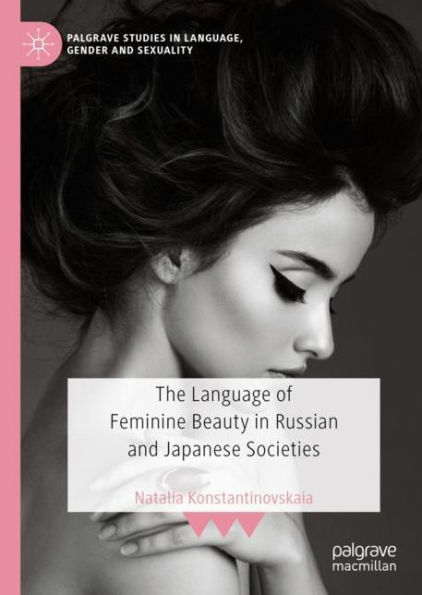
The Language of Feminine Beauty Russian and Japanese Societies in Franklin, TN
Current price: $54.99
Barnes and Noble
The Language of Feminine Beauty Russian and Japanese Societies in Franklin, TN
Current price: $54.99
Loading Inventory...
Size: Hardcover
This book conducts a cross-linguistic and cross-cultural study of 'women’s language' as it pertains to feminine beauty. It examines the ideological constructs of beauty and femininity in the cultures of Japan and Russia, as embodied through televised beauty ads, and relates them to the real-world language practices of Japanese and Russian women. The author traces the reciprocal connection between women’s real and imagined language in the construction of ideals of beauty and femininity, revealing the complex ways women respond to ideological expectations regarding language use: assimilating, transforming, and subverting ideologized language and the assumptions implicit in it. She also demonstrates ways in which women alter the texture of language by appropriating 'masculine' language for their own purposes, shifting the meaning and correlates of linguistic items and structures. This book will be of interest to students and scholars of sociolinguistics, language and gender, cultural andmedia studies, and Russian and Japanese culture.
This book conducts a cross-linguistic and cross-cultural study of 'women’s language' as it pertains to feminine beauty. It examines the ideological constructs of beauty and femininity in the cultures of Japan and Russia, as embodied through televised beauty ads, and relates them to the real-world language practices of Japanese and Russian women. The author traces the reciprocal connection between women’s real and imagined language in the construction of ideals of beauty and femininity, revealing the complex ways women respond to ideological expectations regarding language use: assimilating, transforming, and subverting ideologized language and the assumptions implicit in it. She also demonstrates ways in which women alter the texture of language by appropriating 'masculine' language for their own purposes, shifting the meaning and correlates of linguistic items and structures. This book will be of interest to students and scholars of sociolinguistics, language and gender, cultural andmedia studies, and Russian and Japanese culture.
You May Also Like














More About Barnes and Noble at CoolSprings Galleria
Barnes & Noble is the world’s largest retail bookseller and a leading retailer of content, digital media and educational products. Our Nook Digital business offers a lineup of NOOK® tablets and e-Readers and an expansive collection of digital reading content through the NOOK Store®. Barnes & Noble’s mission is to operate the best omni-channel specialty retail business in America, helping both our customers and booksellers reach their aspirations, while being a credit to the communities we serve.
1800 Galleria Blvd #1310, Franklin, TN 37067, United States
Find Barnes and Noble at CoolSprings Galleria in Franklin, TN
Visit Barnes and Noble at CoolSprings Galleria in Franklin, TN
