
Home
The Macroeconomics of Malthus
Barnes and Noble
Loading Inventory...
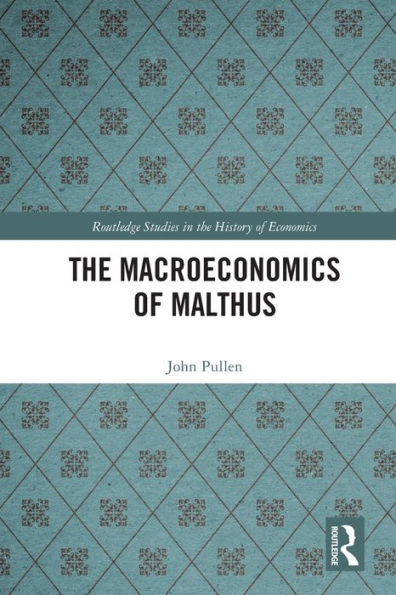
The Macroeconomics of Malthus in Franklin, TN
Current price: $190.00
Barnes and Noble
The Macroeconomics of Malthus in Franklin, TN
Current price: $190.00
Loading Inventory...
Size: Hardcover
The views of Thomas Robert Malthus (1766–1834) on population, first published in his
Essay on the Principle of Population
, 1798, continue to be hotly debated, either acclaimed or opposed, as do his views on macroeconomics. There is a widely held view that his macroeconomics lacks coherence and is merely a collection of isolated jottings. This book challenges this view; it presents textual evidence that Malthus’s macroeconomics constitutes a significant system of thought with considerable academic merit.
It reawakens debate about the relative merits of Malthus and Ricardo as macroeconomists and contends that Malthus offers important macroeconomic ideas and policy proposals relevant to modern economic problems. It presents and analyses Malthus’ ideas on topics such as the determinants of aggregate economic growth; the causes of general depression; the remedies for mass unemployment; the balance between laissez-faire and government intervention; the optimum division of expenditure between consumption, saving, and investment; the distribution of income between wages, profits, and rents; and the degree of economic inequality. Particular emphasis is given to his view that the pattern of distribution of wealth between the upper, lower, and middle classes is a major determinant or factor in the production of wealth, and that continued economic development depends on the growth of a large and affluent middle class. The radical nature of some of his ideas and policy proposals on the ownership and distribution of land is highlighted. An extensive treatment of Say’s Law, incorporating aspects of the correspondence between Say and Malthus, addresses the question of whether Malthus showed that Say’s Law is merely a truism and lacks any scientific relevance. The book also sheds new light on the nature of the influence of Malthus on Keynes.
This combination of a search for textual authenticity and a critical assessment of the views of commentators on Malthus will be of significant interest to students and scholars of economic theory and the history of economics.
Essay on the Principle of Population
, 1798, continue to be hotly debated, either acclaimed or opposed, as do his views on macroeconomics. There is a widely held view that his macroeconomics lacks coherence and is merely a collection of isolated jottings. This book challenges this view; it presents textual evidence that Malthus’s macroeconomics constitutes a significant system of thought with considerable academic merit.
It reawakens debate about the relative merits of Malthus and Ricardo as macroeconomists and contends that Malthus offers important macroeconomic ideas and policy proposals relevant to modern economic problems. It presents and analyses Malthus’ ideas on topics such as the determinants of aggregate economic growth; the causes of general depression; the remedies for mass unemployment; the balance between laissez-faire and government intervention; the optimum division of expenditure between consumption, saving, and investment; the distribution of income between wages, profits, and rents; and the degree of economic inequality. Particular emphasis is given to his view that the pattern of distribution of wealth between the upper, lower, and middle classes is a major determinant or factor in the production of wealth, and that continued economic development depends on the growth of a large and affluent middle class. The radical nature of some of his ideas and policy proposals on the ownership and distribution of land is highlighted. An extensive treatment of Say’s Law, incorporating aspects of the correspondence between Say and Malthus, addresses the question of whether Malthus showed that Say’s Law is merely a truism and lacks any scientific relevance. The book also sheds new light on the nature of the influence of Malthus on Keynes.
This combination of a search for textual authenticity and a critical assessment of the views of commentators on Malthus will be of significant interest to students and scholars of economic theory and the history of economics.
The views of Thomas Robert Malthus (1766–1834) on population, first published in his
Essay on the Principle of Population
, 1798, continue to be hotly debated, either acclaimed or opposed, as do his views on macroeconomics. There is a widely held view that his macroeconomics lacks coherence and is merely a collection of isolated jottings. This book challenges this view; it presents textual evidence that Malthus’s macroeconomics constitutes a significant system of thought with considerable academic merit.
It reawakens debate about the relative merits of Malthus and Ricardo as macroeconomists and contends that Malthus offers important macroeconomic ideas and policy proposals relevant to modern economic problems. It presents and analyses Malthus’ ideas on topics such as the determinants of aggregate economic growth; the causes of general depression; the remedies for mass unemployment; the balance between laissez-faire and government intervention; the optimum division of expenditure between consumption, saving, and investment; the distribution of income between wages, profits, and rents; and the degree of economic inequality. Particular emphasis is given to his view that the pattern of distribution of wealth between the upper, lower, and middle classes is a major determinant or factor in the production of wealth, and that continued economic development depends on the growth of a large and affluent middle class. The radical nature of some of his ideas and policy proposals on the ownership and distribution of land is highlighted. An extensive treatment of Say’s Law, incorporating aspects of the correspondence between Say and Malthus, addresses the question of whether Malthus showed that Say’s Law is merely a truism and lacks any scientific relevance. The book also sheds new light on the nature of the influence of Malthus on Keynes.
This combination of a search for textual authenticity and a critical assessment of the views of commentators on Malthus will be of significant interest to students and scholars of economic theory and the history of economics.
Essay on the Principle of Population
, 1798, continue to be hotly debated, either acclaimed or opposed, as do his views on macroeconomics. There is a widely held view that his macroeconomics lacks coherence and is merely a collection of isolated jottings. This book challenges this view; it presents textual evidence that Malthus’s macroeconomics constitutes a significant system of thought with considerable academic merit.
It reawakens debate about the relative merits of Malthus and Ricardo as macroeconomists and contends that Malthus offers important macroeconomic ideas and policy proposals relevant to modern economic problems. It presents and analyses Malthus’ ideas on topics such as the determinants of aggregate economic growth; the causes of general depression; the remedies for mass unemployment; the balance between laissez-faire and government intervention; the optimum division of expenditure between consumption, saving, and investment; the distribution of income between wages, profits, and rents; and the degree of economic inequality. Particular emphasis is given to his view that the pattern of distribution of wealth between the upper, lower, and middle classes is a major determinant or factor in the production of wealth, and that continued economic development depends on the growth of a large and affluent middle class. The radical nature of some of his ideas and policy proposals on the ownership and distribution of land is highlighted. An extensive treatment of Say’s Law, incorporating aspects of the correspondence between Say and Malthus, addresses the question of whether Malthus showed that Say’s Law is merely a truism and lacks any scientific relevance. The book also sheds new light on the nature of the influence of Malthus on Keynes.
This combination of a search for textual authenticity and a critical assessment of the views of commentators on Malthus will be of significant interest to students and scholars of economic theory and the history of economics.
You May Also Like












More About Barnes and Noble at CoolSprings Galleria
Barnes & Noble is the world’s largest retail bookseller and a leading retailer of content, digital media and educational products. Our Nook Digital business offers a lineup of NOOK® tablets and e-Readers and an expansive collection of digital reading content through the NOOK Store®. Barnes & Noble’s mission is to operate the best omni-channel specialty retail business in America, helping both our customers and booksellers reach their aspirations, while being a credit to the communities we serve.
1800 Galleria Blvd #1310, Franklin, TN 37067, United States
Find Barnes and Noble at CoolSprings Galleria in Franklin, TN
Visit Barnes and Noble at CoolSprings Galleria in Franklin, TN
