
Home
the Magical Lantern: Essays on Phantasmagoria of Indian Politics
Barnes and Noble
Loading Inventory...
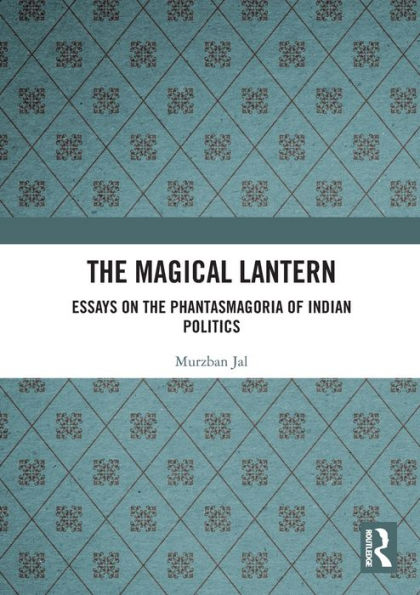
the Magical Lantern: Essays on Phantasmagoria of Indian Politics in Franklin, TN
Current price: $170.00
Barnes and Noble
the Magical Lantern: Essays on Phantasmagoria of Indian Politics in Franklin, TN
Current price: $170.00
Loading Inventory...
Size: Hardcover
The book
The Magical Lantern
is a collection of essays on Marxist philosophy. It is based on the philosophical reflection on Marx’s idea of phantasmagoria as the 'magical lantern' that creates eerie images, an idea that is central to Marx’s theory of modern capitalist societies. It talks of the importance of Marx’s philosophy and its application in concrete politics, especially in creating socialist humanist philosophy of human emancipation where global societies can be emancipated from the phantasmagorias that haunt them, thus able to transcend global capitalism which is in terminal and permanent crisis.
It then critiques the rise of authoritarian regimes emerging all over the world and seeks to explain the rise of global totalitarianism. But it claims that the answer to authoritarianism is not liberalism since liberalism is part of the late imperialism in permanent crisis as well as it involves what Slavoj Žižek calls the
Denkverbot
('the prohibition against thinking') and thus involves the return of the eerie phantasmagoria that does not allow critical thinking.
However, the critique of liberalism does not relapse into orthodox Marxism, since this book argues that in the genre of orthodox Marxism the ghosts of Stalin and Mao with their own authoritarianism haunt philosophies of human emancipation. While Stalin is portrayed as a brutal counter-revolutionary who destroyed Marxism by evoking Marxism itself, Mao is presented as the alchemist of the revolution and a peculiar form of Stalinism in rebellion against Stalinism itself!
The chapters in this book were originally published in
Critique: Journal of Socialist Theory
.
The Magical Lantern
is a collection of essays on Marxist philosophy. It is based on the philosophical reflection on Marx’s idea of phantasmagoria as the 'magical lantern' that creates eerie images, an idea that is central to Marx’s theory of modern capitalist societies. It talks of the importance of Marx’s philosophy and its application in concrete politics, especially in creating socialist humanist philosophy of human emancipation where global societies can be emancipated from the phantasmagorias that haunt them, thus able to transcend global capitalism which is in terminal and permanent crisis.
It then critiques the rise of authoritarian regimes emerging all over the world and seeks to explain the rise of global totalitarianism. But it claims that the answer to authoritarianism is not liberalism since liberalism is part of the late imperialism in permanent crisis as well as it involves what Slavoj Žižek calls the
Denkverbot
('the prohibition against thinking') and thus involves the return of the eerie phantasmagoria that does not allow critical thinking.
However, the critique of liberalism does not relapse into orthodox Marxism, since this book argues that in the genre of orthodox Marxism the ghosts of Stalin and Mao with their own authoritarianism haunt philosophies of human emancipation. While Stalin is portrayed as a brutal counter-revolutionary who destroyed Marxism by evoking Marxism itself, Mao is presented as the alchemist of the revolution and a peculiar form of Stalinism in rebellion against Stalinism itself!
The chapters in this book were originally published in
Critique: Journal of Socialist Theory
.
The book
The Magical Lantern
is a collection of essays on Marxist philosophy. It is based on the philosophical reflection on Marx’s idea of phantasmagoria as the 'magical lantern' that creates eerie images, an idea that is central to Marx’s theory of modern capitalist societies. It talks of the importance of Marx’s philosophy and its application in concrete politics, especially in creating socialist humanist philosophy of human emancipation where global societies can be emancipated from the phantasmagorias that haunt them, thus able to transcend global capitalism which is in terminal and permanent crisis.
It then critiques the rise of authoritarian regimes emerging all over the world and seeks to explain the rise of global totalitarianism. But it claims that the answer to authoritarianism is not liberalism since liberalism is part of the late imperialism in permanent crisis as well as it involves what Slavoj Žižek calls the
Denkverbot
('the prohibition against thinking') and thus involves the return of the eerie phantasmagoria that does not allow critical thinking.
However, the critique of liberalism does not relapse into orthodox Marxism, since this book argues that in the genre of orthodox Marxism the ghosts of Stalin and Mao with their own authoritarianism haunt philosophies of human emancipation. While Stalin is portrayed as a brutal counter-revolutionary who destroyed Marxism by evoking Marxism itself, Mao is presented as the alchemist of the revolution and a peculiar form of Stalinism in rebellion against Stalinism itself!
The chapters in this book were originally published in
Critique: Journal of Socialist Theory
.
The Magical Lantern
is a collection of essays on Marxist philosophy. It is based on the philosophical reflection on Marx’s idea of phantasmagoria as the 'magical lantern' that creates eerie images, an idea that is central to Marx’s theory of modern capitalist societies. It talks of the importance of Marx’s philosophy and its application in concrete politics, especially in creating socialist humanist philosophy of human emancipation where global societies can be emancipated from the phantasmagorias that haunt them, thus able to transcend global capitalism which is in terminal and permanent crisis.
It then critiques the rise of authoritarian regimes emerging all over the world and seeks to explain the rise of global totalitarianism. But it claims that the answer to authoritarianism is not liberalism since liberalism is part of the late imperialism in permanent crisis as well as it involves what Slavoj Žižek calls the
Denkverbot
('the prohibition against thinking') and thus involves the return of the eerie phantasmagoria that does not allow critical thinking.
However, the critique of liberalism does not relapse into orthodox Marxism, since this book argues that in the genre of orthodox Marxism the ghosts of Stalin and Mao with their own authoritarianism haunt philosophies of human emancipation. While Stalin is portrayed as a brutal counter-revolutionary who destroyed Marxism by evoking Marxism itself, Mao is presented as the alchemist of the revolution and a peculiar form of Stalinism in rebellion against Stalinism itself!
The chapters in this book were originally published in
Critique: Journal of Socialist Theory
.
You May Also Like









More About Barnes and Noble at CoolSprings Galleria
Barnes & Noble is the world’s largest retail bookseller and a leading retailer of content, digital media and educational products. Our Nook Digital business offers a lineup of NOOK® tablets and e-Readers and an expansive collection of digital reading content through the NOOK Store®. Barnes & Noble’s mission is to operate the best omni-channel specialty retail business in America, helping both our customers and booksellers reach their aspirations, while being a credit to the communities we serve.
1800 Galleria Blvd #1310, Franklin, TN 37067, United States
Find Barnes and Noble at CoolSprings Galleria in Franklin, TN
Visit Barnes and Noble at CoolSprings Galleria in Franklin, TN
