
Home
The National Council of Teachers English and Cold War Education Policies
Barnes and Noble
Loading Inventory...
The National Council of Teachers English and Cold War Education Policies in Franklin, TN
Current price: $99.74
Barnes and Noble
The National Council of Teachers English and Cold War Education Policies in Franklin, TN
Current price: $99.74
Loading Inventory...
Size: Hardcover
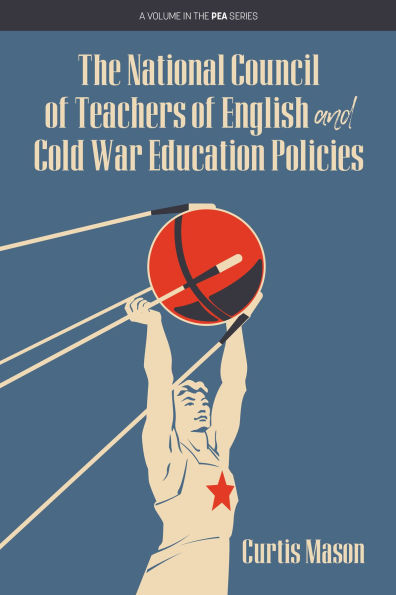
The launching of Sputnik in 1957 sparked an education movement that stressed the importance of curricular rigor and standardization as a means to improve education and bolster national defense. Within six months of Sputnik's launch, Congress passed the National Defense Education Act (NDEA) that approved an unprecedented amount of federal funding toward the math, science, and foreign language disciplines. The teaching of English was left out and through the leadership of the National Council of Teachers of English (NCTE), the discipline maneuvered public relations and political connections in its quest to acquire federal funds. In doing so, the NCTE mimicked strategies that galvanized funding for math, science, and foreign language disciplines by arguing the importance of the teaching of English for national security and advocating for a teaching model that aligned with Cold War Era pedagogical trends.
These tactics marked a major shift in how the NCTE advocated for the teaching of English. In the early twentieth century, the organization embraced studentcentered education practices connected to the ideas of progressive educators. This perspective continued with the creation and expansion of life adjustment education during the 1930s and 40s. During this era, many NCTE authors recommended this movement that advocated connecting education to future adult experiences. Following Sputnik, NCTE leaders supported contentcentered reforms. Instead of curriculum recommendations based in discovering and fostering relevant student experiences, the NCTE's focus became adjusting student learning to predefined skills it thought all students should possess. This trend was supported by conceptions of Cold War education models, including those advocated by their rival English organization, the Modern Language Association (MLA). The MLA had successfully worked with federal actors in attaining funding for foreign language training institutes and the NCTE's collaboration with the MLA represented a shift in adopting ideas it was previously opposed to promoting.
Despite their efforts, the NCTE was not a part of NDEA reauthorization in 1961 the federal government, led by U.S. Commissioner of Education, Sterling McMurrin, funded teachertraining institutes for the study of English through a program called "Project English." The 1960s continued with the NCTE representing stronger contentcentered ideas before shifting in less than a decade as indicated by the materials produced by the 1966 AngloAmerican Conference on English at Dartmouth. Here, NCTE leaders reassessed their beliefs after meeting with British educators who advocated studentcentered curriculum models and reintroduced benefits of experiential education. These ideas would manifest into studentcentered curriculum models during the late 1960s and 1970s.
These tactics marked a major shift in how the NCTE advocated for the teaching of English. In the early twentieth century, the organization embraced studentcentered education practices connected to the ideas of progressive educators. This perspective continued with the creation and expansion of life adjustment education during the 1930s and 40s. During this era, many NCTE authors recommended this movement that advocated connecting education to future adult experiences. Following Sputnik, NCTE leaders supported contentcentered reforms. Instead of curriculum recommendations based in discovering and fostering relevant student experiences, the NCTE's focus became adjusting student learning to predefined skills it thought all students should possess. This trend was supported by conceptions of Cold War education models, including those advocated by their rival English organization, the Modern Language Association (MLA). The MLA had successfully worked with federal actors in attaining funding for foreign language training institutes and the NCTE's collaboration with the MLA represented a shift in adopting ideas it was previously opposed to promoting.
Despite their efforts, the NCTE was not a part of NDEA reauthorization in 1961 the federal government, led by U.S. Commissioner of Education, Sterling McMurrin, funded teachertraining institutes for the study of English through a program called "Project English." The 1960s continued with the NCTE representing stronger contentcentered ideas before shifting in less than a decade as indicated by the materials produced by the 1966 AngloAmerican Conference on English at Dartmouth. Here, NCTE leaders reassessed their beliefs after meeting with British educators who advocated studentcentered curriculum models and reintroduced benefits of experiential education. These ideas would manifest into studentcentered curriculum models during the late 1960s and 1970s.
The launching of Sputnik in 1957 sparked an education movement that stressed the importance of curricular rigor and standardization as a means to improve education and bolster national defense. Within six months of Sputnik's launch, Congress passed the National Defense Education Act (NDEA) that approved an unprecedented amount of federal funding toward the math, science, and foreign language disciplines. The teaching of English was left out and through the leadership of the National Council of Teachers of English (NCTE), the discipline maneuvered public relations and political connections in its quest to acquire federal funds. In doing so, the NCTE mimicked strategies that galvanized funding for math, science, and foreign language disciplines by arguing the importance of the teaching of English for national security and advocating for a teaching model that aligned with Cold War Era pedagogical trends.
These tactics marked a major shift in how the NCTE advocated for the teaching of English. In the early twentieth century, the organization embraced studentcentered education practices connected to the ideas of progressive educators. This perspective continued with the creation and expansion of life adjustment education during the 1930s and 40s. During this era, many NCTE authors recommended this movement that advocated connecting education to future adult experiences. Following Sputnik, NCTE leaders supported contentcentered reforms. Instead of curriculum recommendations based in discovering and fostering relevant student experiences, the NCTE's focus became adjusting student learning to predefined skills it thought all students should possess. This trend was supported by conceptions of Cold War education models, including those advocated by their rival English organization, the Modern Language Association (MLA). The MLA had successfully worked with federal actors in attaining funding for foreign language training institutes and the NCTE's collaboration with the MLA represented a shift in adopting ideas it was previously opposed to promoting.
Despite their efforts, the NCTE was not a part of NDEA reauthorization in 1961 the federal government, led by U.S. Commissioner of Education, Sterling McMurrin, funded teachertraining institutes for the study of English through a program called "Project English." The 1960s continued with the NCTE representing stronger contentcentered ideas before shifting in less than a decade as indicated by the materials produced by the 1966 AngloAmerican Conference on English at Dartmouth. Here, NCTE leaders reassessed their beliefs after meeting with British educators who advocated studentcentered curriculum models and reintroduced benefits of experiential education. These ideas would manifest into studentcentered curriculum models during the late 1960s and 1970s.
These tactics marked a major shift in how the NCTE advocated for the teaching of English. In the early twentieth century, the organization embraced studentcentered education practices connected to the ideas of progressive educators. This perspective continued with the creation and expansion of life adjustment education during the 1930s and 40s. During this era, many NCTE authors recommended this movement that advocated connecting education to future adult experiences. Following Sputnik, NCTE leaders supported contentcentered reforms. Instead of curriculum recommendations based in discovering and fostering relevant student experiences, the NCTE's focus became adjusting student learning to predefined skills it thought all students should possess. This trend was supported by conceptions of Cold War education models, including those advocated by their rival English organization, the Modern Language Association (MLA). The MLA had successfully worked with federal actors in attaining funding for foreign language training institutes and the NCTE's collaboration with the MLA represented a shift in adopting ideas it was previously opposed to promoting.
Despite their efforts, the NCTE was not a part of NDEA reauthorization in 1961 the federal government, led by U.S. Commissioner of Education, Sterling McMurrin, funded teachertraining institutes for the study of English through a program called "Project English." The 1960s continued with the NCTE representing stronger contentcentered ideas before shifting in less than a decade as indicated by the materials produced by the 1966 AngloAmerican Conference on English at Dartmouth. Here, NCTE leaders reassessed their beliefs after meeting with British educators who advocated studentcentered curriculum models and reintroduced benefits of experiential education. These ideas would manifest into studentcentered curriculum models during the late 1960s and 1970s.
You May Also Like










More About Barnes and Noble at CoolSprings Galleria
Barnes & Noble is the world’s largest retail bookseller and a leading retailer of content, digital media and educational products. Our Nook Digital business offers a lineup of NOOK® tablets and e-Readers and an expansive collection of digital reading content through the NOOK Store®. Barnes & Noble’s mission is to operate the best omni-channel specialty retail business in America, helping both our customers and booksellers reach their aspirations, while being a credit to the communities we serve.
1800 Galleria Blvd #1310, Franklin, TN 37067, United States
Find Barnes and Noble at CoolSprings Galleria in Franklin, TN
Visit Barnes and Noble at CoolSprings Galleria in Franklin, TN
